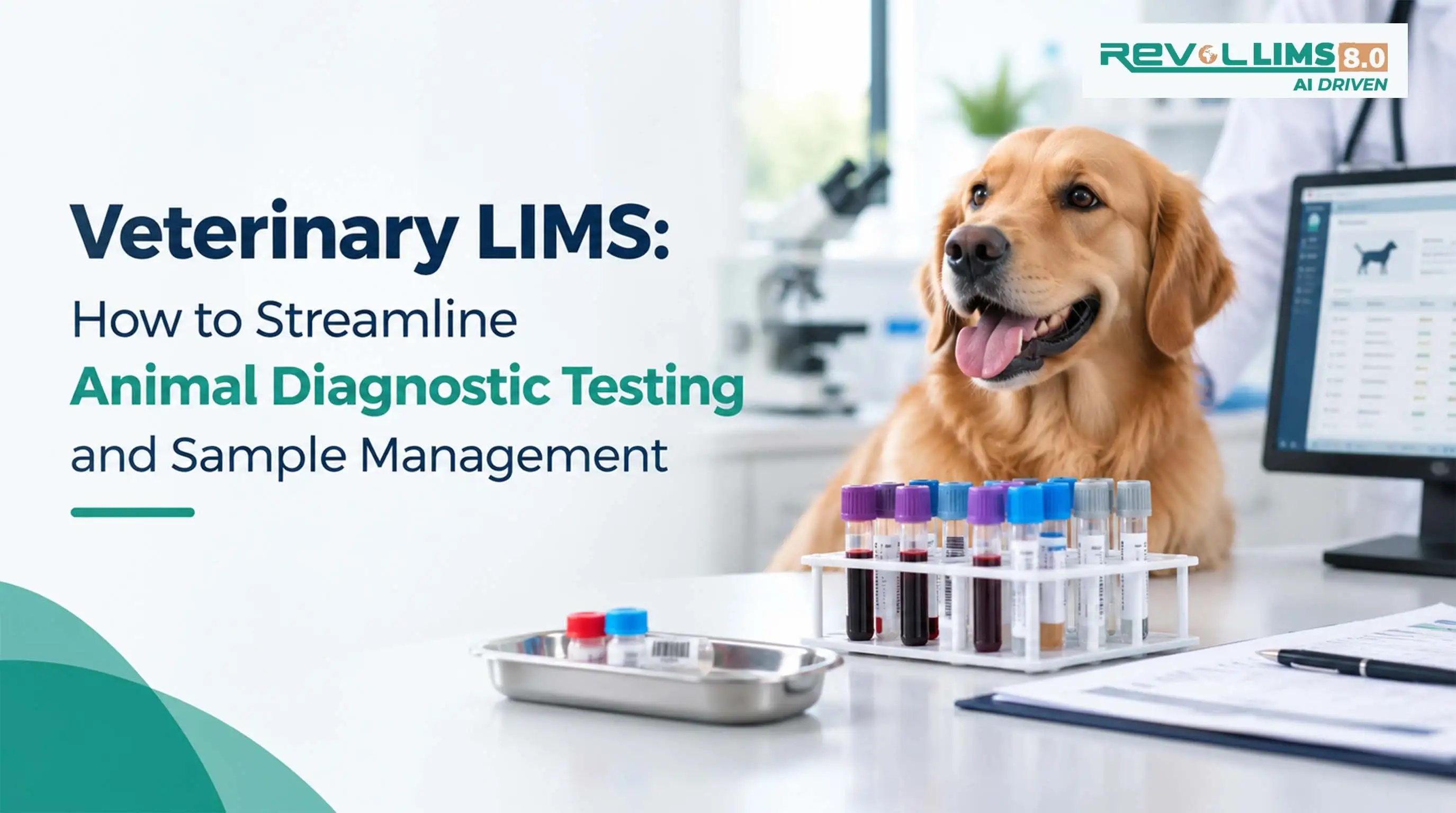
Veterinary LIMS: Streamline Animal Diagnostic Testing
Veterinary diagnostic laboratories are processing more samples, from more species, for more reasons than ever before. A single day's workload might include blood panels from companion animals, fecal and tissue samples from livestock herds, necropsy specimens for disease surveillance, and export-certification tests that must meet international trade requirements. Each of these arrives with its own collection method, storage condition, and turnaround expectation.
This growth in volume is compounded by species and specimen diversity. A canine blood draw, an equine joint fluid aspirate, a poultry swab, and a fish tissue sample all demand different handling protocols, yet many labs still route them through the same generic intake process. When that process depends on paper logs or disconnected spreadsheets, small identification errors multiply quickly across hundreds of daily accessions.
At the same time, referring veterinarians, herd health programs, and regulatory bodies expect diagnostic data that is accurate, traceable, and quickly accessible. A missed link between a sample and its animal of origin can delay a diagnosis, compromise a disease-surveillance report, or jeopardize an export health certificate. This growing complexity is why veterinary laboratories are increasingly turning to a Laboratory Information Management System (LIMS) purpose-built for animal diagnostics.
1. What Is a Veterinary LIMS?
Unlike a generic LIMS, a veterinary-configured system manages data fields unique to animal diagnostics: species, breed, herd or flock identifiers, owner or premise information, and animal-specific test panels. It governs the full sample lifecycle — accession, aliquoting, testing, result interpretation, and reporting — while maintaining a continuous chain of custody from the originating animal to the final report. This makes it possible to manage clinical pathology, microbiology, serology, molecular diagnostics, necropsy, and herd-surveillance testing within one connected environment rather than in isolated departmental systems.
2. Why Is Sample Management Challenging in Veterinary Laboratories?
Even well-run veterinary labs run into the same recurring friction points when sample volume and diversity increase:
Manual Records
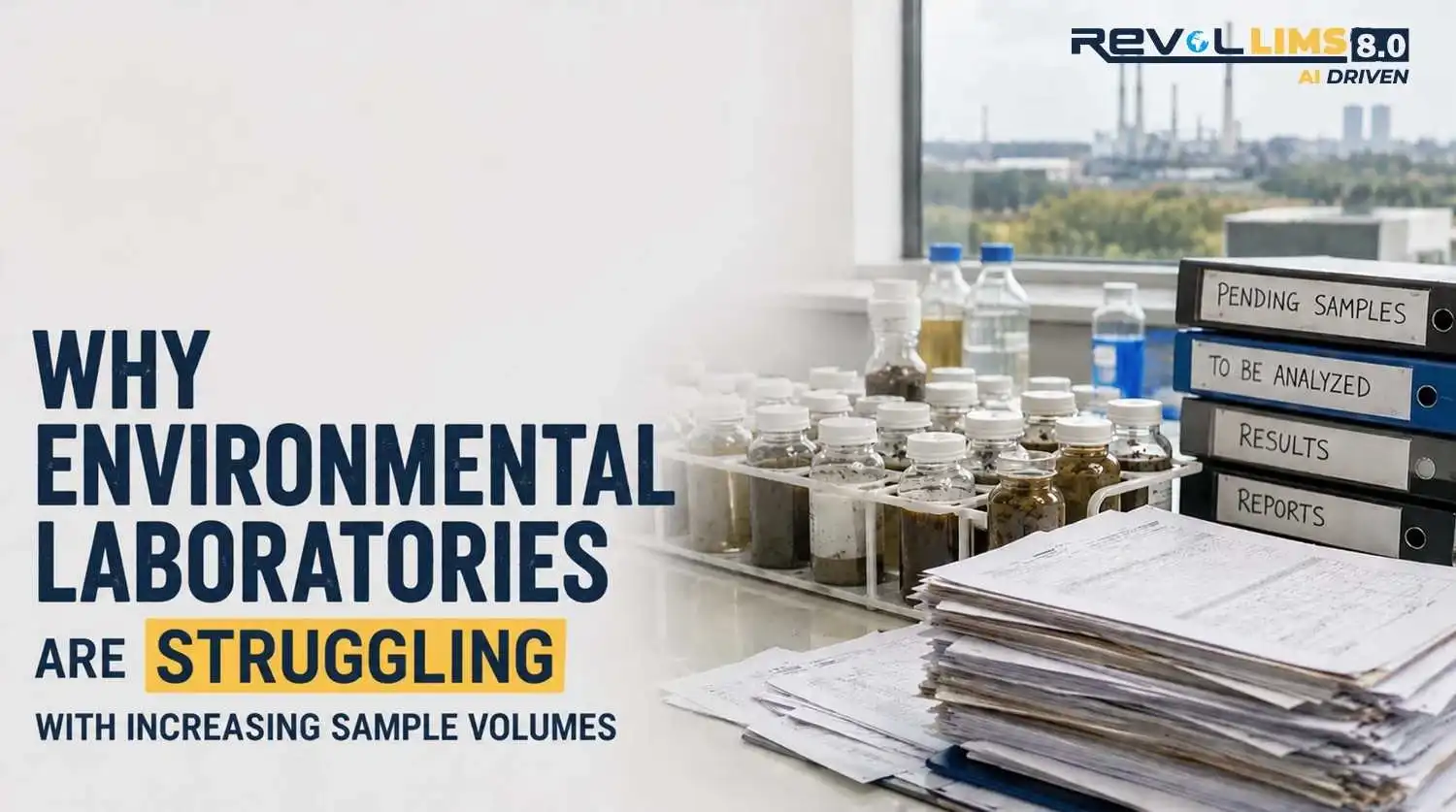
Paper accession logs and standalone spreadsheets slow intake, invite transcription errors, and make it difficult to reconstruct a sample's history during an audit or disease investigation.
Sample Identification and Tracking
Without unique, barcoded identifiers, samples from different animals or herds can be mislabeled or misrouted, especially during high-volume outbreak testing or seasonal herd screening.
Multiple Tests and Specimen Types
A single accession may require serology, PCR, culture, and histopathology in parallel. Coordinating aliquots, test assignments, and turnaround times across departments is hard to do manually.
Result Management
Results generated on different instruments and by different sections must be consolidated, reviewed, and released together — a process prone to delay when done through email or shared folders.
Layered on top of these operational issues is a structural one: data scattered across systems. Accession information may sit in one spreadsheet, instrument outputs in another, and client communication in an inbox. When a referring veterinarian calls for a status update, staff have to piece together the answer from several disconnected sources instead of pulling it from one record.
3. How Does LIMS Streamline Veterinary Diagnostic Testing?
A veterinary LIMS addresses these challenges by digitizing and connecting every stage of the sample lifecycle:
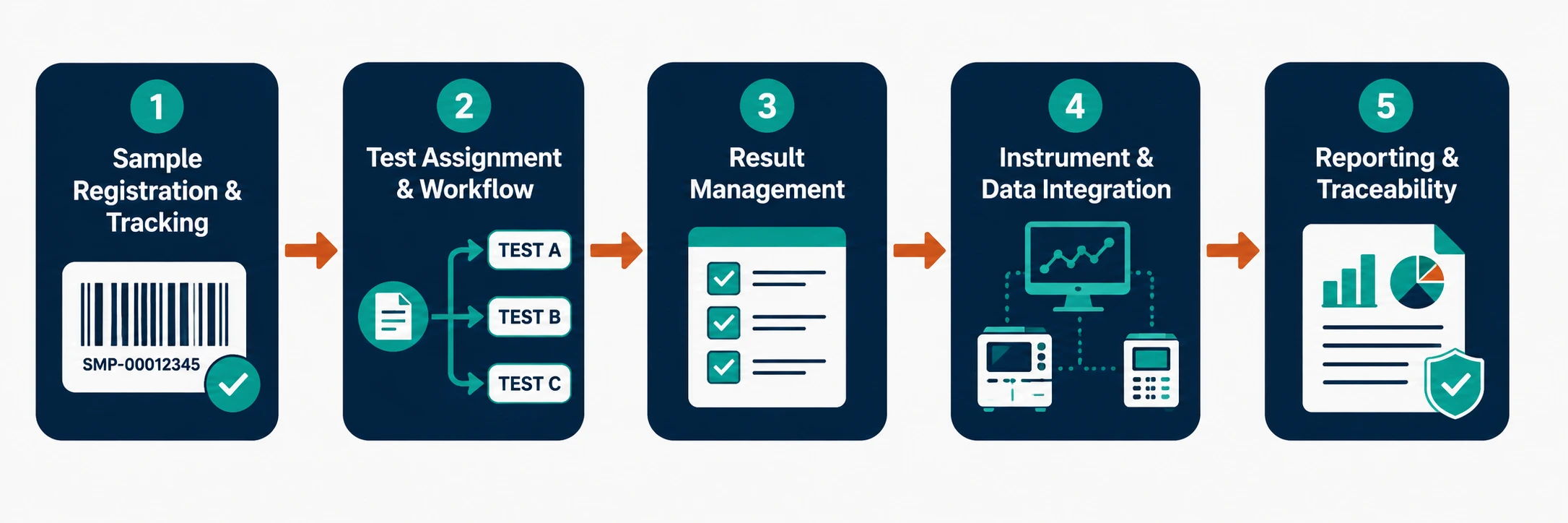
Sample Registration and Tracking
Each sample is registered with a unique barcode or ID at accession, capturing species, specimen type, owner or herd details, and requested tests in one step. From that point forward, the sample can be scanned and located at any stage, eliminating guesswork about where it is or what has been done to it.
Test Assignment and Workflow Management
Once registered, the system automatically routes each sample or aliquot to the correct test panel and department — serology, microbiology, molecular diagnostics, or pathology — based on pre-configured rules, so nothing waits in a queue because of a manual handoff that was missed.
Result Management
Results from different sections and instruments are captured into a single record per sample, supporting structured review, flagging of abnormal values, and consolidated release rather than results being emailed or reported separately.
Instrument and Data Integration
Direct integration with analyzers, PCR platforms, and imaging systems removes manual transcription, reducing the risk of typographical errors when moving results from an instrument screen into a report.
Reporting and Traceability
Every action on a sample — from receipt to result release — is time-stamped and attributed to a user, creating a complete audit trail that supports client reporting, accreditation reviews, and disease-surveillance documentation.
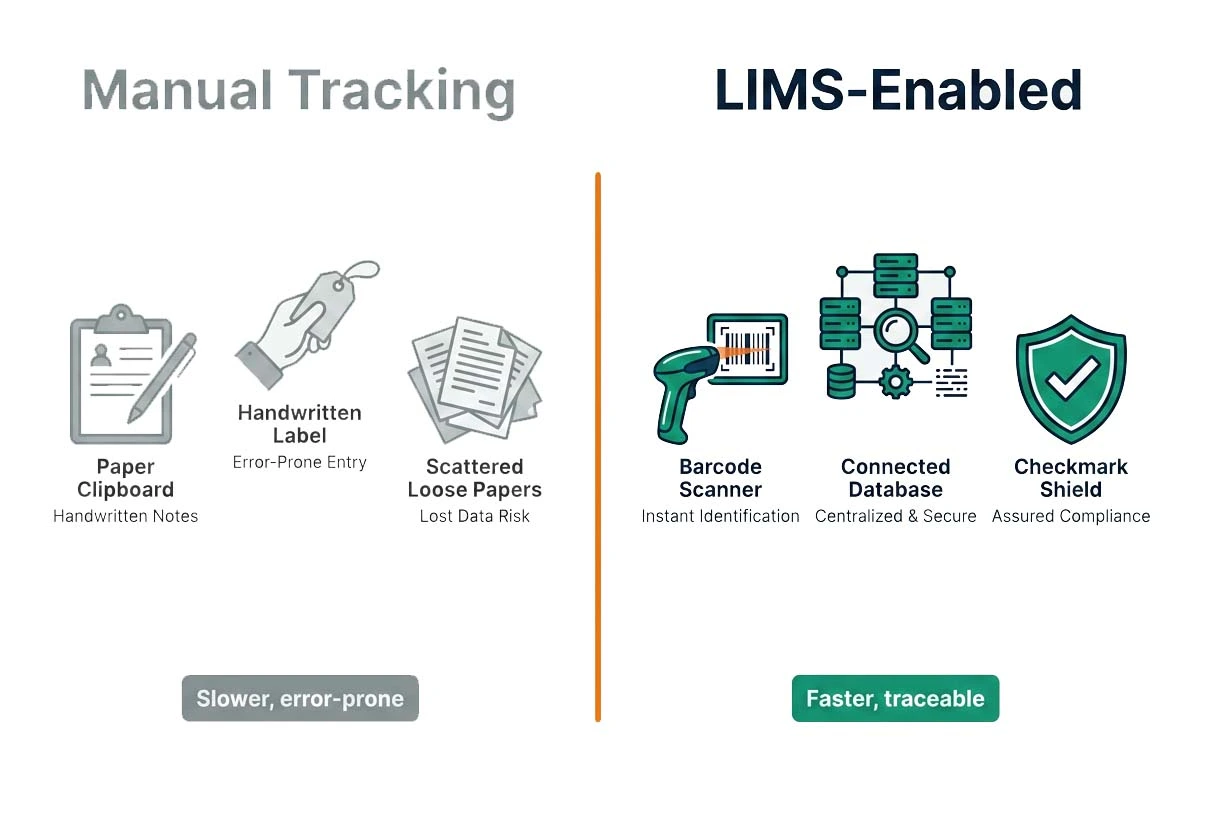
Manual Tracking vs. LIMS-Enabled Sample Management
| Task | Manual / Spreadsheet | LIMS-Enabled |
|---|---|---|
| Sample identification | Handwritten labels, risk of duplication | Unique barcode per sample and aliquot |
| Test routing | Verbal or paper handoff between sections | Automated, rule-based assignment |
| Result consolidation | Collected manually from each department | Auto-compiled into one sample record |
| Audit readiness | Reconstructed from multiple logs | Continuous, time-stamped audit trail |
| Historical lookups | Manual file search, often slow | Searchable by animal, herd, or premise |
4. What Are the Benefits of LIMS for Veterinary Laboratories?
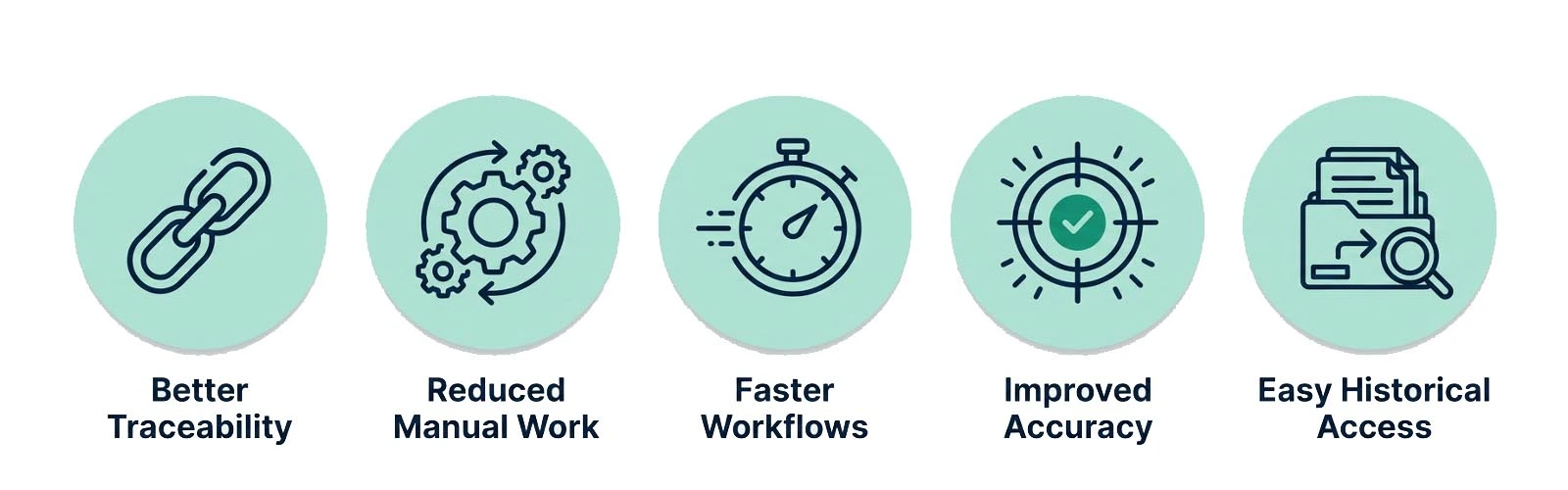
- Better sample traceability — a continuous digital chain of custody from animal or herd to final report.
- Reduced manual work — automated registration, routing, and instrument capture cut down repetitive data entry.
- Faster workflows — samples move through testing without waiting on manual handoffs or status checks.
- Improved data accuracy — direct instrument integration and structured fields reduce transcription errors.
- Easier access to historical records — prior results for a herd, premise, or individual animal are searchable in seconds rather than buried in old files.
5. Key Features to Consider in Veterinary LIMS
- Barcode and sample tracking — unique identifiers for every sample, aliquot, and container.
- Workflow automation — configurable rules for routing samples to the right test and department.
- Result management — consolidated, reviewable results across multiple test types per accession.
- Instrument integration — bidirectional interfaces with analyzers, PCR systems, and imaging equipment.
- Audit trails — a complete, time-stamped record of every action taken on a sample.
- Reporting — configurable client, regulatory, and surveillance reports generated directly from stored data.
- Data security — role-based access controls that protect client, herd, and animal health records.
These capabilities echo the core feature set that any modern LIMS should offer, adapted here to the species-and-specimen variability unique to animal diagnostics. Laboratories evaluating a system for the first time may also find it useful to start with a broader guide to what a LIMS is and how it works before narrowing down species-specific requirements.
Because veterinary laboratories often support the same disease-surveillance and export-certification obligations described in the World Organisation for Animal Health's standards for diagnostic tests, sample data and reporting need to hold up to the same scrutiny as any regulated laboratory record. In North America, this is reflected in the AAVLD accreditation requirements for veterinary diagnostic laboratories, which are closely aligned with the internationally recognized ISO/IEC 17025 general requirements for testing and calibration laboratories — the same quality-management foundation that underpins traceability expectations in biobank sample management and clinical diagnostic testing.
Veterinary labs that also run herd-level or environmental screening programs share several of the same volume and traceability pressures documented in agricultural testing lifecycles and environmental sample volume management. And where a veterinary lab operates under formal regulatory documentation requirements, the same electronic-record and audit-trail principles covered in 21 CFR Part 11 and Annex 11 compliance apply directly to result release and reporting.
6. Frequently Asked Questions
What is a veterinary LIMS?
A veterinary LIMS is a laboratory information management system configured to handle animal-origin samples across multiple species and specimen types. It manages sample registration, testing, results, and reporting while preserving a clear link between each sample and the animal, herd, or premise it came from.
How does LIMS improve veterinary sample management?
It replaces manual logs and spreadsheets with barcode-based registration and tracking, so every sample carries a unique identifier from intake through disposal. This reduces mislabeling, speeds up locating a sample mid-workflow, and keeps a complete, searchable history for every accession.
How does LIMS support animal diagnostic testing?
LIMS automates test assignment and routing across departments such as serology, microbiology, molecular diagnostics, and pathology, consolidates results from multiple instruments into a single record, and generates reports with a full, time-stamped audit trail for each sample.
What features should veterinary laboratories look for in LIMS?
Priority features include barcode and sample tracking, configurable workflow automation, consolidated result management, instrument integration, detailed audit trails, flexible reporting, and role-based data security to protect client and animal health records.
7. Conclusion
As veterinary diagnostic laboratories take on higher sample volumes, broader species diversity, and closer regulatory scrutiny, manual sample management becomes a genuine operational risk rather than a minor inconvenience. A purpose-built veterinary LIMS closes that gap — connecting registration, testing, results, and reporting into one traceable record so laboratories can move faster without losing the accuracy their clients and regulators depend on.
See how a modern LIMS handles animal diagnostic workflow
Explore a guided demo tailored to veterinary and animal diagnostic laboratories.
Request a Demo →Author: Revol Team · marketing@revollims.com · www.revollims.com





 (1) (1).webp)