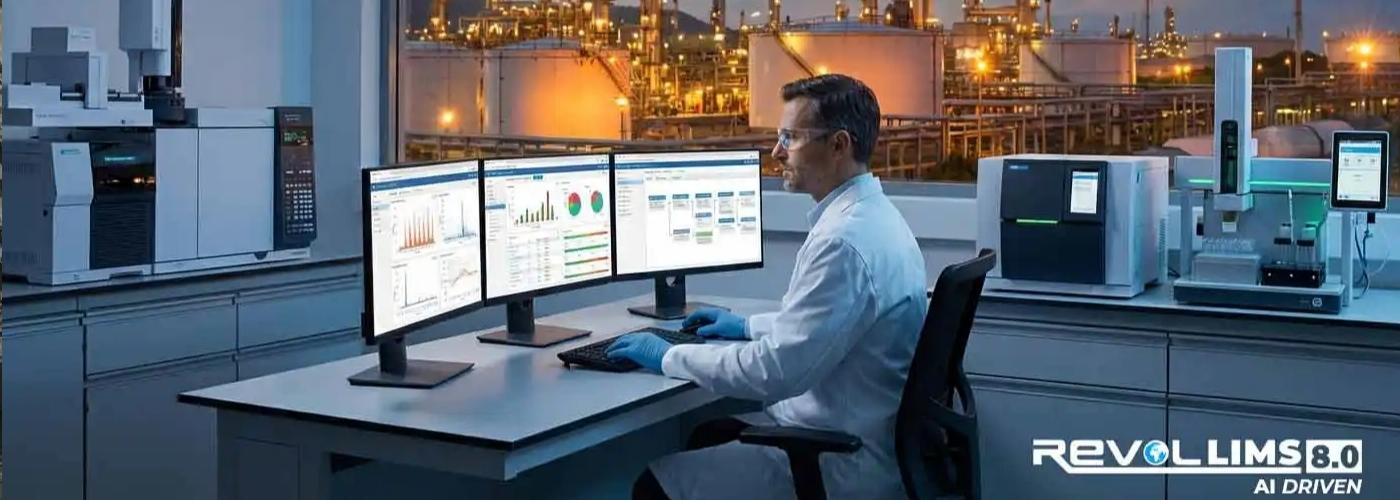
Oil & Gas Laboratories Face Complex Multi-Grade Product Specification Management, Pipeline Integrity Testing Demands, and Simultaneous Environmental Compliance Obligations — Across Upstream, Midstream, and Downstream Operations.
Revol LIMS delivers automated petroleum product specification management, pipeline integrity and corrosion testing workflows, environmental regulatory reporting, and built-in ISO 17025, ASTM, API, IP Method, and EPA compliance — in one platform built for upstream, midstream, and downstream laboratory operations.
Solving the Unique Challenges of the Oil and Gas Industry
Oil and gas testing laboratories serve one of the world’s most technically demanding and regulated industrial sectors. Whether your lab supports a refinery, a petrochemical plant, a pipeline operator, or an exploration company, three challenges define the environment:
- Multi-Grade Petroleum Product Specification Management: A refinery laboratory may test dozens of petroleum product grades — diesel, jet fuel, gasoline, fuel oil, lubricants, LPG, and speciality products — each with distinct specification limits defined by API standards, customer contracts, and regulatory fuel quality mandates. Managing grade-specific specifications, generating compliant Certificates of Analysis, and preventing off-spec product release at scale cannot be done reliably through manual systems.
- Environmental Monitoring & Regulatory Compliance: Oil and gas operations generate environmental monitoring obligations spanning stack emissions, produced water, cooling water, soil and groundwater monitoring, and chemical inventory reporting under EPA, REACH, SARA, and regional environmental regulations. Managing these across multiple production facilities and regulatory jurisdictions manually creates version-control, reporting-deadline, and documentation-integrity risks.
Enterprise Features for Modern Oil and Gas Laboratories
1. Petroleum Product Testing & Specification Management
Revol LIMS maintains configurable product specification libraries per petroleum product grade, customer contract, and regulatory fuel quality standard — automatically checking every result against the applicable specification and generating Certificates of Analysis directly from released data.
- Configurable specification libraries per petroleum product grade, API standard, and customer specification.
- Automated result-to-specification check with OOS flag generation on exceedance.
- CoA generation directly from verified analytical data using customer-specific templates.
- Multi-grade batch management: raw crude, intermediate streams, and finished product grades.
- Product blending QC: pre-blend, post-blend, and finished blend specification verification.
- Grade-specific hold, release, and reclassification batch disposition workflows.
2. Environmental Monitoring & Regulatory Reporting
Revol LIMS manages environmental monitoring programmes across oil and gas production facilities from stack emissions and produced water through soil and groundwater monitoring — with automated regulatory reporting package generation.
- Stack emissions, produced water, cooling water, and groundwater monitoring workflows.
- EPA method-aligned analytical workflows for air, water, and soil matrices.
- SARA Title III (Tier II) threshold tracking with automated reporting deadline alerts.
- REACH SVHC substance register and restriction monitoring for chemical inventory.
- Discharge permit compliance tracking with configurable limit exceedance alerts.
- Regulatory reporting package generation for EPA, EA, and international bodies.
3. Exploration Sample & Field Sample Management
Revol LIMS manages upstream exploration and production samples from wellsite collection through laboratory receipt, reservoir characterisation analysis, and long-term core and fluid archive management.
- Wellsite sample manifest and chain-of-custody from collection to laboratory receipt.
- Reservoir fluid PVT analysis sample tracking and result management.
- Core sample and sidewall core inventory with depth, well, and reservoir metadata.
- SCAL (Special Core Analysis) sample workflow management.
- Formation water analysis and produced water characterisation workflows.
- Long-term geological sample archive and retrieval management.
What’s Holding Oil & Gas Labs Back
Across refinery QC labs, pipeline operator testing facilities, and upstream exploration laboratories, the same operational and compliance bottlenecks consistently limit efficiency and create regulatory risk:
Built for Global Oil and Gas Compliance Standards
Oil and gas testing laboratories carry compliance obligations spanning petroleum product quality standards, pipeline integrity regulations, environmental discharge mandates, and international chemical substance law. Revol LIMS ensures continuous regulatory readiness across every applicable framework.
| Standard / Regulation |
How Revol LIMS Supports Compliance |
| ISO/IEC 17025:2017 |
How Revol LIMS Supports Compliance Method management, measurement uncertainty, equipment calibration, proficiency testing, and document control for oil and gas testing laboratories seeking or maintaining ISO 17025 accreditation for petroleum and environmental testing. |
| ASTM International (D-Series Methods) |
Configurable method library aligned to ASTM D-series petroleum testing methods: flash point (D92/D93), viscosity (D445/D7279), density (D1298), distillation (D86/D2892), sulphur content (D4294/D5453), and API gravity (D287). |
| API (American Petroleum Institute) |
Configurable product specification libraries aligned to API product standards for petroleum products, lubricants, refinery streams, and natural gas liquids, with automated batch disposition against API-compliant specification limits. |
| IP (Energy Institute) Methods |
Method library support for IP petroleum testing methods used in UK and international petroleum product quality testing and certification programmes. |
| ISO 15156 / NACE MR0175 |
H2S partial pressure testing, pipeline steel compatibility assessment documentation, and material qualification test data management aligned to ISO 15156 and NACE MR0175 for sour service applications. |
| EPA Methods (40 CFR) |
Environmental monitoring workflows for produced water, stack emissions, cooling water, and soil/groundwater testing aligned to EPA analytical methods, with regulatory reporting package generation for discharge permits and air permits. |
| REACH (EU No 1907/2006) |
SVHC substance tracking, restriction monitoring, and chemical safety report documentation for EU REACH registration obligations on chemical substances used in or produced by oil and gas operations. |
| SARA Title III / TSCA (US) |
Hazardous chemical inventory tracking with configurable SARA 312/313 threshold-based reporting alerts and toxic substance documentation for TSCA compliance submissions. |
| ALCOA+ Data Integrity |
All analytical data is Attributable, Legible, Contemporaneous, Original, and Accurate — with tamper-evident audit trails satisfying regulatory inspectors and accreditation body assessors across all applicable frameworks. |
Key Revol LIMS Capabilities for Oil and Gas Labs
Manages multi-grade product specifications and generates customer-specific CoAs directly from verified analytical data with automated specification compliance checking.
- Grade-specific specification libraries (API, customer, regulatory).
- Automated OOS flag generation on specification exceedance.
- CoA generation from verified data with customer-specific templates.
- Multi-grade batch management: crude, streams, finished products.
- Product blending QC verification workflows.
- Hold / Release / Reclassify batch disposition tracking.
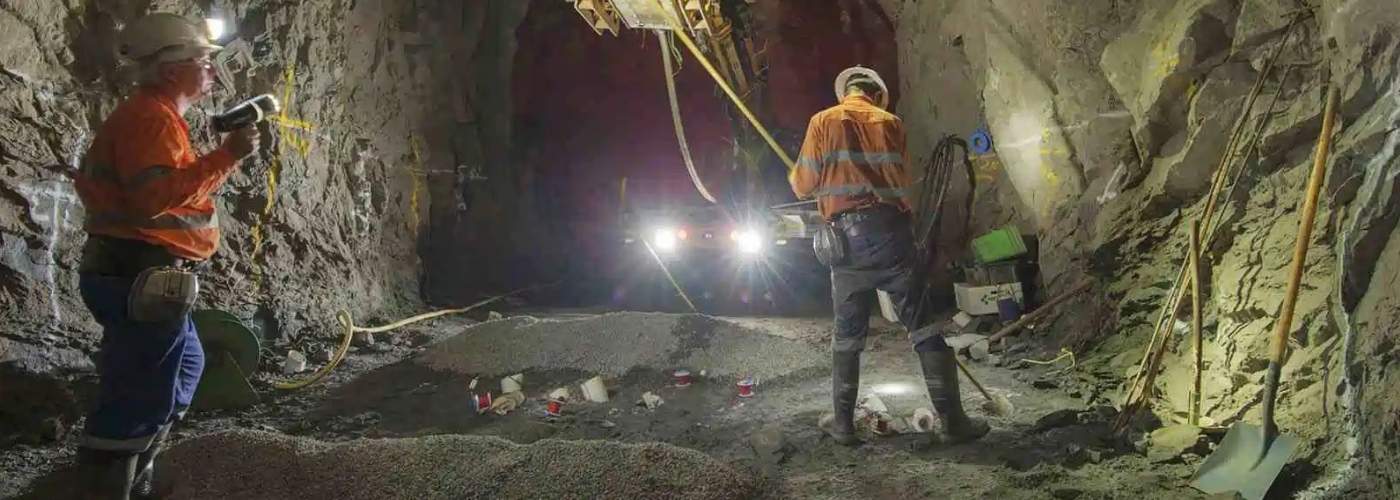
Manages mine site environmental monitoring programmes with automated regulatory reporting and discharge permit compliance tracking across all monitoring points.
- Stack emissions, produced water, cooling water, and groundwater workflows
- EPA method-aligned analytical workflows per matrix
- SARA 312/313 threshold tracking and deadline alerts
- REACH SVHC substance register and restriction monitoring
- Discharge permit compliance tracking with limit alerts
- Regulatory reporting package generation (EPA, EA, international)
Tracks petroleum product, pipeline, and upstream exploration samples from field collection through laboratory receipt, analysis, and long-term archive.
- Field sample manifest and electronic chain-of-custody.
- Wellsite and upstream exploration sample management.
- Core and reservoir fluid sample inventory.
- Third-party laboratory forwarding with result reconciliation.
- Long-term sample archive and retrieval management.
- GPS-tagged field sampling event records.
Connects directly to the full range of petroleum and environmental analytical instruments, transferring results automatically.
- GC-FID/GC-MS (hydrocarbons, BTX, sulphur compounds)
- ICP-OES/ICP-MS (trace metals, catalyst poisons)
- XRF (sulphur content, metals in oils)
- Viscometers, densitometers, flash-point testers
- Karl Fischer titrators (water content)
- Portable and field instrument data import
Surfaces insights that protect product quality, pipeline integrity, and environmental compliance across oil and gas operations.
- Petroleum product specification exceedance trend monitoring
- Environmental discharge permit approach-to-limit alerts.
- Turnaround time analytics by product, matrix, and production unit.
- Supplier crude quality trend analysis.
- Regulatory reporting deadline countdown dashboards.
The Revol Difference: Why We Outpace Legacy Vendors
| Feature |
Revol LIMS |
Legacy Vendors |
| CoA Generation |
Automated — grade-specific templates generated directly from verified data in one click across all product grades. |
Hours of manual assembly per grade from instrument exports, specification spreadsheets, and multiple systems. |
| Environmental Reporting |
Automated — regulatory report packages with SARA threshold tracking and discharge permit limit monitoring. |
Manual compilation from multiple facility systems; deadline management in spreadsheets with no systematic alerts. |
| Field Sample CoC |
Electronic — chain-of-custody from wellsite to laboratory with GPS metadata and transport condition records. |
Paper manifests with manual receipt logs; traceability gaps surface in regulatory challenges and disputes. |
| Instrument Integration |
Plug-and-play — APIs for GC, ICP, XRF, viscometers, and field instruments. No middleware required. |
Manual CSV uploads or third-party middleware for most instrument types |
| Implementation Time |
3–4 Months — with domain expertise in petroleum and environmental testing laboratory environments. |
9–12 Months with heavy custom configuration and onsite consulting requirements. |
Keep Your Oil & Gas Laboratory Compliant, Efficient, and Release-Ready
Revol LIMS gives oil and gas testing laboratories the infrastructure to manage multi-grade petroleum specifications, monitor pipeline integrity trends proactively, satisfy environmental compliance obligations across multiple facilities, and remain continuously audit-ready — from upstream exploration to downstream product release.
“Ready to modernise your oil and gas laboratory operations? Book your FREE no-obligation demo today.”
Frequently Asked Questions
Can Revol LIMS manage multi-grade petroleum product specifications and generate CoAs automatically?
Yes. Revol LIMS maintains configurable product specification libraries per petroleum product grade, API standard, and customer contract. Results are automatically checked against applicable specifications, OOS conditions are flagged immediately, and Certificates of Analysis are generated directly from released verified data using customer-specific templates.
Which ASTM and API methods does Revol LIMS support for petroleum testing?
Revol LIMS supports a configurable method library aligned to ASTM D-series petroleum testing methods including flash point (D92/D93), viscosity (D445/D7279), density (D1298), distillation (D86/D2892), and sulphur content (D4294/D5453), alongside API product specification standards for petroleum products, lubricants, and refinery streams.
Does Revol LIMS support EPA environmental monitoring and SARA/REACH compliance?
Yes. Revol LIMS includes environmental monitoring workflows for stack emissions, produced water, cooling water, and groundwater matrices aligned to EPA analytical methods, with SARA Title III threshold-based reporting alerts, REACH SVHC substance tracking, and regulatory reporting package generation.
Can Revol LIMS manage upstream exploration and field sample chain-of-custody?
Yes. Revol LIMS manages field and exploration sample chain-of-custody from wellsite collection through laboratory receipt with GPS-tagged sampling event records, transport manifest generation, receipt condition inspection, and core and reservoir fluid inventory management.
What deployment options are available?
Revol LIMS is available as SaaS (cloud-hosted), PaaS, and on-premise deployments, giving oil and gas laboratories the flexibility to align with their IT infrastructure, data sovereignty requirements, and operational technology integration needs across upstream, midstream, and downstream facilities.