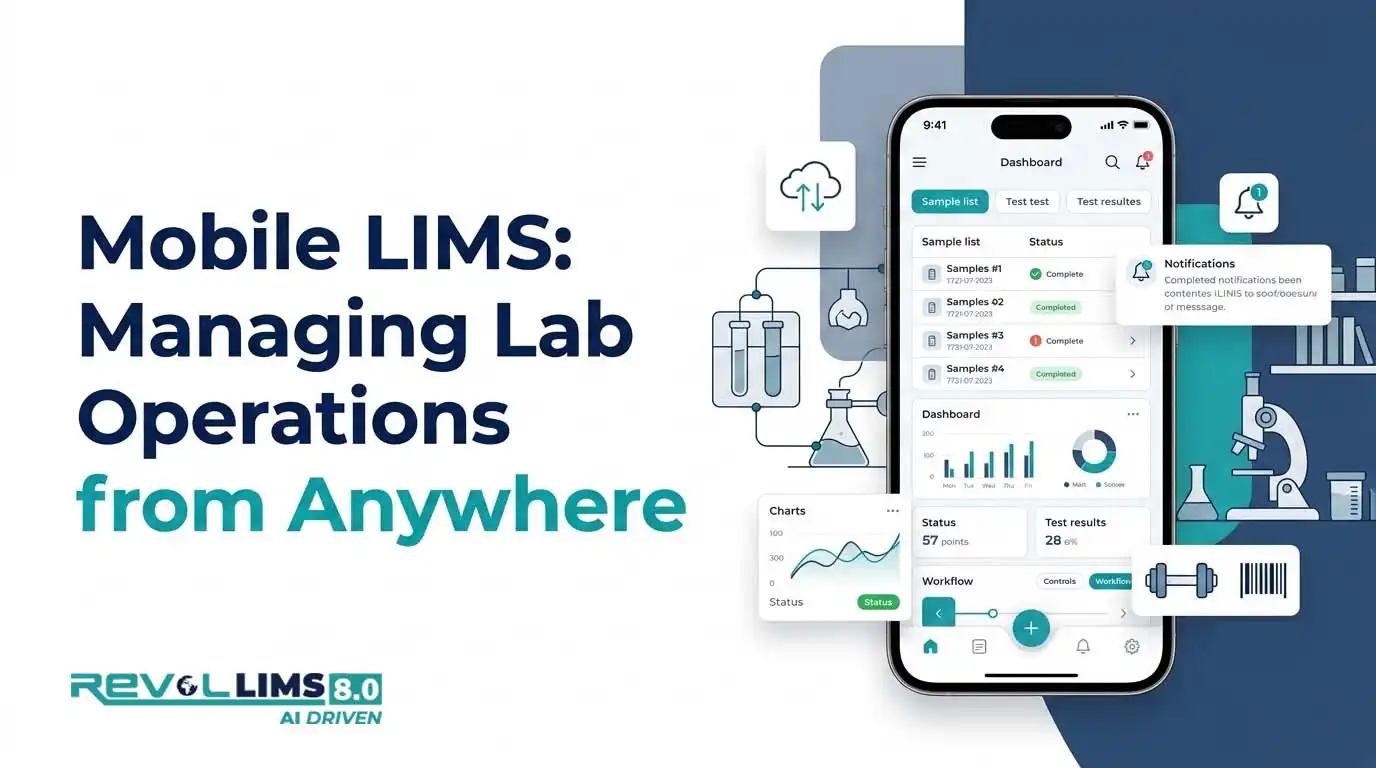
A decade ago, “lab work” meant being physically present at a bench, a workstation, or an instrument. Today, that assumption no longer holds. Laboratory managers approve batch results from a conference room. QA/QC professionals review deviations from a train platform. Scientists check instrument status from home during an off-hour alert. This shift is not a passing convenience — it is a structural change in how laboratories operate, and it is being driven by a single technology category: mobile LIMS.
A mobile laboratory information management system (LIMS) extends the core functions of your lab software — sample tracking, results review, approvals, inventory, and reporting — onto smartphones and tablets. It is quickly becoming one of the most searched and most requested capabilities among laboratories modernizing their operations in 2026.
In this article, we will unpack what mobile LIMS really means, why it is trending now, the practical use cases changing daily lab life, the measurable benefits for laboratory managers and QA/QC teams, and how to evaluate a mobile LIMS solution before you invest.
Consider a simple, everyday scenario. A QA manager at a multi-site testing lab is on the road visiting a client when a critical out-of-specification result comes in from the night shift. In a traditional setup, that result would sit untouched until she is back at her desk — potentially delaying a batch release by hours or even a full day. With a mobile LIMS, she receives an instant push notification, reviews the flagged result on her phone, checks the instrument history behind it, and either escalates it or clears it for release — all before her next meeting starts. That is the practical difference mobile LIMS makes, multiplied across every lab role, every day.
What Is Mobile LIMS ?
Mobile LIMS refers to the mobile-optimized version of a Laboratory Information Management System — accessible through a dedicated app or a responsive web interface — that allows authorized users to perform lab management tasks from a smartphone or tablet, rather than being tied to a desktop workstation inside the lab.
Unlike a traditional LIMS, which is typically accessed from a fixed lab computer, a mobile LIMS is built for laboratory operations from anywhere. This includes:
- Reviewing and approving test results remotely
- Tracking sample status and chain of custody in real time
- Receiving instant alerts for out-of-specification (OOS) results
- Scanning barcodes or QR codes to log or locate samples
- Monitoring instrument calibration and maintenance schedules
- Accessing dashboards, KPIs, and compliance reports on the go
In short, mobile LIMS software takes the same secure, compliant, and structured workflows of a full LIMS platform and makes them available wherever the user happens to be — without compromising data integrity or audit trails.
It helps to see the difference side by side. The table below outlines how a traditional, desktop-only LIMS compares to a mobile-enabled LIMS across common laboratory activities.
| Activity | Traditional LIMS | Mobile LIMS |
|---|---|---|
| Result approval | Must be at a desktop workstation | Approve from any location, any time |
| OOS/deviation alerts | Seen only when logged in | Instant push notification |
| Sample logging | Manual entry, often after the fact | Real-time barcode/QR capture at the source |
| Multi-site oversight | Requires separate site visits or reports | Live dashboard across all locations |
| Audit trail | Captured only for desktop actions | Full parity for mobile and desktop actions |
Why Mobile LIMS Is a Growing Trend in 2026
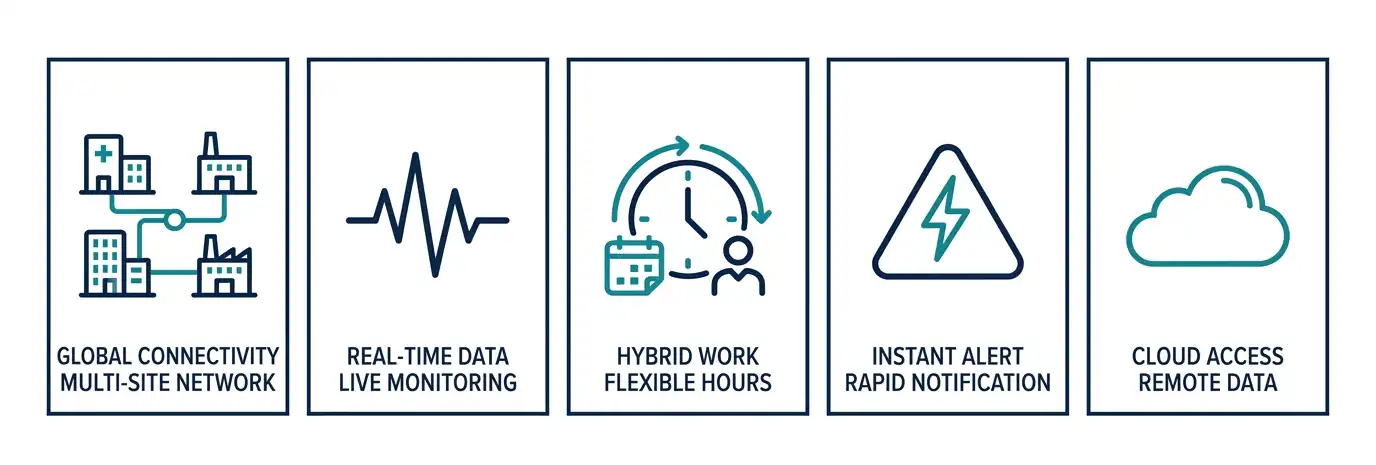
Search interest in “mobile LIMS,” “remote lab access,” and “laboratory management app” has climbed steadily over the past two years, and it is not hard to see why. Laboratories are under more pressure than ever to move faster, prove compliance instantly, and operate across multiple locations — all while managing lean teams. Several forces are converging at once to make mobile LIMS a priority rather than a luxury:
1. Distributed and Multi-Site Lab Operations
Many laboratories today are no longer single-building operations. Contract research organizations, testing networks, and multi-site manufacturers need laboratory managers to have visibility into more than one location — often at the same time. Mobile LIMS makes this possible without requiring a physical presence at every site.
2. The Expectation of Real-Time Data
Business leaders, auditors, and clients increasingly expect real-time lab data rather than end-of-day or end-of-week reporting. A mobile-first LIMS meets that expectation by pushing live updates directly to a manager's phone the moment a result is logged.
3. Workforce Flexibility
Laboratory staff, like most professionals, now expect some degree of flexibility. Mobile LIMS supports hybrid work models for administrative and supervisory lab roles — approvals, audits, and reporting — while sample handling remains safely in the physical lab.
4. Faster Response to Critical Events
An out-of-specification result, an instrument failure, or a compliance deviation cannot always wait until someone is back at a desktop. Mobile alerts allow lab managers and QA professionals to respond within minutes rather than hours.
5. Rising Adoption of Cloud-Based LIMS
As more laboratories move to cloud-based LIMS platforms, mobile access becomes a natural extension. Cloud infrastructure already supports secure, remote connectivity — mobile apps simply put that infrastructure into the hands of the people who need it.
Key Features to Expect in a Mobile LIMS
Not every “mobile-friendly” LIMS offers the same depth of functionality. When evaluating a mobile LIMS solution, look for these core capabilities:
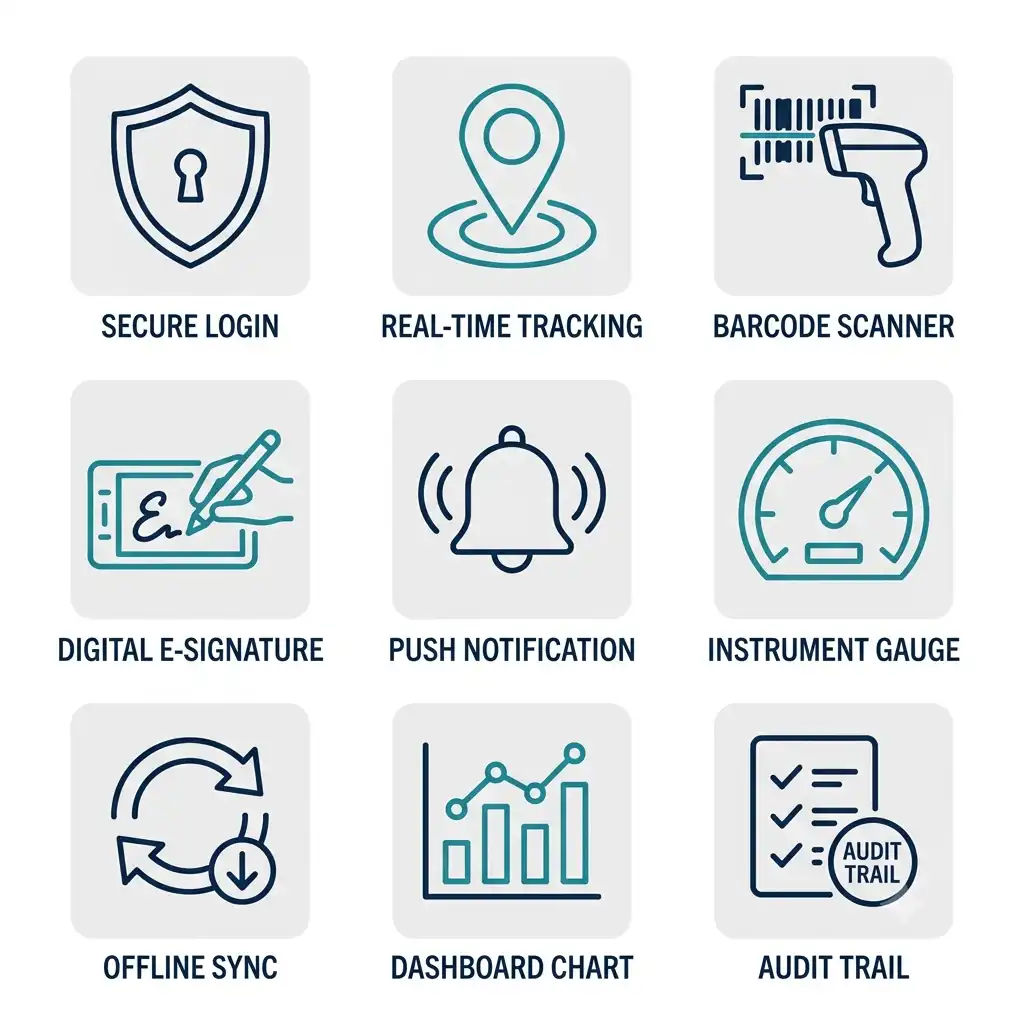
- Secure login with role-based access control and multi-factor authentication
- Real-time sample tracking and status updates
- Barcode / QR code scanning for sample identification
- Mobile-friendly approval workflows with e-signatures
- Push notifications for OOS/OOT results, deviations, and pending approvals
- Instrument calibration and maintenance alerts
- Offline data capture with automatic sync once reconnected
- Dashboard access to KPIs, turnaround times, and compliance status
- Full audit trail parity with the desktop LIMS platform
Revol LIMS brings this checklist to life in its own mobile app for iOS and Android. Lab teams can scan a barcode to identify a sample, review and approve a result with an e-signature, and get pushed straight to an OOS alert or a pending approval — even offline, since anything captured on the go syncs automatically once the connection returns. Every mobile action carries the same audit trail as its desktop counterpart, so nothing gets lost moving between the two.
Use Cases: Mobile LIMS in Action
Mobile LIMS is not a single feature — it supports a wide range of daily lab scenarios across different roles. Here is what it looks like in practice.
For Laboratory Directors and Managers
- Approving finalized test results and certificates of analysis (CoAs) while traveling between sites or attending off-site meetings
- Monitoring lab-wide KPIs — turnaround time, backlog, and pass/fail rates — from a single mobile dashboard
- Receiving instant escalation alerts when a critical deviation or OOS result is logged
- Reviewing staff workload and reassigning tasks remotely to prevent bottlenecks
For QA/QC Professionals
- Reviewing batch records and audit trails ahead of a scheduled inspection, even before arriving on-site
- Verifying electronic signatures and approval chains for regulatory readiness
- Tracking corrective and preventive actions (CAPAs) and their due dates on the go
- Responding quickly to compliance queries from clients or regulators without needing lab computer access
For Scientists and Lab Technicians
- Logging sample receipt and chain-of-custody details directly from the point of collection using a phone or tablet
- Scanning barcodes to confirm sample identity before testing, reducing manual entry errors
- Checking instrument calibration status before starting an analysis
- Receiving reminders for pending sample preparation steps or expiring reagents
For Multi-Site and Field Operations
- Field sample collectors (environmental, agricultural, or clinical) logging samples immediately at the collection site instead of on paper
- Regional lab managers comparing performance across multiple facilities in real time
- Remote auditors or clients viewing live lab status without needing on-site system access
Benefits of Mobile LIMS for Modern Laboratories
The shift toward mobile lab management is not just about convenience — it delivers measurable operational value across compliance, speed, and cost.
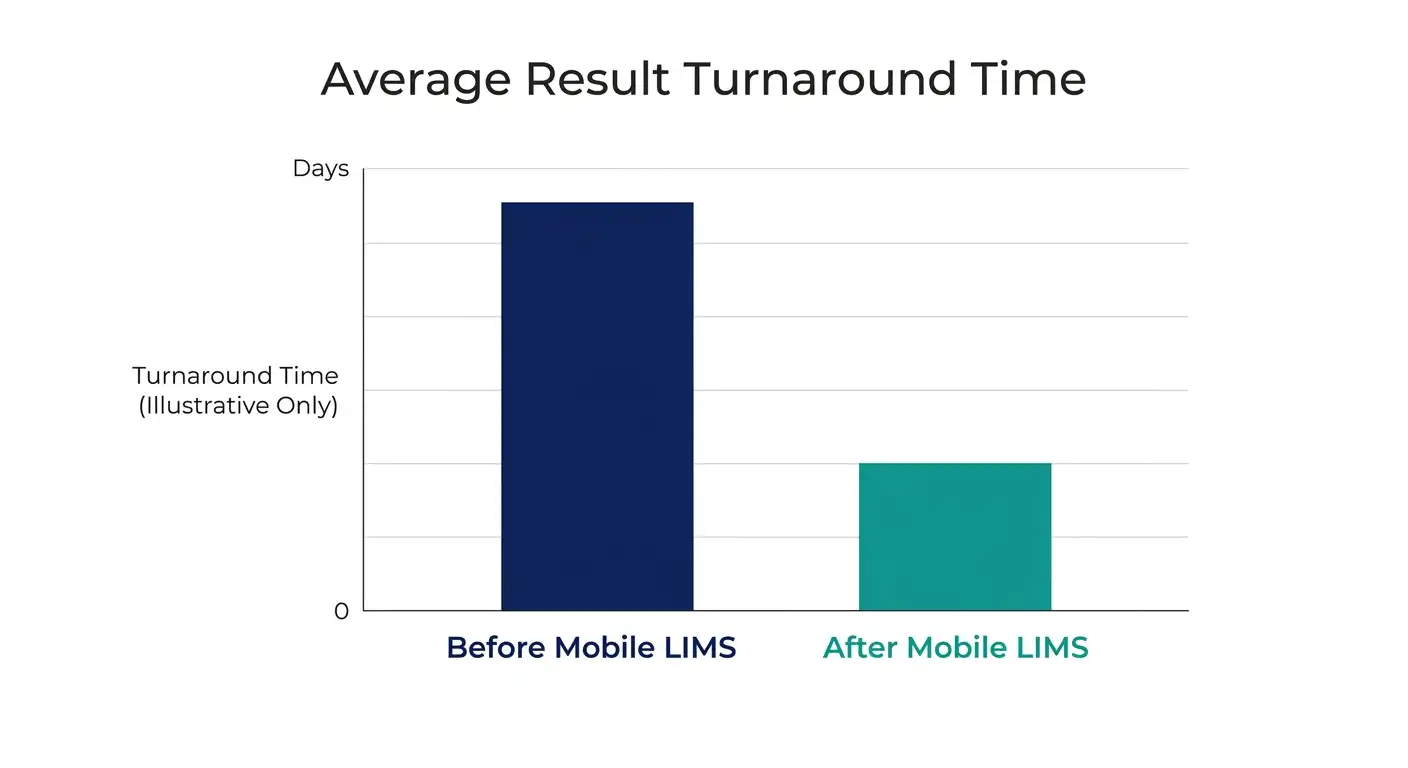
Faster Turnaround Times: When approvals and reviews no longer wait for someone to reach a desktop, results move through the pipeline faster. Mobile access can shave hours — sometimes days — off release cycles for time-sensitive samples.
Improved Data Accuracy: Barcode scanning and mobile data entry at the point of activity reduce the transcription errors that come from writing on paper and re-entering data later.
Stronger Compliance and Audit Readiness: A mobile LIMS maintains the same audit trails, e-signatures, and access controls as the desktop system, so remote actions remain fully traceable and inspection-ready.
Real-Time Visibility for Decision-Makers: Lab directors and QA leads gain live insight into lab performance, so problems are caught and addressed before they escalate into compliance risks.
Better Response to Critical Events: Instant push notifications for OOS results or instrument failures mean the right person can act within minutes, not after the fact.
Reduced Operational Costs: Fewer delays, fewer manual errors, and faster approvals translate directly into lower rework costs and better resource utilization.
Support for Multi-Site and Distributed Teams: Organizations running several labs can standardize oversight and reporting across locations without requiring managers to be physically present at each site.
Higher Staff Satisfaction: Supervisory and administrative flexibility supports better work-life balance for lab leadership, without compromising the integrity of lab operations.
The Business Case: What Mobile LIMS Means for the Bottom Line
For laboratory directors evaluating any new technology investment, the question eventually comes down to return on investment. Mobile LIMS makes a strong case on three fronts: time saved, errors avoided, and revenue protected.
Time saved is the most immediate impact. If a single approval step that used to wait four to six hours for someone to reach a desktop now takes minutes, that time compounds across dozens of samples per day, per site. Over a month, that can mean the difference between a lab that consistently meets client turnaround commitments and one that consistently apologizes for delays.
Errors avoided translate directly into cost savings. Manual transcription from paper notebooks or handwritten logs is one of the most common sources of data integrity findings during audits. Capturing sample data directly through a mobile device at the point of activity — rather than re-entering it later from memory or notes — closes that gap.
Revenue protected is the less obvious but equally important factor. A compliance failure, a missed deviation, or a delayed batch release can cost a laboratory a client relationship, not just a single project. The faster visibility that mobile LIMS provides gives lab leaders the chance to catch and correct issues before they become client-facing problems.
Challenges and Considerations When Going Mobile
Mobile LIMS adoption is not without its considerations. Laboratories should plan for the following before rolling out mobile access:
- Data security: mobile access must be protected with encryption, secure authentication, and remote-wipe capability for lost or stolen devices
- Regulatory alignment: mobile workflows should meet the same 21 CFR Part 11, ISO 17025, and GxP requirements as the primary LIMS
- Network reliability: offline data capture with automatic sync is essential for labs or field teams working in low-connectivity environments
- User training: staff need clear guidance on which actions are appropriate to perform via mobile versus requiring in-lab verification
- Device management: IT and QA teams should define policies for approved devices, especially in regulated environments
None of these challenges should discourage adoption — they simply highlight the importance of choosing a mobile LIMS platform built with compliance and security as a foundation, not an afterthought.
How to Choose the Right Mobile LIMS Solution
If you are evaluating mobile LIMS software for your laboratory, use this checklist to guide your decision:
- Does it offer full audit trail parity between mobile and desktop actions?
- Is role-based access control enforced on mobile the same way it is on desktop?
- Can it support offline data capture with reliable sync?
- Does it integrate with your existing instruments, ERP, and reporting tools?
- Is it compliant with ISO 17025, 21 CFR Part 11, GLP, or other standards relevant to your industry?
- Does the vendor provide onboarding and training support for mobile adoption?
- Can permissions be customized by role — for example, limiting mobile approvals to senior QA staff?
- Is the mobile experience genuinely built for lab workflows, not just a scaled-down desktop screen?
The Future of Mobile Lab Management
As laboratories continue to digitize, mobile access is moving from a “nice-to-have” to a baseline expectation — much like cloud hosting did a few years ago. The next wave will likely bring deeper integration between mobile LIMS, AI-driven alerts, and predictive analytics, allowing lab managers not just to see what happened, but to anticipate what is likely to happen next — all from a device in their pocket.
Laboratories that adopt mobile-first lab management now are positioning themselves to respond faster, maintain stronger compliance, and support a more flexible, resilient workforce.
Frequently Asked Questions About Mobile LIMS
Is mobile LIMS secure enough for regulated laboratories?
Yes, provided the platform is built for it. A properly designed mobile LIMS uses encrypted connections, multi-factor authentication, and role-based permissions, and it maintains the same audit trail standards required under 21 CFR Part 11 and ISO 17025. The security level should match — not fall short of — the desktop system.
Can mobile LIMS work without an internet connection?
Many mobile LIMS platforms support offline data capture. Actions like sample logging or barcode scanning can be performed without connectivity, with the data automatically syncing once the device reconnects to the network.
Does mobile LIMS replace the need for a desktop LIMS?
No. Mobile LIMS is designed to extend and complement the desktop system, not replace it. Complex data review, method setup, and detailed reporting are still best handled on a larger screen, while mobile access covers approvals, alerts, and on-the-go visibility.
Which lab roles benefit most from mobile LIMS?
Laboratory directors, QA/QC managers, and multi-site supervisors see the most immediate benefit because their work involves frequent approvals, oversight, and rapid response to critical events. Scientists and technicians also benefit from faster sample logging and instrument status checks at the point of activity.
How do I know if my lab is ready for mobile LIMS?
If your team already relies on a modern, cloud-based LIMS, you are likely ready for mobile access as a natural next step. Labs still using paper records or older on-premise systems may need to modernize their core LIMS first before adding mobile capability.
Final Thoughts
Mobile LIMS is redefining what it means to “be in the lab.” For laboratory managers, QA/QC professionals, scientists, and lab directors, it offers a practical way to stay connected to critical lab operations — approvals, alerts, compliance data, and sample tracking — without being physically tied to a single location.
As the demand for speed, accuracy, and flexibility continues to grow across every industry that relies on laboratory testing, mobile LIMS is no longer a future concept. It is quickly becoming a standard part of how modern labs operate.
The laboratories that move early will not just save time — they will build a more responsive, resilient operation that is ready for whatever the next inspection, client request, or critical result throws their way. Whether you manage a single lab or a network of testing sites, the question is no longer whether to adopt mobile LIMS, but how soon you can put it to work.
Ready to Manage Your Lab from Anywhere?
Discover how Revol LIMS puts real-time sample tracking, approvals, and compliance data in the palm of your hand — without compromising security or audit readiness. Request a free demo today and see mobile lab management in action.
→ Visit revollims.com to schedule your personalized demo.
Author: Revol LIMS Team




 (1) (1).webp)