Introduction
The beauty and personal care industry is moving faster than ever. New product launches, clean-label reformulations, and global market expansion mean cosmetics laboratories are testing more products, in more formats, under more regulations, than at any point in the industry's history. At the same time, regulators in the United States, European Union, China, and across Asia-Pacific are tightening safety and documentation requirements.
For laboratory managers and QA/QC teams, this creates a familiar problem: too much data, too many spreadsheets, and too little time. Stability studies, microbial testing, raw material qualification, and finished product release all generate data that must be accurate, traceable, and audit-ready. Manage it manually, and something eventually slips through the cracks.
This is exactly the gap a purpose-built cosmetics testing LIMS is designed to close. In this guide, we will walk through what a Laboratory Information Management System (LIMS) does for cosmetics and personal care laboratories, the regulatory frameworks it needs to support, real-world use cases, and how to evaluate the right solution for your lab.
Why Cosmetics and Personal Care Labs Need a Purpose-Built LIMS
Cosmetics testing is not the same as pharmaceutical or clinical testing , even though the two fields overlap. A cosmetics testing LIMS needs to handle a wider variety of sample types, testing protocols, and regulatory frameworks than a typical generic system.
Consider the breadth of what a single personal care lab might test in one week:
- Raw materials and INCI-listed ingredients from multiple suppliers
- In-process formulation samples during R&D
- Finished goods such as creams, serums, shampoos, and color cosmetics
- Packaging compatibility and leachables studies
- Long-term and accelerated stability samples stored at different temperature and humidity conditions
- Microbial challenge tests and preservative efficacy testing (PET)
- Claims substantiation data (SPF, "hypoallergenic," "dermatologist tested")
Each of these sample types comes with its own workflow, its own specifications, and its own reporting requirements. Spreadsheets and paper logs simply were not built to manage this level of complexity. A LIMS built for cosmetics and personal care testing laboratories brings structure to this chaos, connecting every sample, test, and result inside a single, traceable system.
The Cosmetics Testing Landscape in 2026
Several forces are reshaping how cosmetics laboratories operate this year, and they all point toward the same conclusion: labs need smarter, more connected systems.
1. Stricter Global Regulation
The U.S. Modernization of Cosmetics Regulation Act (MoCRA) introduced new requirements around facility registration, product listing, adverse event reporting, and safety substantiation. The EU Cosmetic Products Regulation (EC) No 1223/2009 continues to demand detailed Product Information Files (PIFs) and Cosmetic Product Safety Reports (CPSRs). Meanwhile, China's NMPA and various ASEAN authorities maintain their own ingredient and testing requirements. Labs selling into multiple markets need a system that can manage overlapping — and sometimes conflicting — compliance obligations without duplicating work.
2. Clean Beauty and Ingredient Transparency
Consumers and retailers are demanding full ingredient transparency, "clean" formulations, and sustainability claims that can be substantiated with real data. This pushes more scrutiny onto raw material qualification and traceability.
3. Faster Product Development Cycles
Brands are launching products faster than ever to keep up with social-media-driven trends. R&D and QC labs are under pressure to turn around stability and safety data in weeks, not months, without cutting corners on quality.
4. Rising Expectations Around Data Integrity
Regulators and auditors increasingly expect electronic, time-stamped, tamper-evident records — not paper logbooks or disconnected spreadsheets prone to manual error.
5. AI and Automation Adoption
Laboratories across every industry are exploring AI-assisted data review, predictive stability modeling, and automated instrument integration to reduce manual workload and human error. Cosmetics labs are no exception.
Common Challenges Cosmetics Labs Face Without a Modern LIMS
Before looking at solutions, it helps to name the problems clearly. These are the pain points we hear most often from laboratory directors and QA/QC managers in the personal care space.
- Scattered data across spreadsheets, LIMS-lite tools, and paper logs, making it hard to get a single source of truth
- Manual stability study tracking, where pull dates are tracked in shared calendars or spreadsheets and easily missed
- Inconsistent specification management, especially when the same formulation is tested against different regional regulatory limits
- Slow, error-prone Certificate of Analysis (CoA) generation, often built by copying data into Word or Excel templates
- Limited traceability from raw material lot to finished product batch, which becomes a major liability during a recall investigation
- Disconnected instruments, requiring analysts to manually transcribe results from balances, HPLC, microbial readers, and viscometers
- Difficulty preparing for audits, since evidence is spread across multiple systems and formats
- No real-time visibility for lab managers into sample backlogs, turnaround times, or bottlenecks
Each of these issues is manageable in isolation. Together, across dozens of active projects and hundreds of samples, they create real risk — to product quality, to regulatory standing, and to the brand's reputation.
Core Use Cases: How a Cosmetics Testing LIMS Solves These Problems
Stability Testing Management
Stability testing is one of the most data-intensive workflows in a cosmetics lab. Products are stored under multiple conditions — room temperature, accelerated (40°C/75% RH), refrigerated, and freeze-thaw cycles — and pulled for testing at defined intervals over months or years.
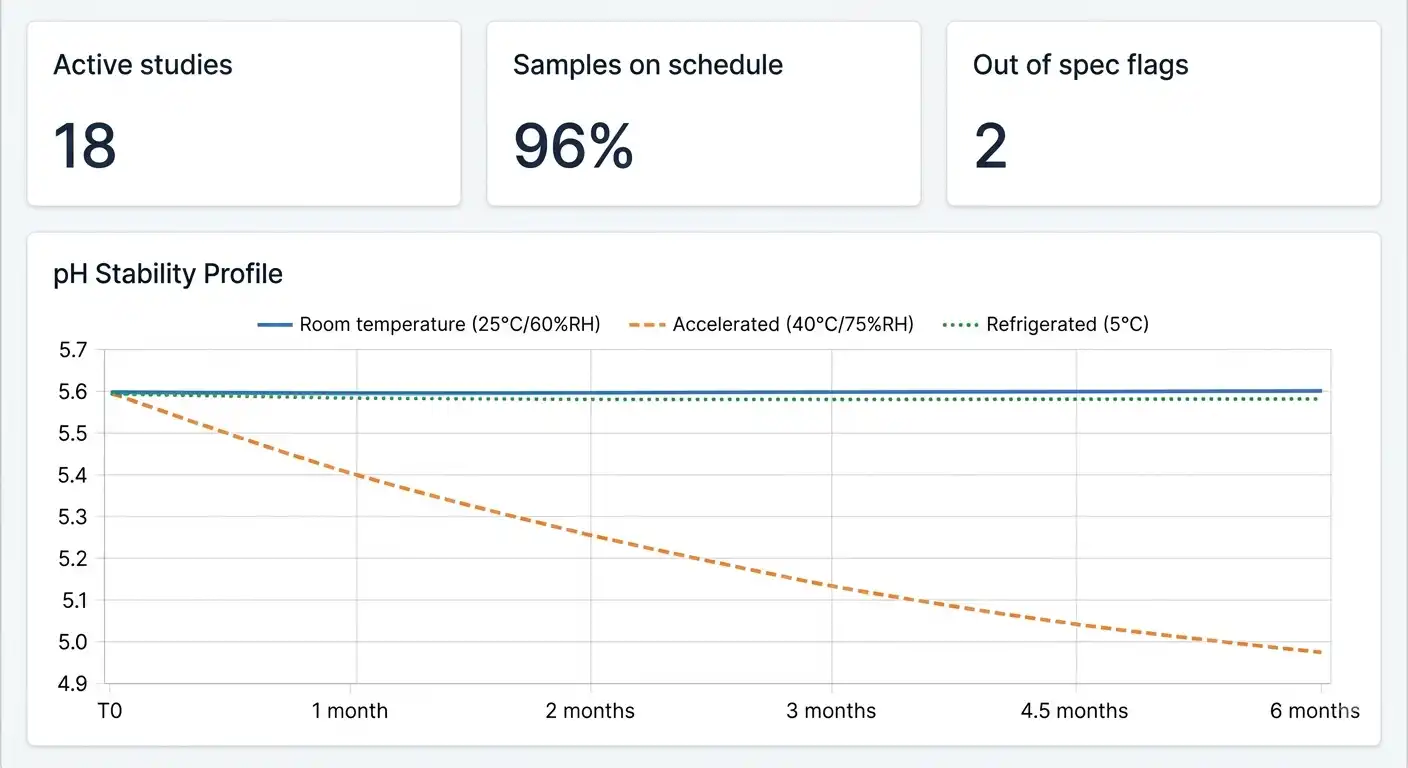
A LIMS automates this entire process. It schedules pull dates automatically, sends alerts before a sample is due, and stores every result against the correct time point and storage condition. Trending tools let scientists visualize how a formulation's pH, viscosity, color, or fragrance changes over time, making it far easier to spot a stability failure early rather than at the final data review.
Microbial and Preservative Efficacy Testing
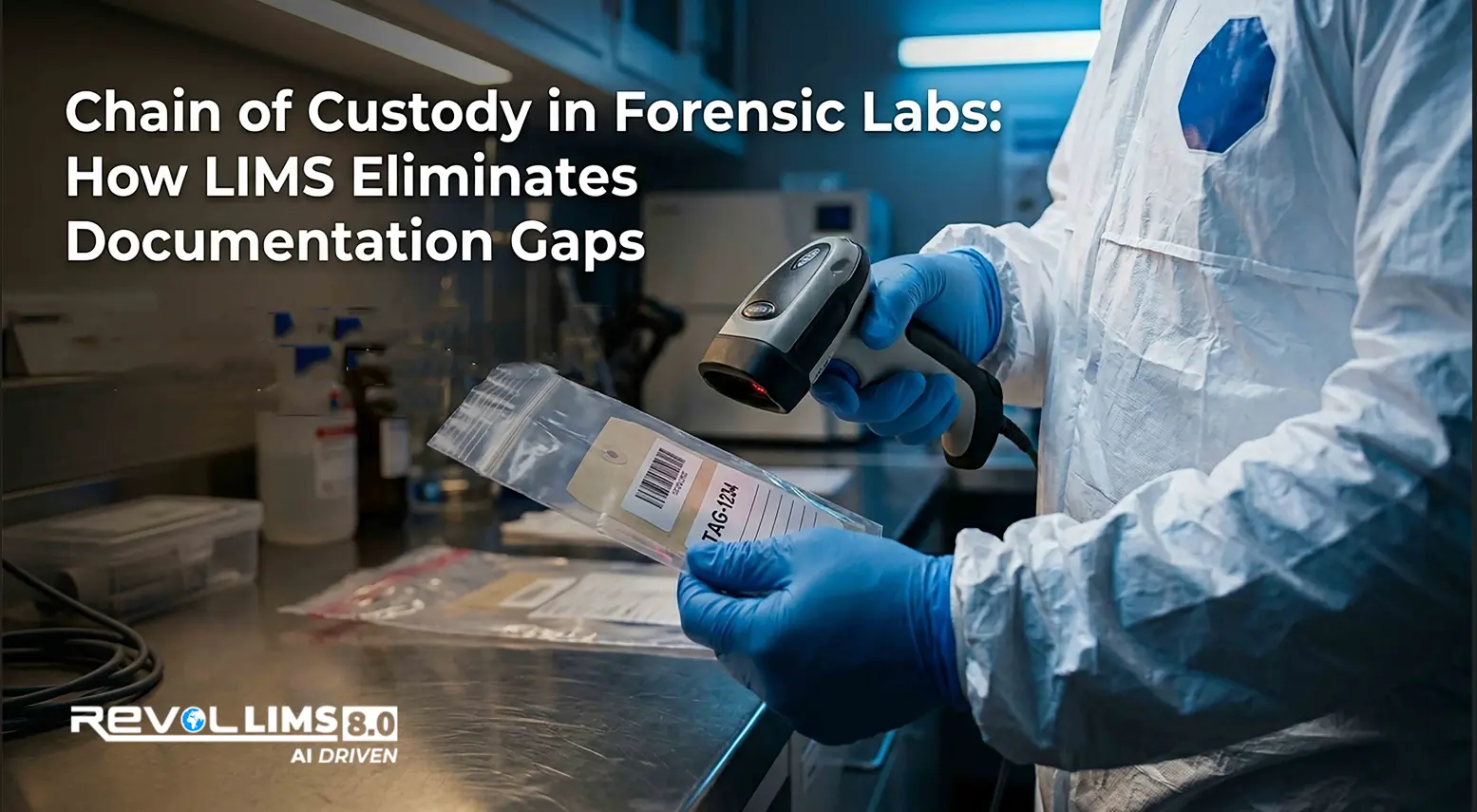
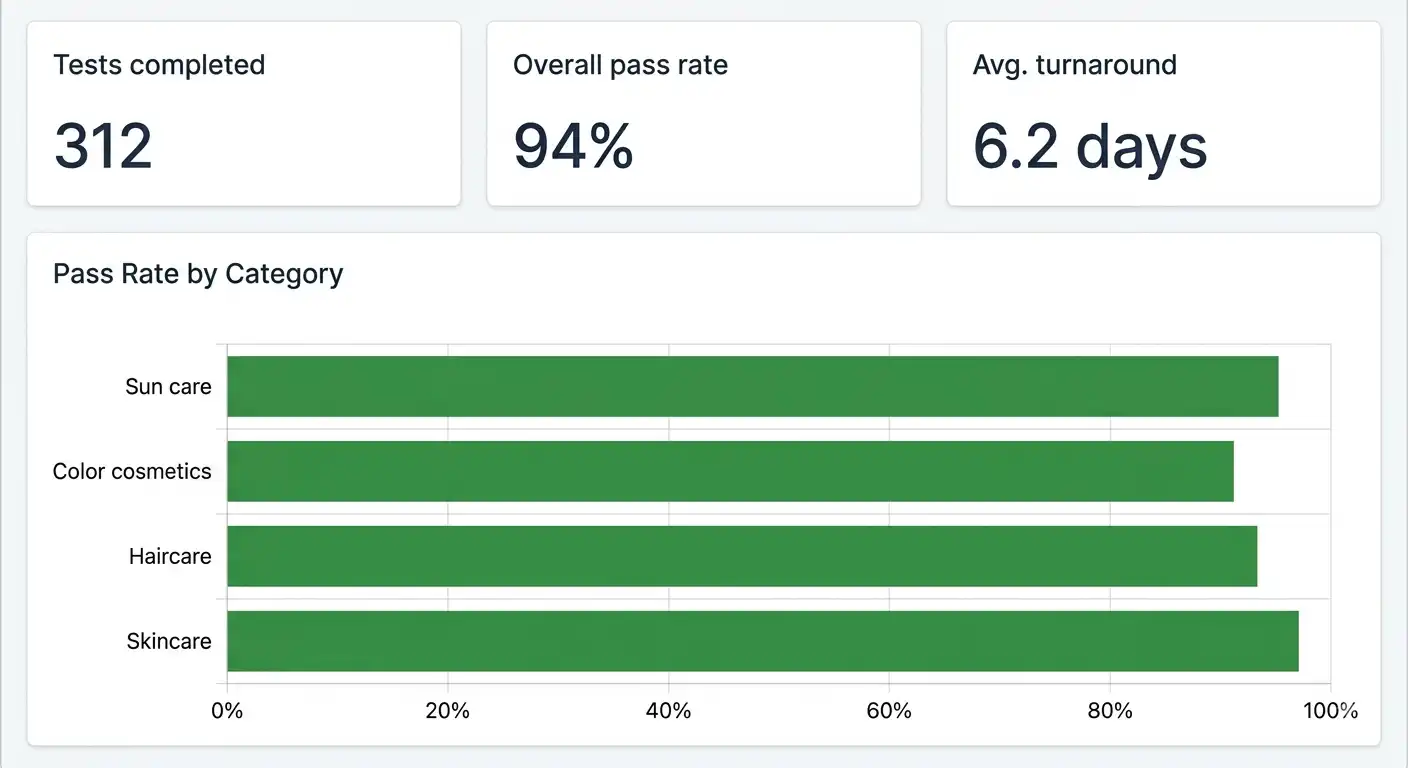
Preservative Efficacy Testing (PET), total viable count, and pathogen screening are core to cosmetic product safety. A LIMS standardizes these workflows with predefined test templates, automatic pass/fail flags against specification limits, and full chain-of-custody tracking from sample receipt through disposal.
Raw Material and Supplier Qualification
Every finished cosmetic product depends on the quality of its raw materials. A LIMS maintains a full history of supplier certificates of analysis, incoming inspection results, and approved supplier status — so QA teams can instantly answer "which supplier lot is in this batch?" during an investigation.
Formulation and R&D Data Management
R&D chemists need to compare test results across formulation iterations quickly. A LIMS centralizes this data, allowing side-by-side comparison of trial batches, so teams can make faster, evidence-based formulation decisions.
Finished Product Release and Certificate of Analysis (CoA) Generation
Once testing is complete, a LIMS can automatically generate a CoA using validated templates, pulling results directly from the system rather than requiring manual re-entry. This reduces transcription errors and cuts release time significantly.
 Generation.webp)
Claims Substantiation and Regulatory Documentation
Whether it's an SPF claim, a "fragrance-free" claim, or a dermatologist-tested claim, regulators expect documented evidence. A LIMS keeps the underlying test data linked directly to the claim, so it can be retrieved instantly if challenged.
Batch Traceability and Recall Readiness
If an adverse event or recall occurs, speed matters. A LIMS with full genealogy tracking can trace a finished product batch back to every raw material lot and every test result within minutes, rather than days of manual investigation.
Key Benefits of Implementing a Cosmetics Testing LIMS
| Benefit | Impact on the Lab |
|---|---|
| Centralized data management | One source of truth for every sample, test, and result |
| Faster turnaround times | Automated workflows reduce manual bottlenecks |
| Improved data integrity | Electronic records with full audit trails, reducing transcription errors |
| Regulatory readiness | Structured documentation supports MoCRA, EU CPR, ISO 22716, and more |
| Real-time visibility | Dashboards show sample status, backlogs, and turnaround metrics instantly |
| Stronger traceability | Full genealogy from raw material to finished product |
| Reduced compliance risk | Standardized specifications and automated flagging of out-of-spec results |
| Better resource planning | Lab managers can see workload and allocate staff and instruments efficiently |
These benefits compound over time. A lab that adopts a cosmetics testing LIMS typically sees fewer audit findings, faster product release cycles, and a measurable reduction in manual data-entry errors within the first few months of use.
Regulatory Frameworks a Cosmetics LIMS Should Support
Because personal care products are often sold in multiple regions, a capable LIMS needs to flex across several regulatory frameworks at once:
- U.S. MoCRA (Modernization of Cosmetics Regulation Act) — facility registration, product listing, safety substantiation, and adverse event recordkeeping
- EU Cosmetic Products Regulation (EC) No 1223/2009 — Product Information Files, Cosmetic Product Safety Reports, and Responsible Person documentation
- ISO 22716 (Good Manufacturing Practices for Cosmetics) — quality management and documentation standards across production and testing
- China NMPA regulations — ingredient registration and safety data requirements for products sold in China
- ASEAN Cosmetic Directive — harmonized requirements across Southeast Asian markets
A LIMS that supports configurable specification limits, region-specific reporting templates, and electronic audit trails makes it far easier for a lab to serve multiple markets from a single testing operation, rather than maintaining separate documentation systems for each region.
A Real-World Scenario: How This Plays Out in Practice
Picture a mid-sized personal care testing laboratory that runs stability, microbial, and finished product testing for several skincare and haircare brands. Before adopting a LIMS, the lab tracked stability pull dates in a shared spreadsheet, generated CoAs manually in Word, and relied on email threads to flag out-of-spec results to formulation chemists.
During a routine customer audit, the lab struggled to demonstrate a clear chain of custody from raw material lot to finished batch for a specific product. The investigation took nearly three days of manually searching through folders and spreadsheets.
After implementing a cosmetics-specific LIMS, the same lab automated its stability scheduling, connected its instruments directly to the system, and standardized CoA generation. The next time a customer requested batch traceability information, the QA manager pulled the full genealogy report in under ten minutes — directly from the system, with a complete audit trail attached.
This is the practical difference a purpose-built LIMS makes: not just faster reporting, but real confidence during an audit or investigation.
What to Look for When Choosing a Cosmetics Testing LIMS
Not every LIMS on the market is built with cosmetics and personal care testing in mind. When evaluating options, laboratory directors and QA/QC leaders should look for:
- Configurable stability study management, including automated scheduling and multi-condition tracking
- Built-in microbial and PET workflows with pass/fail specification logic
- Flexible specification management to handle multiple regional regulatory limits for the same product
- Instrument integration to eliminate manual transcription from balances, HPLC, and microbial readers
- Electronic CoA generation using validated, customizable templates
- Full batch genealogy and traceability, from raw material to finished product
- Cloud-based access, so R&D, QA, and contract clients can view relevant data securely from anywhere
- Audit-ready electronic records, with complete time-stamped audit trails
- Scalability, to support growth into new product lines, markets, or testing volumes
- AI-assisted data review, to flag anomalies and speed up final release decisions
A LIMS that checks these boxes does more than digitize your lab — it becomes the operational backbone that supports faster releases, stronger compliance, and better decision-making.
How Revol LIMS Supports Cosmetics and Personal Care Laboratories
Revol LIMS is built to handle the full complexity of cosmetics and personal care testing — from raw material intake through stability studies, microbial testing, and finished product release. With configurable workflows, automated stability scheduling, instrument integration, and audit-ready electronic records, Revol LIMS gives laboratory directors and QA/QC teams the visibility and control they need to move faster without compromising data integrity.
Whether your lab supports a single skincare brand or a global portfolio of personal care products, Revol LIMS adapts to your specifications, your regional compliance requirements, and your workflow — not the other way around.
Conclusion
Cosmetics and personal care testing laboratories are operating in a more complex environment than ever before — faster product cycles, tighter global regulations, and rising expectations for data integrity. Spreadsheets and manual tracking simply cannot keep pace. A purpose-built cosmetics testing LIMS gives laboratories the structure, traceability, and speed needed to stay compliant, audit-ready, and competitive.
If your lab is still managing stability studies, microbial testing, or batch traceability manually, now is the time to make the shift.
Ready to see what a cosmetics-specific LIMS can do for your laboratory? Request a personalized Revol LIMS demo today and discover how much time, risk, and manual work you can eliminate from your next audit cycle.
Author: Revol LIMS Team


 (1) (1).webp)