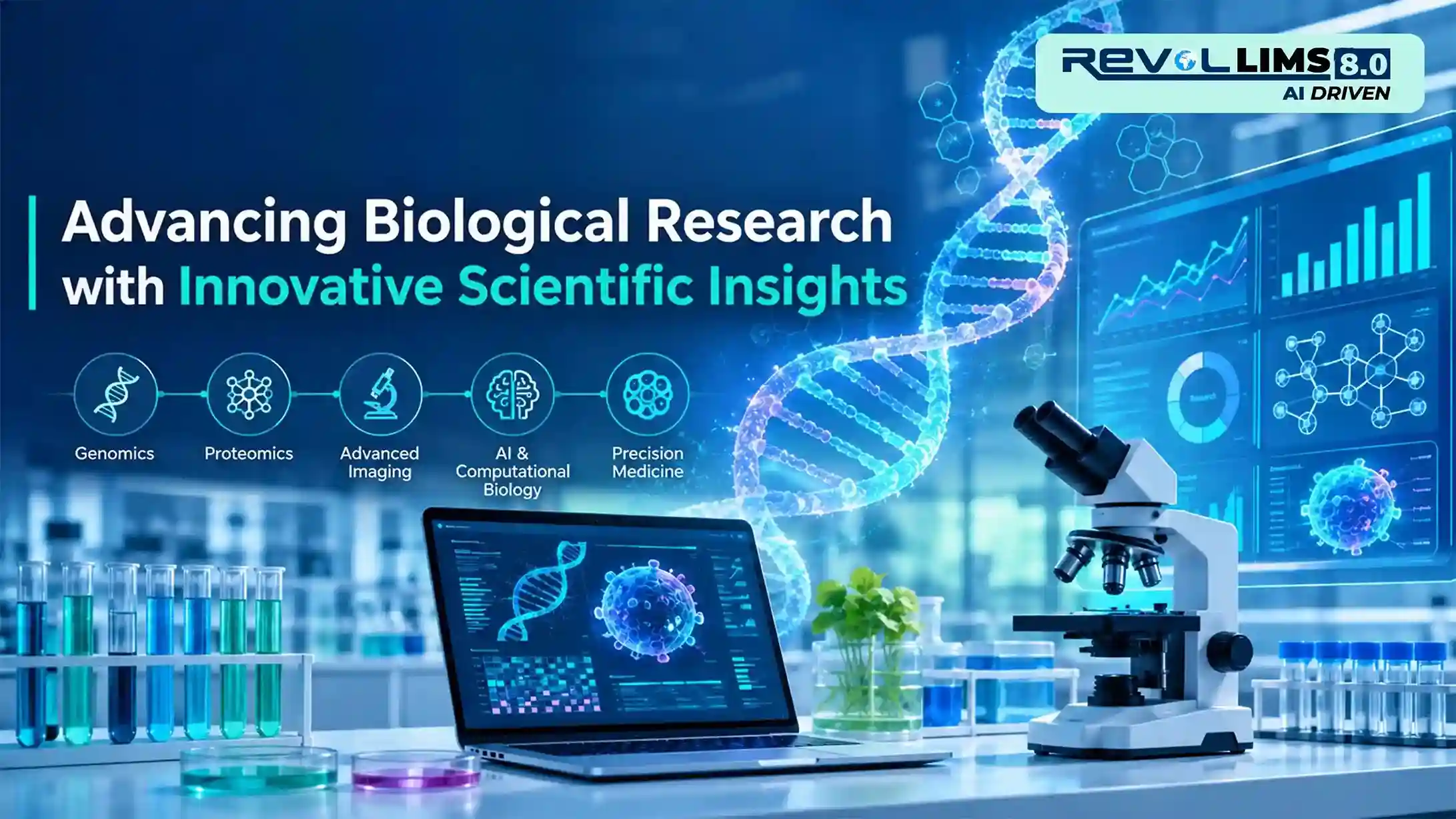
Advancing Biological Research with Innovative Scientific Insights
Key Takeaways
- Scientific insight depends on connected data, not just better instruments.
- Genomics, AI, and computational biology are making research more data-intensive than ever.
- Fragmented data and manual documentation are the biggest bottlenecks to reliable insight.
- A digital laboratory infrastructure connects samples, workflows, and results into one traceable system.
Introduction
Modern biological research is becoming increasingly data-intensive because the questions it asks — how a genome expresses itself, how a cell behaves in a 3D model, how a biomarker predicts disease — can no longer be answered from a single experiment or a single dataset. Each of these questions now depends on combining results from multiple technologies, instruments, and time points, and interpreting them together rather than in isolation.
That shift changes what "good research infrastructure" means. It's no longer enough for an experiment to run correctly — the resulting data has to be captured, labeled, and connected well enough to be combined with everything else generated around it. This piece looks at how biological research has evolved to this point, the technologies driving it, and the laboratory infrastructure that turns all of that data into scientific insight that can actually be trusted and reused.
1. The Evolution of Biological Research
Biological research has moved from single-variable, bench-scale experiments to high-throughput, data-driven studies that generate results faster than most labs can manually process them. A researcher testing one hypothesis at a time with a handful of samples has largely given way to workflows that screen thousands of samples, sequences, or compounds in parallel.
This evolution didn't happen because the scientific method changed — it happened because the tools available to test a hypothesis multiplied. Where a study once relied on one assay and one readout, it now often draws on sequencing data, imaging data, and computational modeling together. The result is more statistically powerful, more biologically complete research — but only if the lab running it can manage the volume and variety of data that comes with it.
2. Technologies Driving Biological Discovery
A small set of technologies is responsible for most of the data volume behind modern biological discovery, each contributing a different layer of biological information.
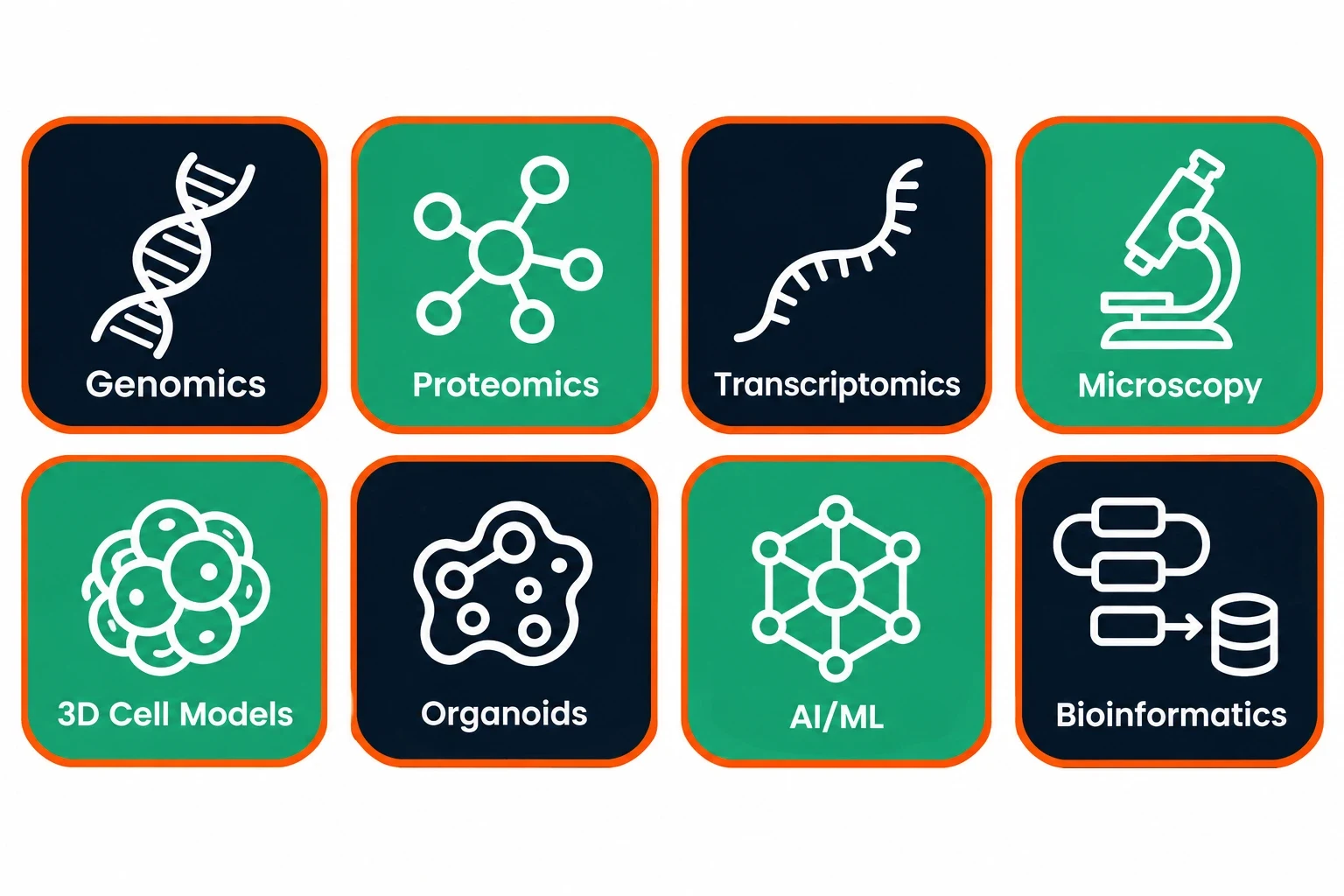
- Genomics — sequencing DNA to identify genetic variants, structural changes, and inherited or acquired mutations.
- Proteomics — profiling the full set of proteins expressed in a sample to understand function at the molecular level.
- Transcriptomics — measuring RNA expression to see which genes are active in a given condition or timepoint.
- Advanced microscopy — high-resolution and live-cell imaging that captures structural and dynamic detail beyond what standard optics allow.
- 3D cell models — culture systems that mimic tissue architecture more closely than traditional flat cell cultures.
- Organoids — lab-grown tissue structures used to model organ-level biology and disease without relying solely on animal models.
- AI and machine learning — pattern recognition across large, multi-modal datasets that would be impractical to analyze manually.
- Bioinformatics — the computational methods and pipelines that process, align, and interpret sequencing and omics data.
Individually, each technology answers a specific biological question. The discovery value increases substantially when their outputs can be layered on the same sample record, which is where most labs run into infrastructure limits rather than scientific ones — the same limits a well-built LIMS feature set is designed to remove.
3. Turning Complex Data into Scientific Insights
Raw experimental data becomes scientific insight only after computational biology and data analytics standardize it, contextualize it against other results, and surface the patterns a human reviewer would otherwise miss. A sequencing run or an imaging dataset, on its own, is just a large file — it becomes meaningful when it's compared against a reference, normalized against controls, and linked to the biological context (sample source, condition, timepoint) it came from.
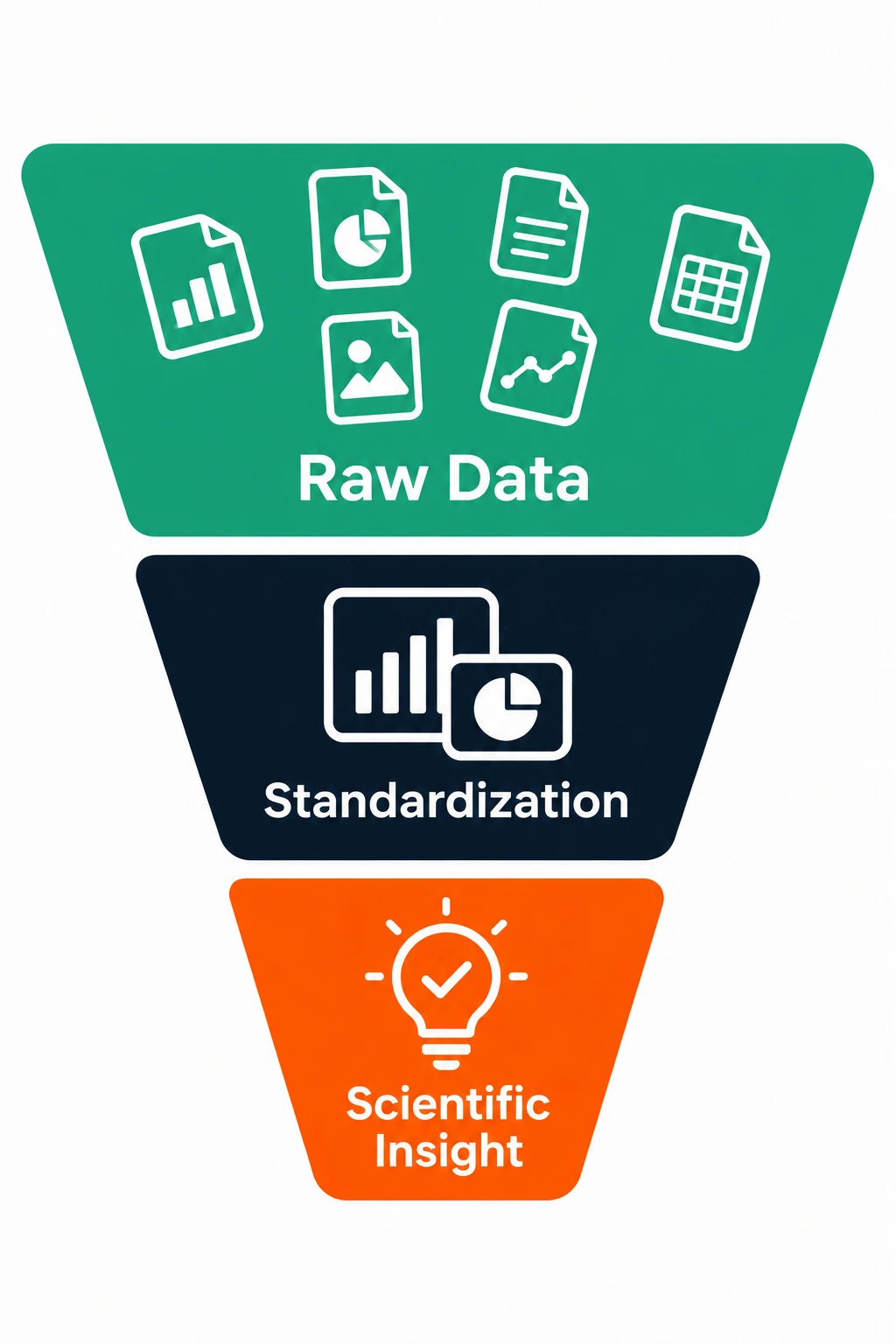
This is the step where computational biology does its heaviest lifting: aligning sequences, quantifying expression, classifying imaging features, and running statistical models across sample sets too large to review manually. The output isn't the raw data itself, but a defensible conclusion drawn from it — and that conclusion is only as reliable as the metadata and traceability behind the data it was built on.
4. Challenges Facing Modern Research Laboratories
Most research laboratories run into the same set of operational challenges as their data volume grows, regardless of which biological question they're studying.
- Increasing sample volumes — high-throughput methods generate far more samples than manual tracking systems were built to handle.
- Complex workflows — multi-step protocols spanning several instruments and teams are hard to standardize without a governing system.
- Fragmented data — results scattered across instrument software, spreadsheets, and lab notebooks are difficult to bring back together.
- Manual documentation — hand-entered records are slow to produce and prone to transcription errors.
- Reproducibility — a result is only reproducible if the exact protocol, sample, and conditions behind it are recorded and retrievable.
- Data integrity — results need to be attributable, unaltered, and time-stamped to be trusted later, in line with electronic-record expectations such as FDA 21 CFR Part 11.
- Traceability — every result should be traceable back to its originating sample, instrument, and analyst on demand, a requirement echoed in ISO/IEC 17025.
5. The Role of Digital Laboratory Infrastructure
A Laboratory Information Management System (LIMS) addresses these challenges by acting as the connective layer between samples, workflows, instruments, results, researchers, and projects — so information created at one point in the research process is available, intact, everywhere else it's needed. Rather than a single tool for one task, it functions as the infrastructure that the rest of the lab's technologies and workflows run on top of.
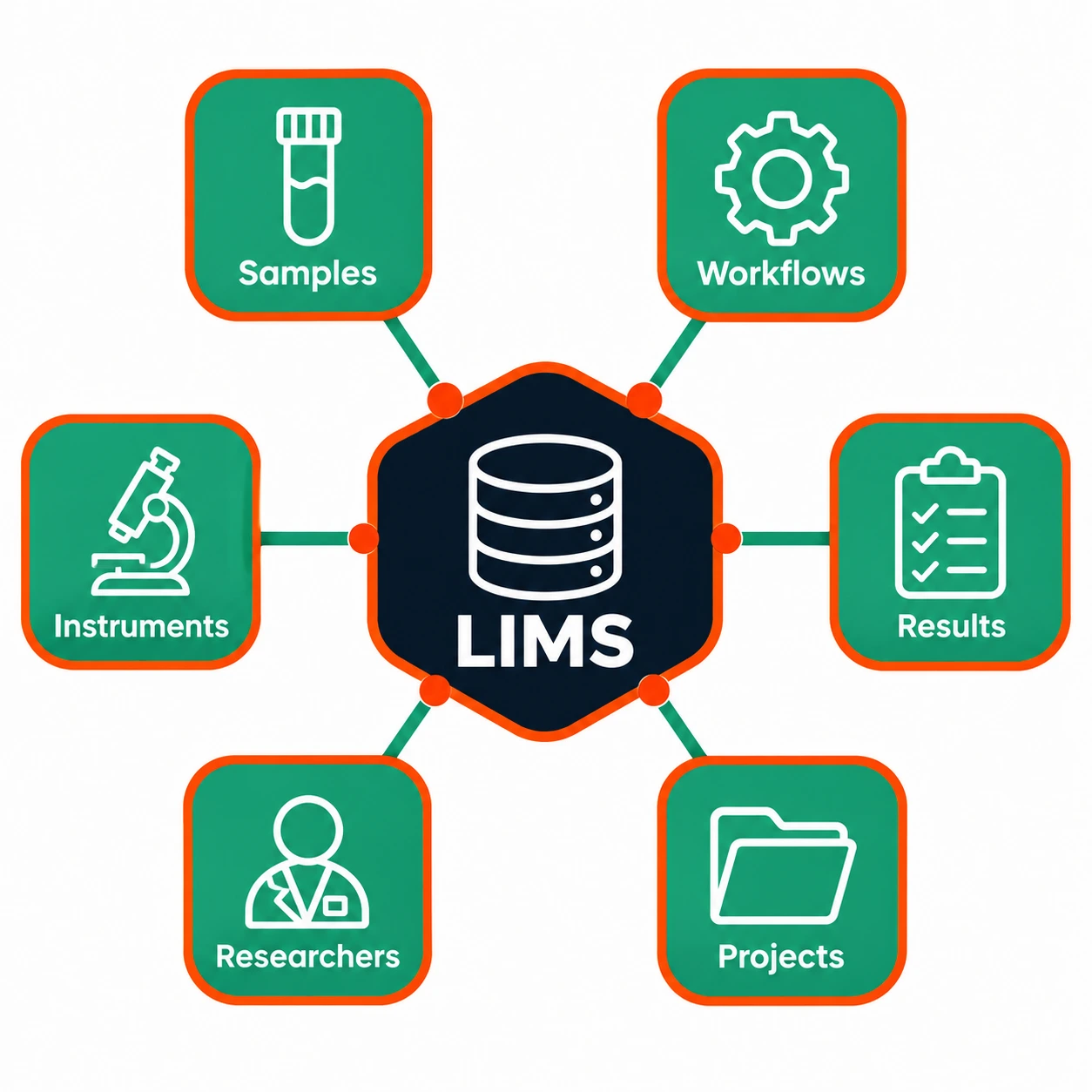
Modern LIMS Key Features Supporting Biological Research
- Unified sample and specimen registry — every sample carries a persistent identifier from intake through every downstream test.
- Multi-omics and instrument connectivity — genomic, proteomic, and imaging outputs feed directly into the sample record from connected instruments.
- Configurable workflow engine — study protocols and approval stages are built into the system so every run follows the same governed sequence.
- Full audit trail and e-signatures — every entry and approval is time-stamped and attributable, supporting data integrity requirements.
- Cross-study data comparability — standardized metadata lets results from different studies or sites be compared without manual reformatting.
- AI/ML-ready data structuring — consistently structured, sample-linked data is what makes downstream analytics usable rather than a cleanup project.
- Real-time collaboration dashboards — researchers and project leads see sample status and study progress from a shared live view.
- Regulatory-ready reporting — study reports are generated directly from the approved result set, keeping findings traceable to source data.
These features work across several connected LIMS modules, and their combined effect is what separates a lab that can answer a data-provenance question in minutes from one that has to reconstruct the answer from separate systems.
6. From Sample to Scientific Insight
In a connected research workflow, a single sample identifier moves through four stages without being re-typed at any point: intake, experimental processing, data capture, and insight reporting.
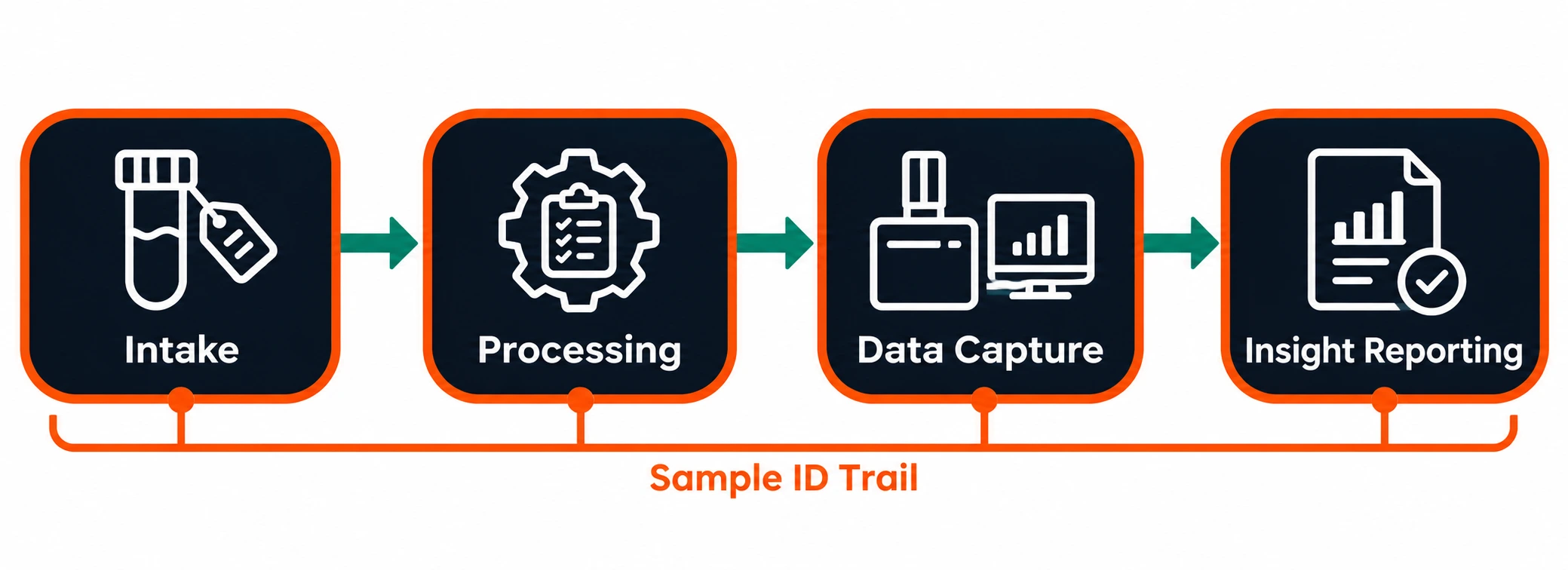
| Stage | What Happens | What Carries Forward |
|---|---|---|
| 1. Sample Intake | Specimen is registered with source, collection, and consent metadata | Persistent sample ID linked to every subsequent step |
| 2. Experimental Processing | Sample moves through defined protocol steps and storage conditions | Protocol version, handling history, storage log |
| 3. Data Capture | Instrument and assay results feed into the sample record | Raw results linked directly to sample and run metadata |
| 4. Insight Reporting | Findings are compiled and reviewed against the underlying dataset | Full traceable chain from finding back to raw sample data |
The value isn't only speed, though removing manual re-entry between stages does shorten study timelines. The larger value is that any reported finding can be traced back to its originating sample and run in a single query, instead of being pieced together by hand when a reviewer or collaborator asks for it.
7. The Future of Biological Research
The next stage of biological research is being shaped by the combination of AI, laboratory automation, more sophisticated biological models, and infrastructure that keeps all of it connected — rather than by any one of these advancing on its own. An AI model is only ever as good as the dataset it learns from, and a dataset scattered across disconnected instruments and spreadsheets gives it little to work with. Automation only removes manual work if the system receiving its output can capture that data without re-entry. And advanced models like organoids and 3D cultures only add value if their results can be compared against everything else generated in the same study.
Put together, these trends point toward labs that increasingly compete less on which single instrument they own, and more on how well their generated data flows between technologies, teams, and analyses.
Conclusion
Scientific innovation depends not only on advanced experiments but also on the ability to capture, organize, trace, analyze, and reuse scientific data effectively. A lab can run the most sophisticated genomics, imaging, or organoid experiment available, and still lose the value of that work if the resulting data can't be connected, retrieved, or trusted later — the practical gap between raw experimentation and the measurable LIMS benefits a connected infrastructure delivers.
8. Frequently Asked Questions
Why is biological research becoming more data-intensive?
Because modern research questions rely on combining outputs from multiple technologies — genomics, imaging, proteomics — rather than a single assay, which multiplies the volume and variety of data each study produces.
What role does a LIMS play in biological research?
A LIMS connects samples, instruments, workflows, and results into one traceable system, so data generated at one stage of a study is automatically available and intact at every later stage.
What's the biggest challenge labs face as sample volumes grow?
Fragmented data and manual documentation are typically the biggest bottlenecks — once results live in separate instrument software, spreadsheets, and notebooks, no single person can reliably piece the full picture back together as volume climbs.
How does computational biology turn raw data into scientific insight?
It standardizes and contextualizes raw results — aligning sequences, normalizing against controls, and running statistical models — so a conclusion, not just a data file, comes out the other end.
Does AI replace the need for good laboratory data infrastructure?
No — AI models depend on it. Structured, sample-linked, traceable data is what makes an AI or machine learning model usable; without that foundation, automation and AI have little reliable data to work from.
See Connected Research Data in Action
Explore how a unified LIMS links sample intake, experimental data, and reporting for life science and biotechnology research teams.
Request a Live Demo →CONTINUE READING
- Life Science LIMS
- Precision Medicine Starts in the Lab: How LIMS Supports NGS, Genomics, and Biomarker Workflows
- LIMS for Contract Research Organizations
- Clinical Diagnostics LIMS: Sample Integrity Guide
Author: Revol Team · marketing@revollims.com · www.revollims.com



 (1) (1).webp)
.webp)