Introduction
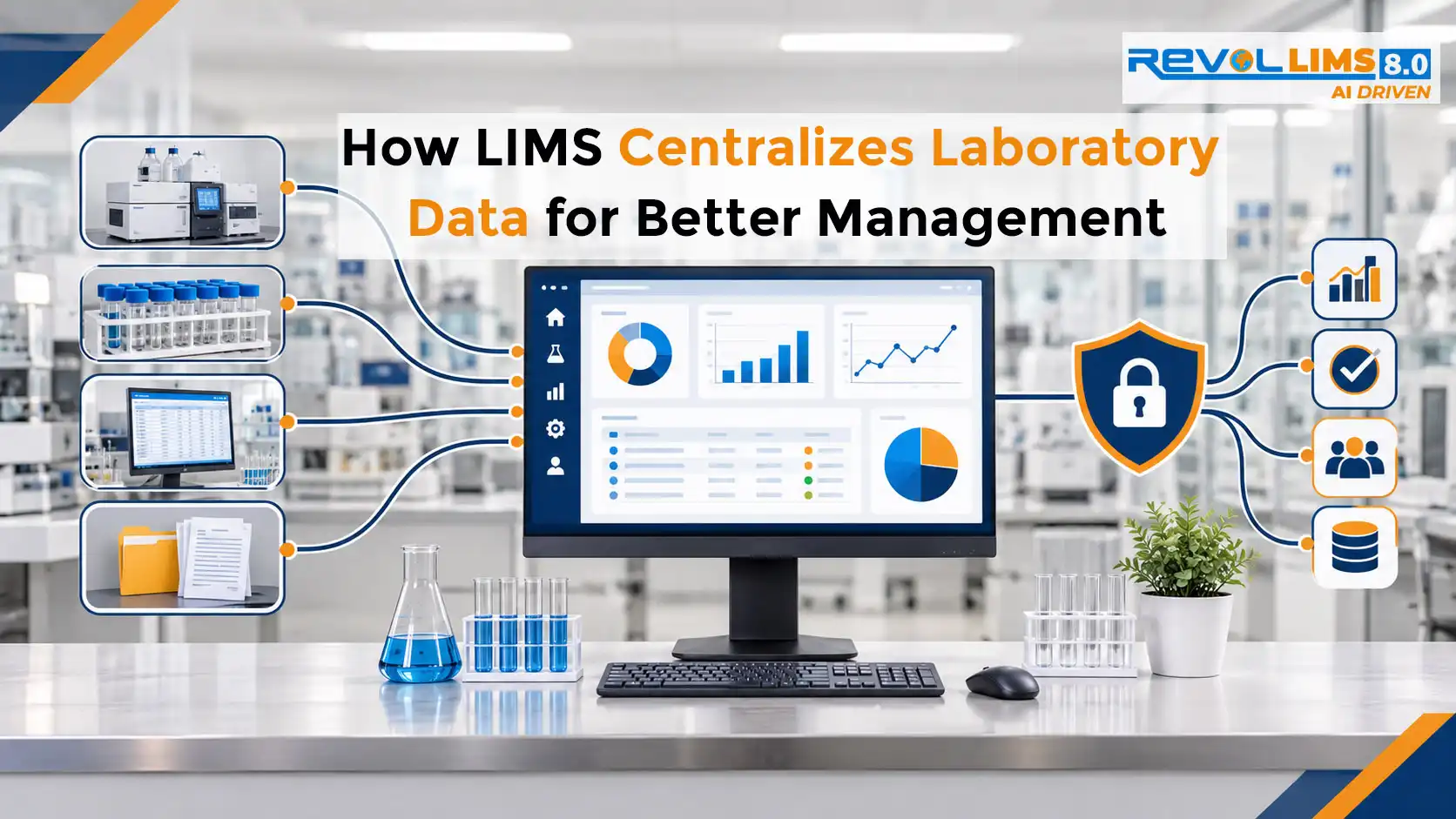
A laboratory information management system (LIMS) centralizes laboratory data by storing samples, test results, instrument outputs, reagents, and quality records in one governed database. Instead of searching spreadsheets, paper notebooks, and standalone instruments, staff work from a single, access-controlled source with consistent definitions, audit trails, and traceable records.
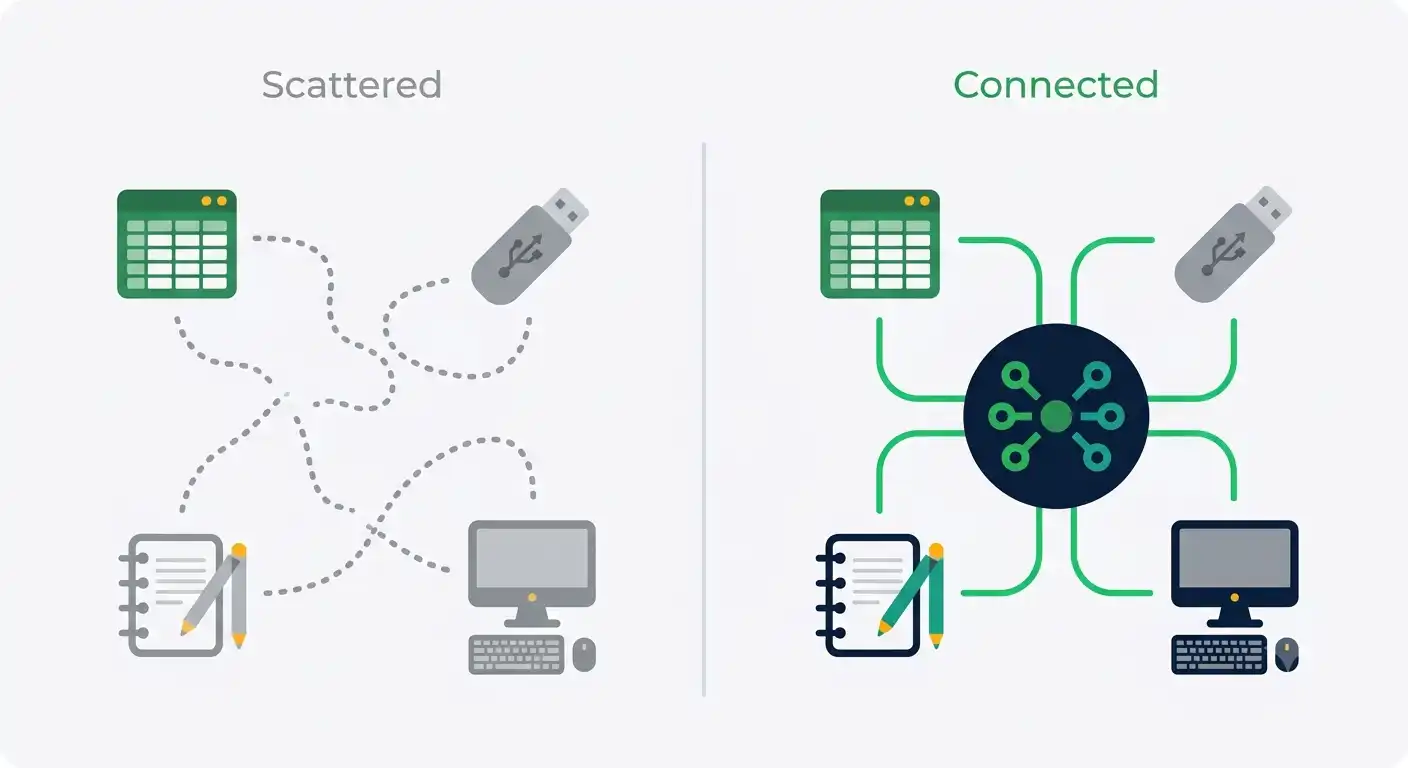
Most laboratories do not begin with one system. Data builds up over the years: instrument software on one workstation, results in spreadsheets, sample logs in a notebook, certificates in a shared folder. Each source works on its own. Problems start when someone has to connect them, such as when answering an auditor, tracing a sample, or comparing trends across sites.
This article explains what centralization means in practice, where gaps usually appear, what a data system needs to close them, and how to start. It is vendor-neutral and applies to any laboratory data platform.
Key Takeaways
Centralizing laboratory data means connecting every record to the sample it belongs to, in a system that controls access and tracks changes. The points below summarize the article for readers who want the short version before the detail.
- Centralized does not mean "one folder." It means linked, searchable, permission-controlled records with a full history.
- Gaps appear where data change hands: instrument to spreadsheet, analyst to reviewer, site to site.
- Standards expect control. ISO/IEC 17025:2017 clause 7.11 addresses validated, protected, and checked information systems.
- Audit trails and access control are core requirements, not optional extras, for regulated work.
- Structure beats speed. A defined sample workflow captures data once and checks it automatically.
- Start small. Map your data, set ownership, and pilot one workflow before scaling.
What Does Centralizing Laboratory Data Actually Mean?
Centralizing laboratory data means managing every record tied to a sample, from receipt to reporting, in one controlled system with shared definitions. It does not mean moving every file into one folder. It means data are linked, searchable, permission-controlled, and traceable, so one question gets one consistent answer.
In most laboratories, the sample is the anchor. Every test, result, reagent lot, instrument, analyst, and report connects back to a unique sample record. When that link exists in one system, tracing a result takes minutes of searching rather than hours of cross-checking.
The expectation is also written into standards. ISO/IEC 17025:2017, clause 7.11, requires laboratories to have access to the data and information needed to do laboratory work. It also requires that information management systems be validated before use, protected from tampering and loss, and that calculations and data transfers be checked in a systematic way.
What data does a LIMS typically bring together?
Exact scope varies by system and laboratory. Common categories include:
- Sample registration, labeling, and chain of custody
- Test assignments, methods, and specifications
- Raw results, calculations, and final results
- Instrument outputs and files
- Reagents, standards, and consumables
- Equipment calibration and maintenance status
- Analyst training and authorization records
- Review, approval, and reporting records
Some quality functions, such as document control or corrective actions, may sit in a separate quality management system and connect to the LIMS through integration.
How does centralized data differ from scattered data?
| Area | Scattered data | Centralized data |
|---|---|---|
| Sample history | Pieced together from notebooks and files | One record from receipt to disposal |
| Result entry | Retyped between systems | Entered once or captured from the instrument |
| Access control | Folder permissions, shared logins | Role-based, individual accounts |
| Change tracking | Manual notes or none | Time-stamped audit trail |
| Reporting | Built by hand in spreadsheets | Generated from the same source data |
| Audit response | Search across locations | Search one system |
Where Do Laboratories Face Data Gaps?
Gaps usually appear where data change hands: from instrument to spreadsheet, from analyst to reviewer, from one site to another. Manual transcription, inconsistent naming, and unmanaged files create blind spots that slow reviews, hide trends, and weaken data integrity evidence. These gaps are common in growing laboratories and often go unnoticed until an audit.
| Gap | What it looks like | Why it matters |
|---|---|---|
| Manual transcription | Results copied from instrument screens or paper into spreadsheets | Transcription errors; extra review effort |
| Spreadsheet sprawl | Many versions, personal copies, unlocked formulas | Unclear which file is the record |
| Disconnected instruments | Data stays on a local PC or USB drive | Risk of loss; hard to trend |
| Inconsistent identifiers | Same sample named three ways | Weak traceability |
| Weak audit trails | No record of who changed a value, or why | Hard to show data integrity |
| Shared or broad access | Shared logins, unrestricted edit rights | Unattributable changes |
| Slow review cycles | Reviewers chase files and signatures | Delayed release of results |
| Multi-site variation | Each site uses its own templates and terms | Results are hard to compare |
Why do these gaps matter for data integrity?
The U.S. FDA's guidance, Data Integrity and Compliance With Drug CGMP: Questions and Answers, describes data integrity as the completeness, consistency, and accuracy of data. It says such data should be attributable, legible, contemporaneously recorded, original or a true copy, and accurate, often shortened to ALCOA. The guidance is written for drug manufacturers, but many laboratories in other sectors use the same principles as a reference point.
Each gap in the table above weakens at least one of those attributes. A shared login weakens "attributable." A retyped result weakens "original." A late spreadsheet entry weakens "contemporaneous." Read more about common data integrity risks in laboratories.
What Do Laboratories Need From a Centralized Data System?
A centralized system needs a sample-centered data model, role-based access, audit trails, validated calculations, instrument integration, configurable workflows, and reliable reporting. It also needs clear data ownership and governance. Technology alone does not fix a weak process, so requirements should come from your real workflows and regulatory obligations.
| Capability | What to look for | Reference |
|---|---|---|
| Sample-centered data model | One unique ID linking tests, results, materials, and reports | ISO/IEC 17025:2017 |
| Role-based access | Individual accounts; permissions matched to job roles | 21 CFR 11.10(d) |
| Audit trails | Secure, computer-generated, time-stamped record of changes | 21 CFR 11.10(e) |
| System validation | Evidence the system works as intended, including interfaces | ISO/IEC 17025:2017, 7.11.2; 21 CFR 11.10(a) |
| Data protection | Backup, recovery, and protection from tampering and loss | ISO/IEC 17025:2017, 7.11.3 |
| Integration | Controlled links to instruments and other business systems | ISO/IEC 17025:2017, 7.11.2 |
| Specifications and limits | Configurable limits with automatic flagging | Laboratory SOPs and method requirements |
| Review and approval | Defined review steps, with electronic signatures where required | 21 CFR Part 11 (where applicable) |
| Search and reporting | Retrieval by sample, batch, date, method, or analyst | Laboratory requirements |
21 CFR Part applies to electronic records in FDA-regulated settings. If your laboratory is outside that scope, treat it as a reference model rather than a requirement, and confirm which rules apply with your quality and regulatory teams.
What should IT teams check?
IT teams carry much of the practical risk. Useful questions include:
- How is the system hosted, and who maintains it? ISO/IEC 17025:2017, clause 7.11.4, expects the laboratory to ensure that an external provider meets applicable requirements.
- How are users authenticated and removed when they leave?
- What are the backup, recovery, and retention arrangements?
- What integration methods are supported, such as file parsing, middleware, or APIs?
- What validation documentation is available, and who maintains it after upgrades?
- Can data be exported in a usable format if you change systems?
How Does a Structured Workflow Support Better Data Management?
A structured workflow defines each step a sample follows and records who did what, when, and with which method and equipment. Because every step writes to the same system, data are captured once, checked automatically, and reviewed by exception. This reduces rework and makes trends and investigations easier to manage.
What does a structured sample workflow look like?
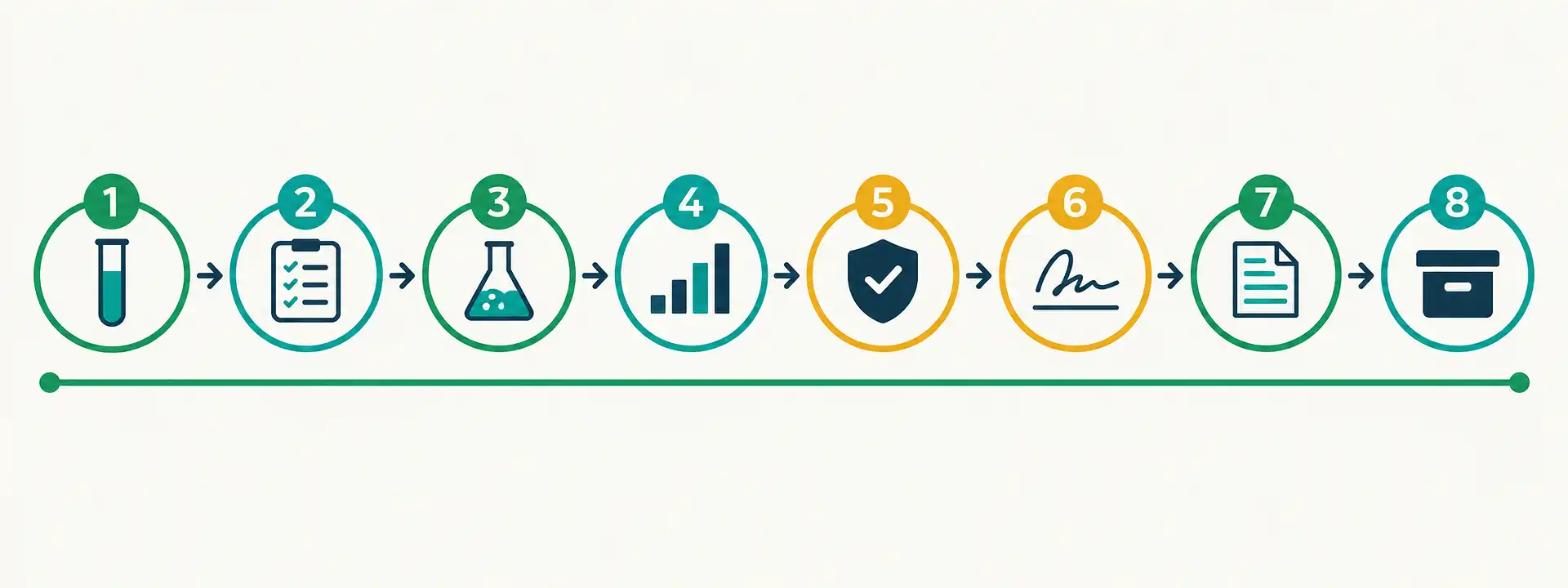
- Register the sample. Assign a unique ID and record source, condition, and receipt details.
- Assign tests. Link each sample to the methods and specifications it requires.
- Prepare the work. Confirm reagent lots, standards, equipment status, and analyst authorization.
- Capture results. Pull data from instruments where possible, or enter it with field-level validation.
- Run automated checks. Compare results against limits and flag out-of-specification or unusual values.
- Review and approve. A second person reviews exceptions and signs off.
- Report and release. Generate reports from the approved data, not from retyped copies.
- Archive and retrieve. Keep records for the retention period and make them searchable.
What benefits can laboratories realistically expect?
Benefits depend on scope, process quality, and how well the system is configured and adopted. Typical, non-guaranteed outcomes include:
- Faster retrieval of sample history and supporting records
- Fewer manual transcription steps
- Consistent trending across methods, instruments, and sites
- Easier preparation for audits and customer inquiries
- Better visibility of workload and turnaround time
This article does not quote percentage gains. Published figures vary widely by laboratory type and method, and no single number applies to every laboratory.
How Do You Get Started With Data Centralization?
Start by mapping where your data lives today, then define requirements, assign ownership, and pilot one workflow before scaling. Treat centralization as a process-and-people project supported by software. Involving analysts, QA, and IT from the beginning reduces rework and builds the trust needed for adoption.
What are the practical steps?
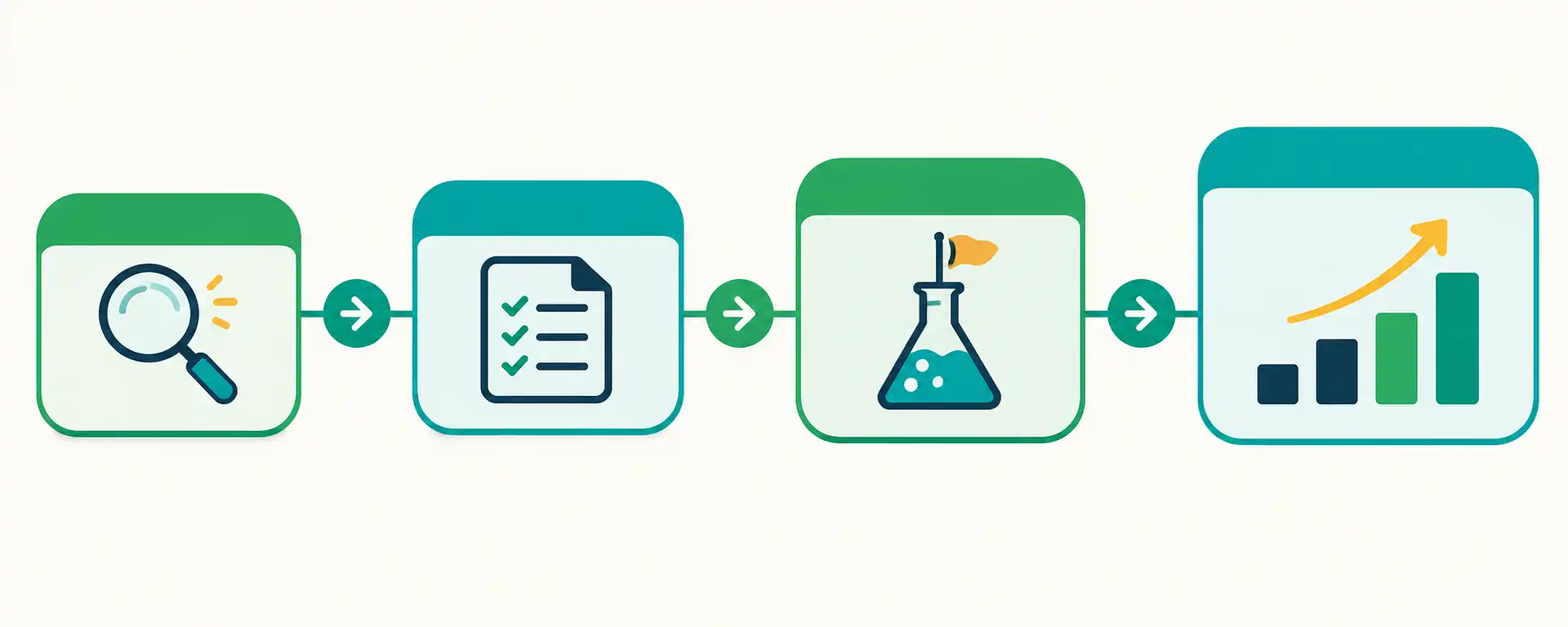
- Inventory data sources. List every place results, samples, and records are created or stored.
- Map the flows. Draw how data moves between instruments, people, files, and reports.
- Identify gaps and risks. Use the gap table above to rank issues by impact on quality and compliance.
- Write requirements. Document what the system must do, with input from analysts, QA, and IT.
- Set governance. Define data owners, naming rules, retention periods, and change control.
- Plan validation and migration. Decide what to migrate, what to archive read-only, and how to verify both.
- Pilot one workflow. Choose a high-volume or high-risk workflow, then review what worked.
- Train and expand. Update SOPs, train users, and extend to other workflows.
Who should be involved?
| Role | Contribution |
|---|---|
| Lab director | Sets scope, priorities, and resourcing |
| QA/QC manager | Defines compliance needs; owns validation approach |
| Analysts and supervisors | Describe real workflows; test during the pilot |
| IT team | Covers security, hosting, integration, and backup |
| Procurement and finance | Evaluates total cost and contract terms |
FAQs
These answers address the questions laboratory teams most often raise when they begin planning. Each is a general guide; your regulatory context and laboratory type will shape the final decision.
Is a LIMS the same as an electronic laboratory notebook (ELN)?
No. A LIMS usually focuses on samples, workflows, tests, and results at scale. An ELN usually focuses on documenting experiments and observations. Many laboratories use both, and some products combine features. Define which records each system owns so data are not duplicated.
Does centralizing data guarantee regulatory compliance?
No. Software supports compliance through access control, audit trails, and validated workflows, but compliance depends on procedures, training, and oversight. Regulators assess the whole quality system. A well-configured system helps you produce evidence, but it does not replace documented processes or competent staff.
Can a LIMS connect to laboratory instruments?
Often, yes, through file parsing, middleware, or direct interfaces, but capability varies by instrument and system. Any interface should be tested and validated. ISO/IEC 17025:2017, clause 7.11.2, specifically mentions the proper functioning of interfaces as part of system validation.
What should we do with legacy data?
Decide by value and risk. Migrate active, frequently used records. Archive older records in a read-only, searchable form. Whichever route you choose, document the decision, verify completeness after transfer, and keep retention periods consistent with your obligations.
Should the system be cloud-based or on-premises?
It depends on security requirements, IT capacity, and contractual obligations. Neither option is inherently better. If an external provider manages the system, ISO/IEC 17025:2017, clause 7.11.4, expects the laboratory to ensure the provider meets applicable requirements.
How long does a centralization project take?
Timelines depend on the number of workflows, instruments, sites, and the volume of data to migrate. Plan in phases and avoid fixed promises. A pilot on one workflow gives a realistic basis for estimating the remaining effort.
Conclusion
Centralizing laboratory data is less about software and more about control: knowing where every record is, who changed it, and whether it can be trusted. A LIMS supports that goal by linking records to samples, enforcing access rules, and keeping a reliable history.
The path is practical. Map your current data, find the gaps, write requirements, assign ownership, and pilot a single workflow. Standards such as ISO/IEC 17025 and guidance such as the FDA's data integrity Q&A provide a useful frame for what "under control" should look like.
Try This Week
Take 30 minutes with your team and sketch one sample's journey from receipt to report. Mark every place the data is retyped, stored locally, or changed without a record. Those marks are your starting list for a centralization plan.
Sources
Author: Revol LIMS Team · marketing@revollims.com · www.revollims.com