Introduction
Laboratory operations today face unprecedented challenges: managing massive data volumes, ensuring regulatory compliance across multiple standards, maintaining equipment uptime, and delivering faster turnaround times—all while controlling operational costs. Traditional LIMS solutions, while functional, often fall short in addressing these evolving demands with the agility modern laboratories require.
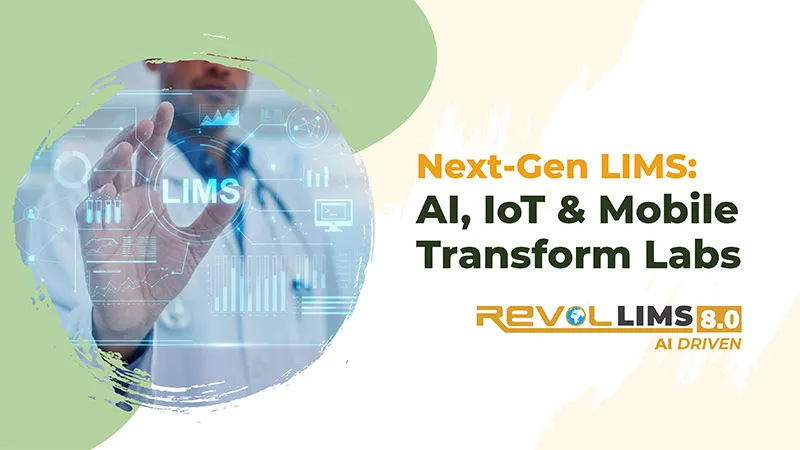
The convergence of Agentic AI, Internet of Things (IoT), and mobile technologies is transforming laboratory information management from reactive data repositories into intelligent, proactive systems that drive operational excellence. This transformation isn't just about adding new features—it's about fundamentally reimagining how laboratories operate, make decisions, and deliver value.
In this comprehensive guide, we'll explore how next-generation LIMS platforms leverage these breakthrough technologies to unlock unprecedented laboratory potential, enhance compliance, and position your lab for future success.
The Evolution of Laboratory Information Management
From Paper to Digital to Intelligent
Laboratory management has undergone significant transformation over the past decades. Early LIMS implementations focused primarily on digitizing paper records and tracking sample workflows. While this represented a major advancement, these systems operated primarily as sophisticated databases—capturing data but providing limited intelligence or proactive guidance.
Second-generation LIMS added workflow automation, basic reporting, and integration capabilities. However, they remained fundamentally reactive systems, requiring significant manual intervention for decision-making, equipment management, and quality control.
Today's next-generation LIMS represents a paradigm shift. By incorporating Agentic AI, IoT connectivity, knowledge graphs, and mobile accessibility, modern platforms like Revol LIMS transform laboratories into intelligent, connected ecosystems where data flows seamlessly, insights emerge automatically, and operations optimize continuously.
The Modern Laboratory's Core Challenges
Understanding why next-gen LIMS matters requires examining the critical pain points laboratories face:
Data Complexity and Volume: Modern laboratories generate enormous data volumes from multiple instruments, tests, and processes. Managing, analyzing, and deriving insights from this data using traditional methods becomes increasingly impractical.
Regulatory Compliance Burden: Laboratories must comply with stringent standards including ISO 17025, FDA 21 CFR Part 11, and CAP requirements. Maintaining compliance across distributed operations while managing audit trails, electronic signatures, and documentation proves resource-intensive.
Equipment Management and Downtime: Laboratory instruments represent significant capital investments. Unplanned downtime disrupts workflows, delays results, and impacts revenue. Traditional maintenance approaches lack predictive capabilities.
Operational Efficiency Pressures: Clients demand faster turnaround times while laboratories face cost pressures. Optimizing resource allocation, minimizing bottlenecks, and improving productivity require real-time visibility and intelligent decision support.
Remote Access and Mobility: Today's laboratory professionals need access to critical information and workflows from anywhere—whether managing field sampling, approving results remotely, or responding to client inquiries outside traditional lab environments.
How Agentic AI Transforms Laboratory Intelligence
Understanding Agentic AI in LIMS Context
Agentic AI represents a sophisticated evolution beyond traditional AI assistants. While conventional AI systems respond to specific queries or commands, Agentic AI operates with goal-oriented autonomy—understanding context, anticipating needs, and taking proactive actions to achieve defined objectives.
In the LIMS context, Agentic AI doesn't merely answer questions about sample status or generate reports on demand. Instead, it actively monitors laboratory operations, identifies potential issues before they become critical, suggests optimization opportunities, and even executes routine tasks autonomously within defined parameters.
Intelligent Sample Logging and Data Entry
One of the most time-consuming laboratory tasks involves sample registration and data entry. Revol LIMS's Gen-AI-based chat assistant revolutionizes this process by enabling natural language sample logging. Laboratory staff can describe samples conversationally—"Log five water samples from Site A collected this morning for bacteria testing"—and the AI interprets the intent, extracts relevant parameters, and completes the registration automatically.
This intelligent approach reduces data entry time by up to 70%, minimizes transcription errors, and allows laboratory personnel to focus on analytical work rather than administrative tasks. The AI validates entries against predefined rules, flags potential inconsistencies, and ensures data quality from the initial capture point.
Predictive Analytics and Proactive Insights
Next-generation LIMS leverages AI to analyze historical data patterns, identify trends, and generate predictive insights that transform laboratory decision-making. Rather than waiting for issues to manifest, the system anticipates potential problems and recommends preventive actions.
For example, AI algorithms can analyze instrument performance data over time, detecting subtle degradation patterns invisible to human operators. When trending suggests potential calibration drift or component failure, the system automatically alerts maintenance teams, schedules preventive service, and adjusts test schedules to minimize disruption.
Similarly, AI-powered quality control monitoring continuously analyzes test results against control charts, identifying out-of-control conditions earlier and with greater sensitivity than traditional SPC methods. The system can automatically investigate root causes by correlating anomalies with environmental conditions, reagent batches, instrument settings, and operator actions.
Intelligent Query and Custom Reporting
Traditional LIMS reporting requires users to navigate complex menus, select parameters, and structure queries using system-specific interfaces. Revol LIMS's AI-powered chat assistant enables natural language querying—users simply ask questions in plain language: "Show me all failed pharmaceutical stability samples from the past quarter" or "Which instruments have the highest failure rates?"
The AI interprets the intent, constructs appropriate database queries, and presents results in intuitive formats. For more complex analysis needs, it can generate custom reports dynamically, applying statistical methods, creating visualizations, and even providing narrative summaries of key findings.
This democratizes data access across the organization, enabling stakeholders at all levels—from bench scientists to executive leadership—to extract insights without specialized technical knowledge or dependence on IT support.
Knowledge Graphs: Connecting Laboratory Data Intelligently
Knowledge graphs represent a powerful AI capability that transforms how LIMS organizes and leverages information. Unlike traditional relational databases that store discrete data points in isolated tables, knowledge graphs create rich, interconnected networks of relationships between entities—samples, tests, instruments, reagents, personnel, facilities, and results.
This interconnected structure enables sophisticated reasoning capabilities. For instance, when investigating an out-of-specification result, the knowledge graph can instantly trace all related factors: which instrument performed the analysis, who operated it, what calibration status it held, which reagent lot was used, environmental conditions at the time, and whether other samples tested similarly show comparable trends.
These contextual insights dramatically accelerate troubleshooting, support root cause analysis, and enable the AI to learn from historical patterns to improve future recommendations.
IoT Integration: The Connected Laboratory
Real-Time Instrument Connectivity
IoT integration transforms laboratory instruments from isolated devices into connected ecosystem participants. Modern LIMS platforms establish bidirectional communication with analytical instruments, environmental monitors, storage units, and other laboratory equipment.
This connectivity eliminates manual data transcription—results flow automatically from instruments to LIMS, maintaining complete data integrity while reducing turnaround times. Electronic data capture also strengthens compliance by creating unbroken audit trails from sample registration through analysis to final reporting.
Beyond data capture, IoT connectivity enables real-time instrument monitoring. The LIMS continuously receives instrument status information: operational state, error conditions, maintenance alerts, calibration status, and performance metrics. This visibility enables proactive management and rapid response to issues.
Predictive Maintenance and Asset Optimization
IoT sensors on laboratory instruments generate continuous streams of operational data—vibration patterns, temperature variations, pressure readings, reagent consumption rates, and performance metrics. Next-generation LIMS analyzes these data streams using machine learning algorithms to detect patterns indicating potential equipment failures before they occur.
For example, subtle changes in chromatography column performance might indicate impending degradation. Rather than waiting for complete failure during critical testing, the system alerts maintenance teams to schedule preventive replacement during planned downtime, minimising operational disruption.
This predictive approach extends instrument lifespan, reduces maintenance costs, prevents revenue-impacting downtime, and optimizes capital equipment investments. Revol LIMS's asset management module provides comprehensive equipment lifecycle tracking, maintenance scheduling, and utilization analytics that maximize laboratory infrastructure ROI.
Environmental Monitoring and Compliance
Many laboratory processes require strictly controlled environmental conditions. IoT sensors continuously monitor temperature, humidity, air pressure, particle counts, and other critical parameters in sample storage areas, testing environments, and controlled spaces.
Next-generation LIMS integrates these monitoring systems, providing real-time alerts when conditions approach or exceed acceptable ranges. Historical environmental data correlates with test results, enabling investigation of potential environmental impacts on analytical outcomes.
For regulated laboratories, automated environmental monitoring with LIMS integration provides robust compliance documentation. The system maintains complete audit trails of environmental conditions, excursion events, corrective actions, and verification activities—demonstrating regulatory adherence with minimal manual effort.
Inventory and Reagent Management Automation
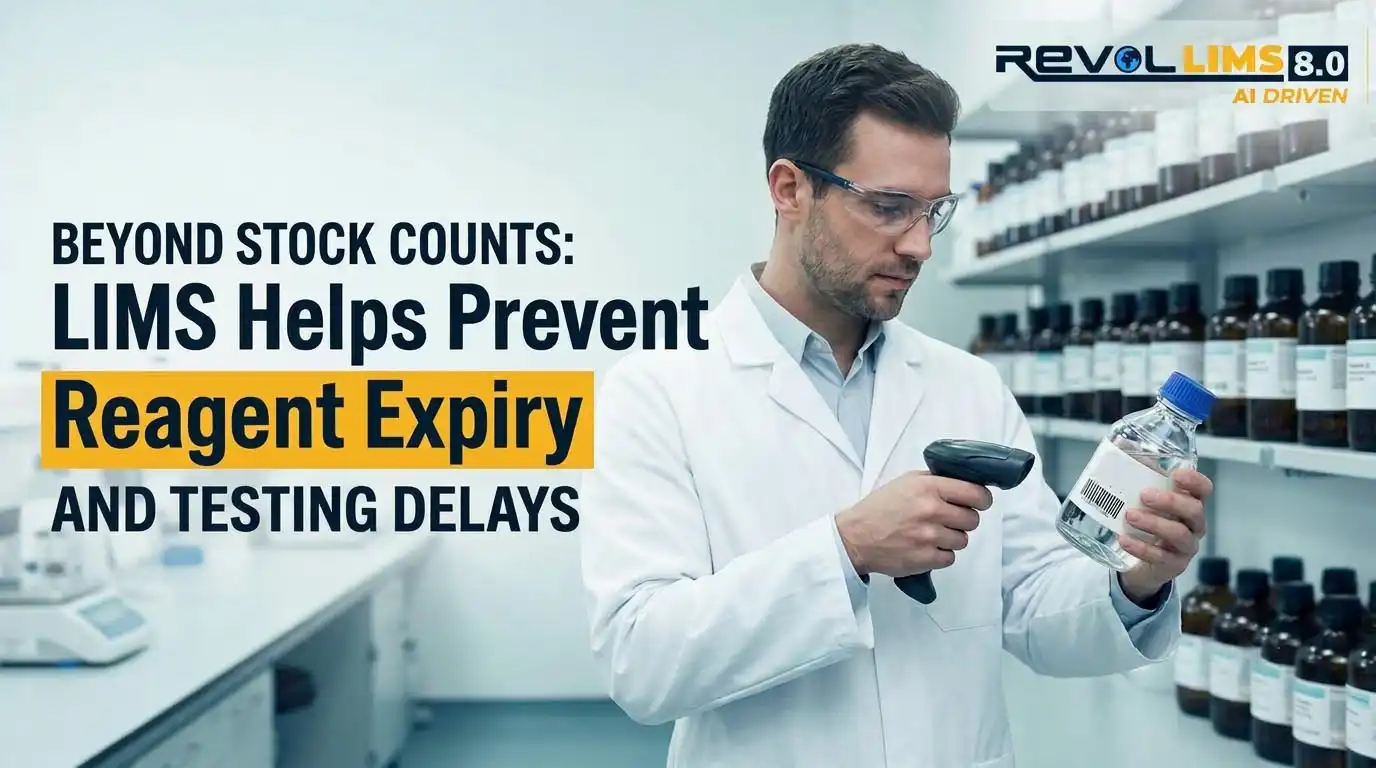
IoT-enabled inventory systems automatically track reagent consumption, monitor stock levels, and trigger reorder workflows when quantities reach defined thresholds. Smart refrigerators and storage units report temperature conditions and inventory status continuously.
Revol LIMS's reagent management module leverages this connectivity to ensure critical materials remain available, manage expiration dates proactively, and optimize inventory levels—reducing waste from expired materials while preventing stockouts that delay testing.
The system also tracks reagent lot numbers and links them to specific test results, supporting complete traceability for investigations and regulatory inspections.
Mobile Applications: Laboratory Management Anywhere, Anytime
Field Sample Collection and Data Capture
Mobile LIMS applications extend laboratory workflows beyond facility walls into the field. Sampling personnel use tablets or smartphones to capture collection data on-site: location coordinates, environmental conditions, photographs, and chain-of-custody information.
This real-time data capture eliminates paper forms, reduces transcription errors, and accelerates sample registration. GPS integration automatically records collection locations with precision, while digital signatures ensure security and compliance. Barcode scanning capabilities enable rapid sample identification and tracking.
For environmental, food safety, and clinical laboratories conducting extensive field sampling, mobile applications dramatically improve operational efficiency while strengthening data quality and regulatory compliance.
Remote Result Review and Approval
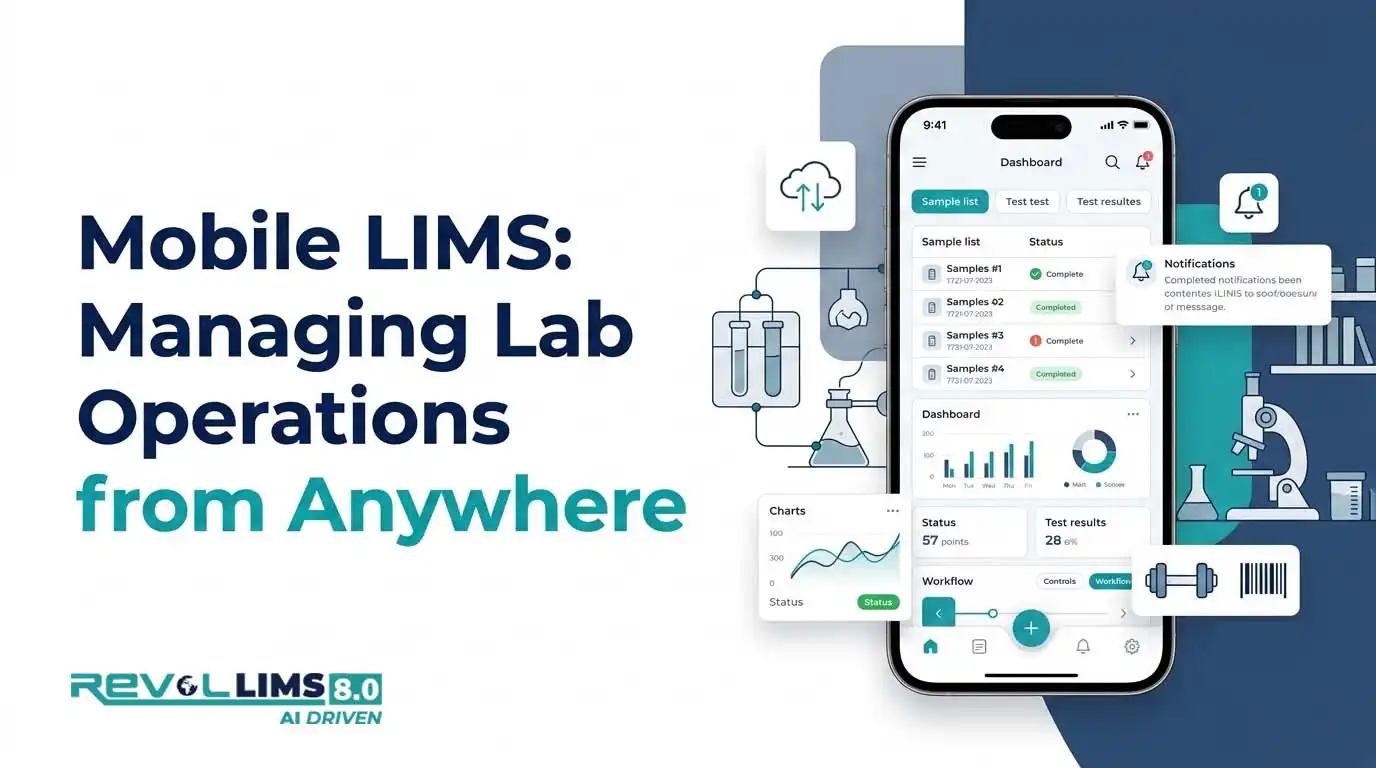
Laboratory managers and authorized personnel can review test results, approve reports, and authorize sample dispositions from anywhere using mobile applications. Revol LIMS's responsive design ensures optimal viewing on tablets and smartphones while maintaining complete functionality.
This mobility capability proves particularly valuable for laboratories supporting time-sensitive operations. Critical results can receive immediate review and approval regardless of reviewer location, accelerating turnaround times and improving client service.
Client Portal Access and Communication
Mobile-responsive client portals enable laboratory customers to submit samples, track testing progress, and access results using any device. This self-service capability reduces administrative overhead while improving client satisfaction through enhanced transparency and convenience.
Automated notifications keep clients informed of sample status changes, result availability, and report delivery. Secure mobile access ensures clients can respond to urgent quality issues immediately, even when away from office environments.
Task Management and Collaboration
Mobile applications enable laboratory teams to manage assignments, communicate about samples or projects, and coordinate activities in real-time. Technicians receive automated task notifications, access work instructions, and report completion status from anywhere in the facility.
This mobile connectivity improves workflow coordination, reduces idle time between tasks, and optimizes personnel utilization. Management gains real-time visibility into operational status and can respond quickly to emerging priorities or issues.
Real-World Impact: Transforming Laboratory Operations
Accelerating Turnaround Times
The combination of AI-powered workflow optimization, IoT instrument connectivity, and mobile accessibility dramatically reduces sample-to-result cycle times. Automated sample logging eliminates registration bottlenecks. Direct instrument integration removes data transcription delays. Mobile approval capabilities prevent administrative holdups.
Laboratories implementing next-generation LIMS platforms typically achieve 30-50% turnaround time reductions while maintaining or improving quality standards. This acceleration translates directly to improved client satisfaction, competitive advantage, and revenue growth potential.
Enhancing Compliance and Audit Readiness
Regulatory compliance represents a significant burden for quality control laboratories. Next-generation LIMS addresses this challenge through comprehensive electronic documentation, complete audit trails, and automated compliance verification.
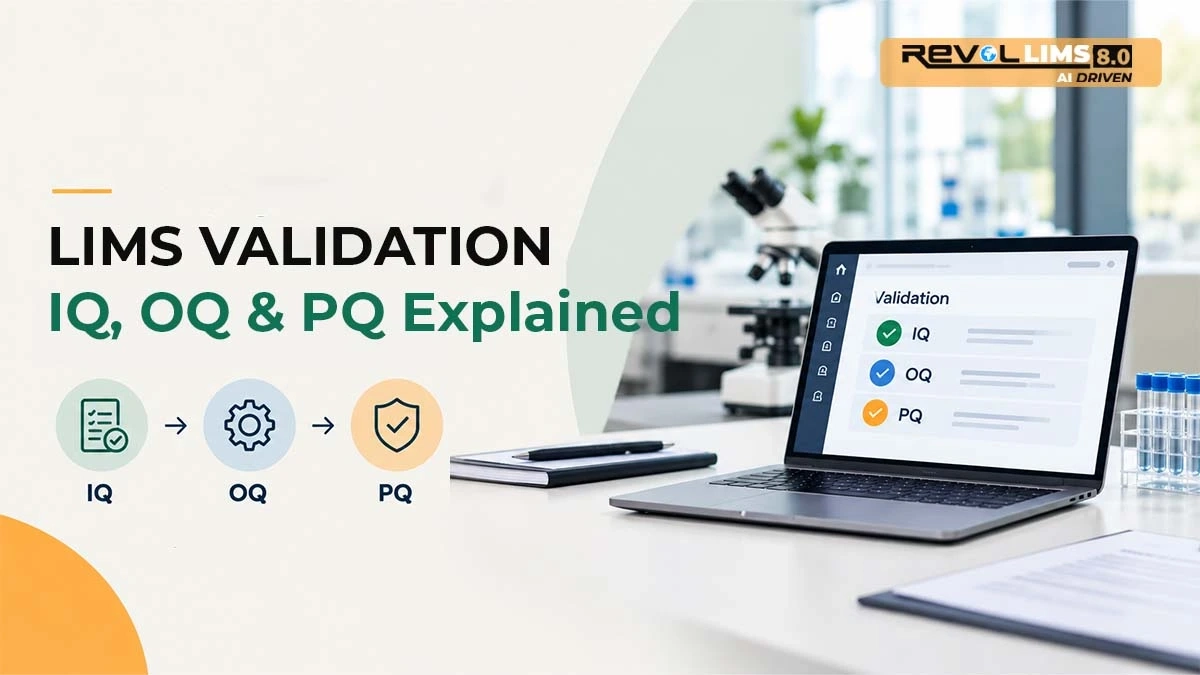
Revol LIMS maintains compliance with ISO 17025, FDA 21 CFR Part 11, and CAP requirements through built-in features: electronic signatures, change control, version management, access controls, and audit logging. The system continuously validates data integrity and flags potential compliance issues for immediate attention.
When audit time arrives, laboratories can instantly generate complete documentation packages demonstrating regulatory adherence. AI-powered search capabilities enable rapid retrieval of specific records or evidence, while knowledge graphs trace complex relationships between procedures, results, and compliance activities.
Optimizing Resource Utilization
Next-generation LIMS provides unprecedented visibility into laboratory operations through real-time dashboards and advanced analytics. Management can identify bottlenecks, optimize staff assignments, balance instrument utilization, and improve space allocation based on data-driven insights.
AI algorithms analyze workflow patterns to recommend optimization opportunities: adjusting test scheduling to minimize instrument idle time, rebalancing workload across personnel, or consolidating similar analyses to improve efficiency. These recommendations transform operational management from reactive problem-solving to proactive optimization.
Reducing Operational Costs
The cumulative impact of improved efficiency, predictive maintenance, optimized inventory management, and reduced error rates significantly lowers laboratory operational costs. Studies of next-generation LIMS implementations show operational expense reductions of 20-35% while simultaneously improving service quality and compliance.
Automation reduces manual labor requirements for administrative tasks, enabling personnel redeployment to higher-value analytical work. Predictive maintenance minimizes expensive equipment downtime and emergency repairs. Optimized inventory management reduces waste from expired materials and carrying costs for excess stock.
Implementing Next-Generation LIMS: Best Practices
Assessing Organizational Readiness
Successful next-generation LIMS implementation begins with honest assessment of organizational readiness across technical, operational, and cultural dimensions. Consider these critical factors:
Technical Infrastructure: Evaluate network capacity, server resources, and existing IT systems that require integration. IoT connectivity demands reliable network infrastructure. Mobile applications require secure remote access capabilities. Cloud deployment options may offer advantages for organizations with limited IT resources.
Process Maturity: Next-generation LIMS capabilities deliver maximum value when deployed against well-defined, standardized processes. Organizations with highly variable or poorly documented workflows should invest in process improvement before or concurrent with LIMS implementation.
Change Management Capability: Technology adoption ultimately depends on user acceptance and behavior change. Assess organizational culture, change readiness, and training capacity to ensure successful adoption.
Phased Implementation Approach
Rather than attempting comprehensive deployment simultaneously, successful organizations adopt phased implementation strategies:
Phase 1: Core LIMS Functionality - Establish foundational capabilities including sample management, workflow automation, and basic reporting. Ensure stable operation and user competency with essential features before adding advanced capabilities.
Phase 2: IoT Integration - Connect laboratory instruments and environmental monitoring systems. Establish automated data capture and real-time monitoring capabilities. Validate data integrity and instrument communication reliability.
Phase 3: Mobile Applications - Deploy mobile capabilities for field sampling, remote approvals, and client access. Train users on mobile workflows and security protocols.
Phase 4: AI and Advanced Analytics - Activate Agentic AI features, knowledge graph capabilities, and predictive analytics. These advanced features deliver maximum value when deployed against stable foundational processes with clean historical data.
This phased approach manages implementation risk, allows organizational adaptation to new capabilities, and demonstrates value progressively to build stakeholder confidence and support.
Integration with Enterprise Systems
Next-generation LIMS doesn't operate in isolation—it serves as the central hub connecting laboratory operations with broader enterprise systems. Plan comprehensive integration with:
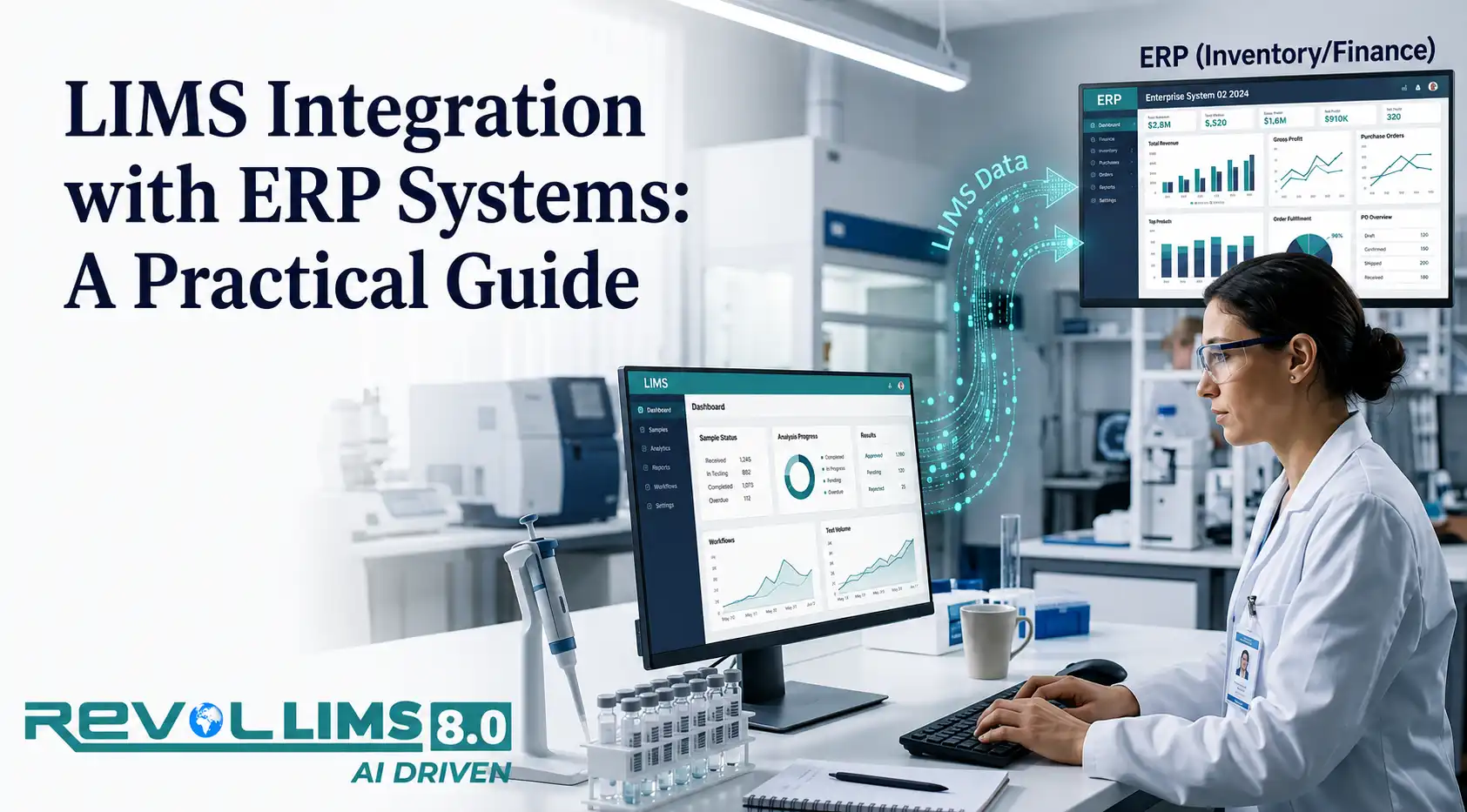
ERP Systems: Bidirectional integration enables automated order processing, invoicing, inventory management, and financial reporting. Revol LIMS offers robust ERP integration capabilities supporting major platforms.
Quality Management Systems: Connect LIMS with QMS platforms to link laboratory data with complaint management, corrective actions, and quality investigations. This integration provides complete visibility into quality events and their laboratory implications.
Document Management Systems: Integrate LIMS with enterprise document repositories to connect laboratory procedures, specifications, and protocols with operational workflows. Version control and change management capabilities ensure staff always access current documentation.
Business Intelligence Platforms: Export laboratory data to enterprise BI tools for executive reporting and cross-functional analytics. Enable stakeholders across the organization to incorporate laboratory insights into strategic decision-making.
Training and Change Management
Technology capabilities mean nothing without effective user adoption. Invest substantially in comprehensive training programs addressing:
Role-Based Training: Develop targeted training curricula for different user types: laboratory technicians, supervisors, quality managers, and executives. Each group requires different capabilities and depth of knowledge.
Hands-On Practice: Theory alone proves insufficient—users need extensive hands-on practice with actual workflows in realistic scenarios. Implement sandbox environments where users can practice without affecting production data.
Ongoing Support: Initial training represents only the beginning. Establish ongoing support mechanisms: help desk resources, user forums, refresher training, and advanced capability workshops. Next-generation features like AI and mobile applications require continuous learning as capabilities evolve.
Change Champions: Identify and empower enthusiastic early adopters who can serve as peer mentors, demonstrate best practices, and build grassroots support for new capabilities.
The Future of Laboratory Operations
The transformation enabled by next-generation LIMS represents just the beginning of laboratory evolution. As AI, IoT, and mobile technologies continue advancing, we can anticipate even more profound capabilities emerging:
Autonomous Laboratory Operations
Future LIMS platforms will orchestrate increasingly autonomous laboratory workflows. AI agents will coordinate sample scheduling, instrument allocation, and resource management with minimal human intervention. Robots and automated systems will execute physical tasks—sample preparation, analysis, and storage—under LIMS coordination.
This autonomous operation won't eliminate human expertise but will redirect it toward higher-value activities: method development, complex problem-solving, strategic planning, and client consultation. Routine operational decisions will execute automatically based on learned patterns and defined objectives.
Collaborative Intelligence Networks
Individual laboratories won't operate as isolated entities but as nodes in collaborative intelligence networks. Anonymized data sharing across laboratory networks will enable collective learning—identifying emerging contaminant patterns, optimizing method performance across diverse matrices, and detecting equipment issues based on fleet-wide performance data.
These networks will accelerate innovation, improve quality standards industry-wide, and enable smaller laboratories to benefit from insights derived from global operational data. Privacy-preserving AI techniques will enable collaboration while protecting proprietary information and client confidentiality.
Augmented Reality Integration
AR technologies will overlay digital information onto physical laboratory environments. Technicians wearing AR glasses will see real-time sample information, procedural guidance, and equipment status displayed in their field of vision. Complex maintenance procedures will include step-by-step AR guidance. Training will leverage immersive AR simulations that replicate actual laboratory conditions without requiring physical resources.
LIMS integration will power these AR experiences, providing the contextual data that makes augmented information relevant and actionable.
Advanced Predictive Capabilities
As AI models train on larger datasets spanning longer timeframes, predictive capabilities will extend beyond equipment maintenance to encompass comprehensive operational forecasting. LIMS will predict:
- Demand Patterns: Anticipating testing volumes based on client behavior, seasonal patterns, and market trends—enabling proactive capacity planning and staffing optimization.
- Quality Issues: Identifying potential quality problems before they manifest in test results based on subtle patterns in instrument performance, environmental conditions, and process parameters.
- Compliance Risks: Detecting compliance vulnerabilities before audit findings by analyzing documentation completeness, procedural adherence patterns, and regulatory requirement changes.
- Resource Requirements: Forecasting reagent consumption, consumable needs, and capacity constraints weeks or months in advance—enabling strategic procurement and resource allocation.
Personalized Laboratory Intelligence
AI systems will learn individual user preferences, work patterns, and information needs—delivering personalized experiences tailored to each laboratory professional. Dashboard configurations, notification priorities, and information presentation will adapt automatically to individual roles and working styles.
New employees will benefit from AI mentorship that observes their activities, identifies knowledge gaps, and proactively delivers just-in-time training and guidance. This personalized support will accelerate competency development and reduce errors during the learning curve.
Why Revol LIMS Leads Next-Generation Laboratory Transformation
Comprehensive Platform Integration
Unlike traditional LIMS solutions that require multiple disparate systems to deliver complete functionality, Revol LIMS consolidates capabilities into a unified platform. This integration eliminates data silos, simplifies user experience, reduces total cost of ownership, and accelerates time-to-value.
Revol LIMS modules span the complete laboratory operation spectrum:
- Gen-AI Chat Assistant for natural language interaction and intelligent automation
- Analysis Workflow management with configurable routing and approval processes
- Sample, Inventory, Reagent, and Asset Management for complete resource control
- Document, Complaint, Audit, and Training Management for comprehensive quality system support
- SQC/SPC with advanced statistical process control capabilities
- Order and Invoice Management for commercial laboratory operations
- Real-time Dashboards and Reports with AI-powered analytics
This comprehensive approach means laboratories implement a single solution addressing all operational needs rather than managing multiple vendor relationships and system integrations.
True Cloud-Native Architecture
Revol LIMS leverages 100% web-based, zero-footprint architecture—requiring no client-side installations and delivering identical functionality regardless of access device or location. This architecture provides:
- Deployment Flexibility: Cloud, on-premise, or hybrid deployment options based on organizational preferences and regulatory requirements
- Scalability: Elastic resource allocation that grows with laboratory operations without infrastructure redesign
- Accessibility: Global access from any device—desktops, tablets, or smartphones—with responsive design optimizing the experience for each form factor
- Reliability: Enterprise-grade uptime and disaster recovery capabilities ensuring continuous operations
- Security: Multi-layered security architecture with encryption, access controls, and audit logging meeting stringent regulatory requirements
Regulatory Compliance Built-In
Revol LIMS embeds regulatory compliance into its fundamental architecture rather than treating it as an add-on feature. The platform maintains native compliance with:
- ISO 17025: International standard for testing and calibration laboratory competence
- FDA 21 CFR Part 11: Electronic records and electronic signatures requirements
- CAP: College of American Pathologists laboratory accreditation standards
Compliance features include electronic signatures, complete audit trails, configurable role-based security, change control, version management, and automated documentation. Laboratories implement these capabilities through configuration rather than custom development—accelerating deployment while ensuring robust compliance.
Proven Implementation Methodology
Revol's implementation approach combines technical expertise with deep laboratory domain knowledge. Implementation teams understand both LIMS technology and laboratory operations—enabling them to configure systems that align with actual workflows while introducing best practices and optimization opportunities.
The methodology emphasizes:
- Requirements Analysis: Comprehensive discovery ensuring the system addresses actual needs
- Process Optimization: Identifying workflow improvements before automating existing processes
- Phased Deployment: Managing risk through incremental capability rollout
- Knowledge Transfer: Building internal competency through training and documentation
- Ongoing Support: Continuous assistance ensuring long-term success
Continuous Innovation
Laboratory needs evolve continuously as technologies advance, regulations change, and competitive pressures intensify. Revol invests substantially in ongoing platform development—delivering regular updates that introduce new capabilities, enhance existing features, and maintain regulatory compliance with evolving standards.
Recent innovations include the Gen-AI chat assistant, enhanced mobile applications, expanded IoT integration capabilities, and advanced analytics features. This commitment to continuous improvement ensures laboratories investing in Revol LIMS benefit from cutting-edge capabilities without disruptive platform migrations.
Getting Started with Next-Generation LIMS
Assessing Your Laboratory's Transformation Potential
Every laboratory faces unique challenges and opportunities. Begin your next-generation LIMS journey by assessing:
Current Pain Points: Document specific operational challenges—turnaround time bottlenecks, compliance gaps, data quality issues, equipment downtime, resource inefficiencies. Understanding current problems clarifies transformation priorities.
Strategic Objectives: Define what success looks like—reduced operational costs, improved quality metrics, accelerated growth capacity, enhanced compliance confidence, competitive differentiation. Align LIMS capabilities with strategic goals.
Technical Readiness: Evaluate IT infrastructure, existing systems requiring integration, and deployment preferences (cloud vs. on-premise). Identify technical prerequisites and resource requirements.
Organizational Readiness: Assess change management capability, training resources, and stakeholder support. Successful transformation requires organizational commitment beyond technology deployment.
Conclusion
The convergence of Agentic AI, IoT connectivity, knowledge graphs, and mobile technologies represents a watershed moment in laboratory information management. Next-generation LIMS platforms like Revol transform laboratories from reactive data repositories into intelligent, connected ecosystems that drive operational excellence, ensure regulatory compliance, and position organizations for future success.
The benefits span every dimension of laboratory operations:
- Operational Efficiency: 30-50% turnaround time reductions and 20-35% cost savings
- Quality Enhancement: Proactive issue detection, automated SPC monitoring, and comprehensive traceability
- Compliance Confidence: Built-in regulatory adherence with comprehensive audit trails and electronic documentation
- Strategic Agility: Real-time visibility and predictive analytics enabling data-driven decision-making
- Competitive Advantage: Enhanced service delivery, faster response times, and superior quality systems
Traditional LIMS solutions can no longer address modern laboratory demands. The question isn't whether to adopt next-generation LIMS capabilities—it's when and how to begin the transformation journey.
Laboratories that embrace this evolution now position themselves as industry leaders, delivering superior service while optimizing operational performance. Those that delay face growing competitive disadvantage as client expectations rise and operational pressures intensify.
Ready to transform your laboratory operations? Contact us today to schedule your demo and begin your transformation journey



 (1) (1).webp)