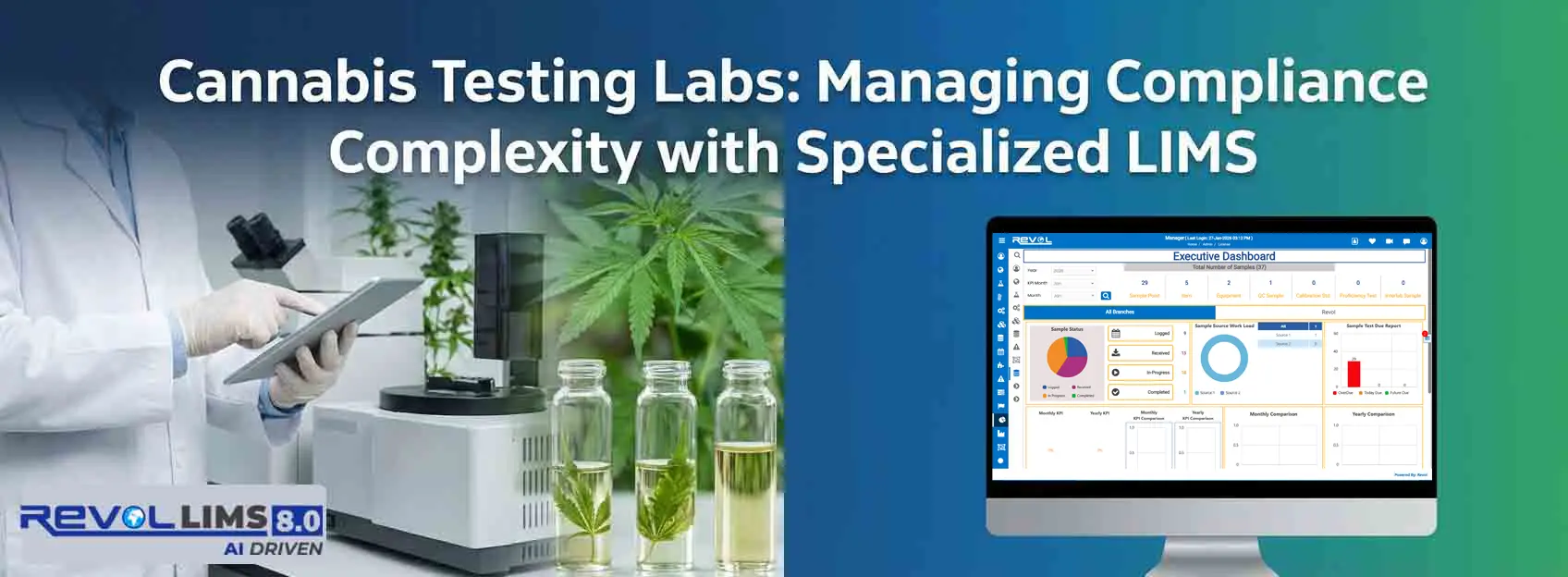
Cannabis Testing Labs: Managing Compliance Complexity with Specialized LIMS
The cannabis industry is experiencing unprecedented growth as legalization sweeps across North America and beyond. However, with this rapid expansion comes a complex web of regulatory requirements that cannabis testing laboratories must navigate. From potency analysis to heavy metal detection, testing labs face mounting pressure to deliver accurate results while maintaining strict compliance with ever-evolving state and federal regulations. This is where specialized Laboratory Information Management Systems (LIMS) become not just helpful, but essential for operational success.
The Growing Cannabis Testing Market: A Significant LIMS Opportunity
The legalization of cannabis for medical and recreational use has created a booming market for testing laboratories. According to MarketsandMarkets research, the cannabis testing market is projected to experience substantial growth, driven by increasing regulatory requirements and consumer demand for safe, quality-assured products.
As more states legalize cannabis, the need for comprehensive testing has become mandatory rather than optional. Testing laboratories must verify that cannabis products meet stringent safety and quality standards before they can be sold to consumers. This regulatory landscape has created significant opportunities for LIMS vendors who can address the unique challenges of cannabis testing.
The complexity of cannabis testing goes far beyond traditional laboratory workflows. Labs must manage multiple sample types (flower, concentrates, edibles, topicals), conduct various analyses simultaneously, and maintain meticulous chain-of-custody documentation—all while adhering to state-specific regulations that can vary dramatically from one jurisdiction to another.
Core Cannabis Testing Workflows That Demand Specialized LIMS
Cannabis testing laboratories perform a wide array of analyses, each with its own technical requirements, regulatory standards, and quality control procedures. A specialized cannabis testing LIMS must seamlessly manage these diverse workflows while ensuring data integrity and regulatory compliance.
Potency Testing: The Foundation of Cannabis Analysis
Cannabinoid potency testing is the most fundamental analysis performed on cannabis products. Laboratories must accurately quantify the concentration of various cannabinoids, including THC (tetrahydrocannabinol), CBD (cannabidiol), CBN (cannabinol), CBG (cannabigerol), and others.
A specialized LIMS for cannabis testing must:
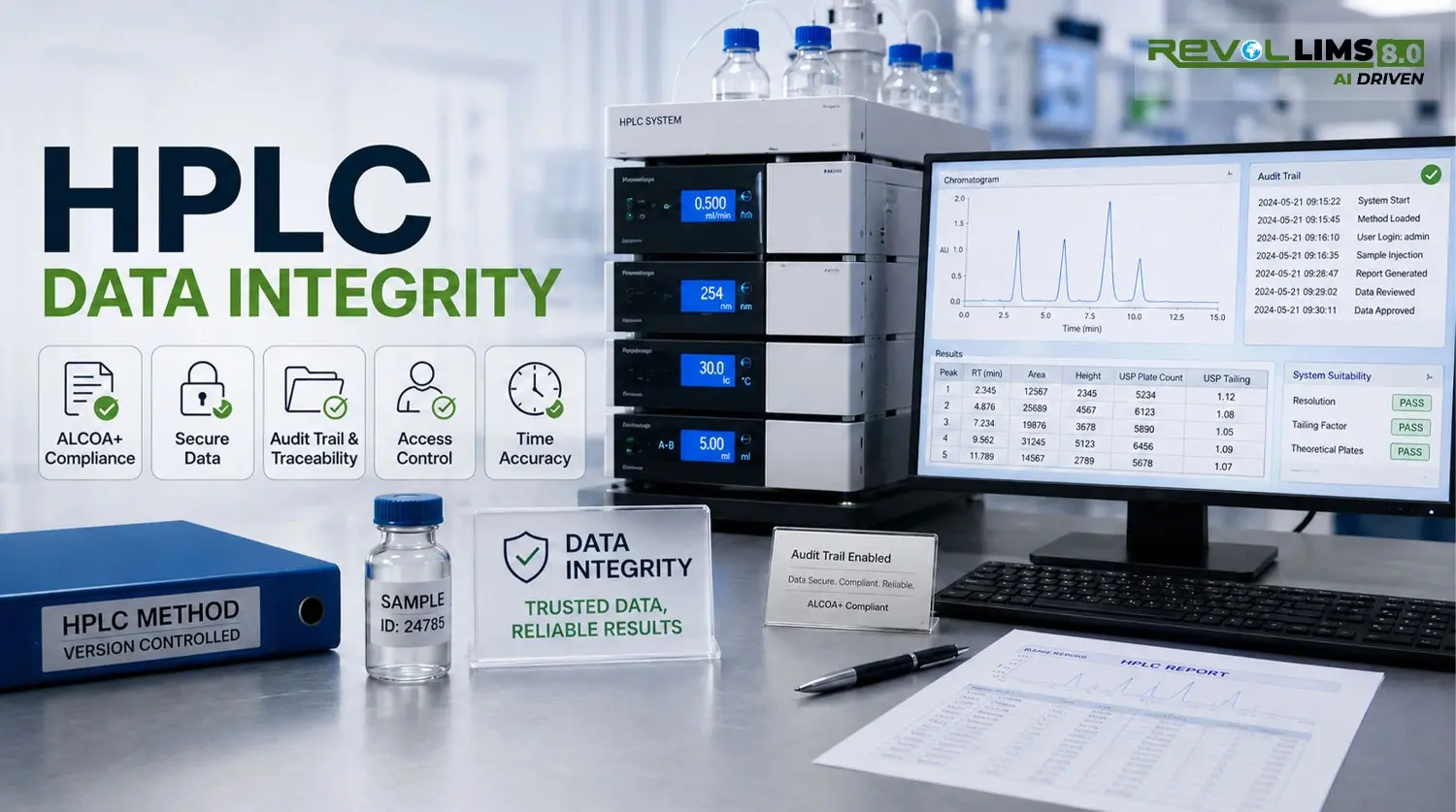
- Support multiple analytical methods, typically HPLC (High-Performance Liquid Chromatography) and GC (Gas Chromatography)
- Calculate total THC and total CBD using decarboxylation formulas as required by state regulations
- Apply appropriate matrix-specific calibration curves for flower, concentrates, and edibles
- Track uncertainty of measurement and reporting limits per regulatory requirements
- Generate certificates of analysis (COAs) that meet state-specific formatting and content requirements
The system must also handle method validation data, proficiency testing results, and quality control sample tracking to demonstrate ongoing method performance—requirements that general-purpose LIMS often struggle to accommodate.
Heavy Metals Testing: Protecting Consumer Safety
Cannabis plants are bioaccumulators, meaning they can absorb heavy metals from contaminated soil or water. Testing for heavy metals such as lead, arsenic, cadmium, and mercury is therefore critical to ensure consumer safety.
Heavy metals analysis, typically performed using ICP-MS (Inductively Coupled Plasma Mass Spectrometry), requires a LIMS that can:
- Manage complex sample preparation workflows including digestion procedures
- Handle multi-element analysis with different action limits for each metal
- Apply appropriate dilution factors and calculate results on a dry-weight basis
- Flag samples that exceed regulatory thresholds and trigger automatic hold procedures
- Integrate with sample tracking systems to prevent the release of non-compliant products
Pesticide Screening: Multi-Residue Analysis at Scale
Pesticide testing is one of the most challenging aspects of cannabis analysis. Laboratories must screen for dozens or even hundreds of pesticide compounds, each with specific action limits that vary by state and product type.
Modern pesticide testing workflows using LC-MS/MS (Liquid Chromatography-Tandem Mass Spectrometry) and GC-MS/MS (Gas Chromatography-Tandem Mass Spectrometry) generate enormous amounts of data. A cannabis-specific LIMS must:
- Manage comprehensive pesticide libraries with state-specific action limits
- Support matrix-matched calibration standards for accurate quantification
- Automatically update compound lists as regulations change
- Handle complex data processing including isotope ratio confirmation
- Generate pass/fail determinations for each compound against applicable limits
- Provide trending analysis to identify recurring contamination issues
Beyond the Big Three: Microbial, Mycotoxin, and Terpene Testing
While potency, heavy metals, and pesticides form the core of cannabis testing, laboratories must also manage:
- Microbial contamination testing (bacteria, mold, yeast) using culture-based or molecular methods
- Mycotoxin analysis (aflatoxins, ochratoxin A) via LC-MS/MS
- Residual solvent testing for concentrates and extracts using headspace GC
- Terpene profiling for product characterization and quality assessment
- Water activity and moisture content determination
Each of these test types has unique workflow requirements, instrument interfaces, and reporting formats that a comprehensive cannabis testing LIMS must accommodate.
Navigating the State-by-State Compliance Maze
Perhaps the most challenging aspect of cannabis testing is the lack of federal standardization. Each state with a legal cannabis program has established its own testing requirements, creating a complex patchwork of regulations that laboratories must navigate.
Key Areas of State-by-State Variation
Cannabis testing regulations vary significantly across jurisdictions in several critical areas:
Required Test Panels: Some states require comprehensive testing for all product types, while others have more limited requirements. For example, California mandates testing for cannabinoids, heavy metals, pesticides, residual solvents, microbials, and mycotoxins. In contrast, other states may only require potency and microbial testing for certain product categories.
Action Limits: The acceptable levels for contaminants vary dramatically between states. A pesticide concentration that passes in one state may fail in another. Heavy metal limits differ, and even the calculation methods for total THC can vary.
Sampling Requirements: States prescribe different protocols for sample collection, sample sizes, and the number of samples required per batch. Some require random sampling, while others specify sampling from specific locations within a batch.
Certificate of Analysis Format: Each state may mandate specific information, formatting, and disclaimers on COAs. Some require QR codes for authentication, specific uncertainty statements, or particular unit conversions.
Reporting Timelines: The turnaround time requirements and reporting deadlines differ by state, affecting laboratory workflow planning and capacity management.
Essential LIMS Features for Multi-State Compliance
To successfully manage this regulatory complexity, a cannabis testing LIMS must provide:
Configurable Regulatory Frameworks: The ability to create state-specific configuration profiles that define required tests, action limits, calculation methods, and reporting formats. Labs operating in multiple states need to easily switch between regulatory frameworks based on sample origin.
Automated Compliance Checking: Real-time validation of test results against applicable limits, with automatic flagging of non-compliant results and triggering of appropriate workflow actions (such as holding samples or notifying clients).
State-Specific COA Templates: Pre-configured certificate templates that meet the formatting and content requirements of each state, eliminating manual reformatting and reducing the risk of non-compliant reporting.
Regulatory Update Management: A system for tracking regulatory changes and updating configuration parameters as states modify their requirements. This includes maintaining a change log for audit purposes.
Audit Trail Functionality: Comprehensive documentation of all data entries, modifications, and compliance decisions to support regulatory inspections and demonstrate adherence to Good Laboratory Practices (GLP).
Integration with State Tracking Systems
Many states operate seed-to-sale tracking systems (such as Metrc, BioTrackTHC, or state-specific platforms) that monitor cannabis products throughout the supply chain. Cannabis testing laboratories must often integrate their LIMS with these tracking systems to:
- Receive sample manifests and chain-of-custody information electronically
- Report test results back to the tracking system automatically
- Update batch status (pass/fail/on hold) in real-time
- Maintain synchronization between laboratory records and state databases
A specialized cannabis testing LIMS should offer pre-built integrations or flexible API capabilities to connect with various state tracking platforms, reducing implementation time and ensuring reliable data exchange.
The Business Case for Cannabis-Specific LIMS
While general-purpose LIMS can theoretically be customized for cannabis testing, specialized solutions offer significant advantages that directly impact laboratory efficiency, compliance, and profitability.
Accelerated Implementation and Reduced Validation Costs
Cannabis-specific LIMS solutions come pre-configured with industry-standard workflows, test methods, and compliance rules. This dramatically reduces implementation time compared to building cannabis workflows from scratch in a generic LIMS. Laboratories can often go live in weeks rather than months, getting to revenue-generating operations faster.
Additionally, pre-validated cannabis workflows reduce the burden of LIMS validation—a critical regulatory requirement. Rather than validating every custom configuration, labs can leverage the vendor's validation documentation and focus validation efforts on laboratory-specific customizations.
Reduced Compliance Risk and Audit Preparedness
Non-compliance in cannabis testing can have serious consequences, including loss of laboratory accreditation, financial penalties, and reputational damage. A specialized LIMS reduces compliance risk by:
- Enforcing regulatory requirements through system validation rules
- Preventing the release of non-compliant results through automated checks
- Maintaining comprehensive audit trails that demonstrate compliance
- Providing pre-built reports for regulatory inspections and accreditation audits
- Keeping pace with regulatory changes through vendor updates
Scalability for Market Growth
As the cannabis market continues to expand, testing laboratories need systems that can scale with their business. A specialized LIMS should support:
- Expansion into new states with different regulatory requirements
- Addition of new test methods and analytical capabilities
- Growth in sample volume without proportional increases in administrative overhead
- Multi-laboratory operations with centralized data management
- Integration with laboratory automation equipment as throughput demands increase
Selecting the Right Cannabis Testing LIMS : Key Evaluation Criteria
When evaluating LIMS solutions for cannabis testing, laboratories should consider the following factors:
| Evaluation Criteria | Key Considerations |
|---|---|
| Industry Experience | Does the vendor have demonstrated experience in cannabis testing? Request references from similar laboratories. |
| Regulatory Coverage | Which states' regulations are supported out-of-the-box? How quickly can the vendor add support for new states? |
| Integration Capabilities | Does the system integrate with your specific instruments, state tracking systems, and client portals? |
| Scalability | Can the system handle your projected growth in sample volume and geographic expansion? |
| Validation Support | What validation documentation does the vendor provide? Is the system validated for 21 CFR Part 11 if required? |
| Deployment Model | Cloud-based solutions offer advantages in scalability and accessibility, while on-premise may be preferred for data security concerns. |
| User Experience | Is the interface intuitive for laboratory technicians? Request a hands-on demonstration with your team. |
| Total Cost of Ownership | Consider licensing, implementation, training, maintenance, and upgrade expenses over a 5-year period. |
Conclusion: LIMS as a Competitive Advantage in Cannabis Testing
The cannabis testing industry stands at the intersection of explosive market growth and increasingly complex regulatory requirements. Laboratories that invest in specialized LIMS solutions position themselves to capitalize on this opportunity while managing compliance risk effectively.
A cannabis-specific LIMS is more than just a data management tool—it's a strategic asset that enables laboratories to operate efficiently across multiple jurisdictions, maintain regulatory compliance, scale their operations, and deliver accurate results with confidence. As the industry matures and regulations become more stringent, the gap between laboratories with sophisticated LIMS capabilities and those relying on generic or manual systems will only widen.
For testing laboratories considering LIMS implementation or replacement, the time to act is now. The right system will not only solve today's compliance challenges but also provide the foundation for future growth as the cannabis industry continues its remarkable expansion.
Ready to streamline your cannabis testing operations?
RevollIMS offers specialized LIMS solutions designed specifically for cannabis testing laboratories. Our platform provides comprehensive state-by-state compliance management, automated workflow optimization, and seamless integration with analytical instruments and state tracking systems.
Contact us today to schedule a demonstration and discover how RevolLIMS can help your laboratory manage compliance complexity while improving operational efficiency.




 (1) (1).webp)