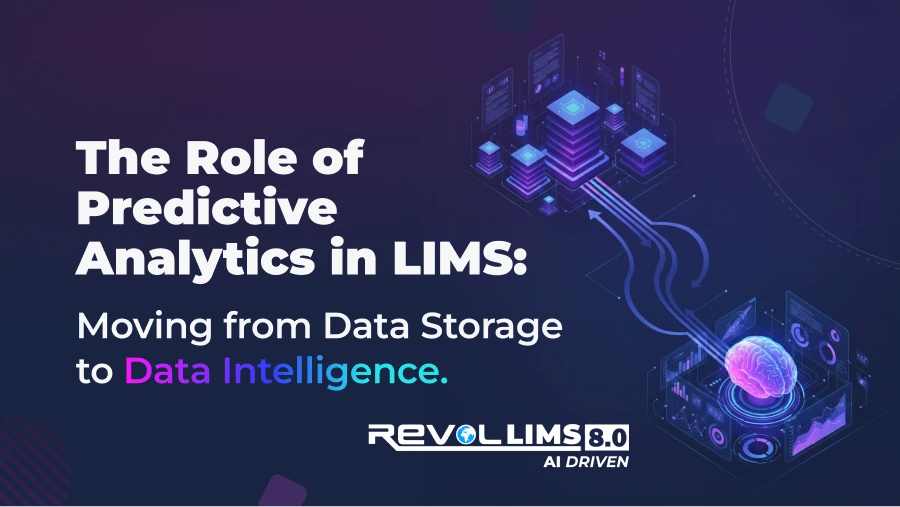
Executive Summary: Predictive analytics in LIMS uses statistical algorithms and machine learning to forecast future laboratory outcomes based on historical data. It shifts laboratory management from reactive reporting to proactive intelligence,enabling predictive maintenance,early quality control trend detection, and optimised resource allocation.
At a Glance: Key Benefits of Predictive LIMS
- Reduced Downtime: Anticipate instrument failures before they occur.
- Enhanced Compliance: Detect quality drifts early to avoid out-of-specification (OOS) results.
- Optimised Resources: Accurate forecasting for reagents and staffing needs.
Modern laboratories generate massive volumes of data daily—from sample test results and instrument readings to quality control metrics and compliance records. Yet, many quality control laboratories still treat their Laboratory Information Management Systems (LIMS) primarily as digital filing cabinets. This approach misses a critical opportunity: transforming raw laboratory data into predictive intelligence that drives proactive decision-making and operational excellence.
The shift from reactive data storage to predictive analytics represents the next evolution in laboratory management. For laboratories struggling with unexpected equipment failures, compliance deviations, or quality issues that could have been prevented, predictive analytics offers a path forward. This comprehensive guide explores how integrating predictive capabilities into LIMS transforms laboratory operations from retrospective reporting to forward-looking intelligence.
Understanding Predictive Analytics in Laboratory Contexts
Predictive analytics applies statistical algorithms and machine learning techniques to historical laboratory data to forecast future outcomes. Unlike traditional descriptive analytics that simply report what happened, predictive models identify patterns and trends that indicate what is likely to happen next.
In laboratory settings, this means:
- Deep Data Analysis: Analysing years of accumulated test data, quality control measurements, instrument performance logs, and environmental conditions to detect subtle patterns invisible to manual review.
- Foundation for Forecasting: These patterns become the basis for forecasting potential quality deviations, predicting equipment maintenance needs, and identifying samples at risk of retesting before problems occur.
- Processing at Scale: The power of predictive analytics lies in its ability to process complex, multidimensional laboratory data at scale.
A single pharmaceutical quality control laboratory might conduct thousands of tests monthly across dozens of instruments and hundreds of reagent lots. Human analysts cannot realistically monitor all these variables simultaneously for emerging trends, but predictive algorithms excel at exactly this type of comprehensive pattern recognition.
Key Applications of Predictive Analytics in Modern LIMS
1. Predictive Instrument Maintenance and Calibration
Laboratory instruments represent significant capital investments, and unexpected failures disrupt testing schedules, delay product releases, and incur costly emergency repairs. Traditional preventive maintenance follows fixed schedules based on manufacturer recommendations, which may result in unnecessary servicing or miss emerging issues between scheduled windows.
Predictive maintenance models change this by:
- Analysing Performance Data: Tracking calibration drift patterns, baseline noise levels, detector response consistency, and error frequencies to forecast when specific instruments will require attention.
- Proactive Scheduling: For example, by tracking how quickly an HPLC detector's signal-to-noise ratio degrades, the system can predict when performance will fall below acceptable thresholds and schedule maintenance before failures occur.
- Optimisation: This approach reduces unplanned downtime, extends instrument lifespan, and optimises resource allocation by focusing efforts where they are genuinely needed.
2. Quality Control (QC) Trend Forecasting
Quality control laboratories rely on Statistical Quality Control (SQC) and Statistical Process Control (SPC) to monitor test reliability. Traditional SQC approaches react to out-of-specification (OOS) results after they occur.
Predictive analytics enhances this through:
- Drift Identification: Identifying subtle trending patterns that indicate a control material or testing process is drifting toward failure before specifications are breached.
- Multidimensional Analysis: By analysing historical SQC data across multiple control levels, instruments, and operators, models can detect gradual shifts in mean values, increasing variability, or seasonal patterns.
- Early Intervention: Laboratories receive early warnings to investigate root causes—reagent degradation, environmental factors, or operator technique—and implement corrections before producing invalid results.
- Compliance Strength: This proactive approach reduces invalid runs, minimises sample retesting, and demonstrates a robust quality system to regulators.
3. Sample Result Prediction and Outlier Detection
In high-throughput testing environments, predictive models can learn typical result patterns for specific sample types and historical batches. When new samples exhibit characteristics that deviate significantly from these learned patterns, the system flags them for review before final reporting.
This capability is particularly valuable for:
- Stability Testing Programs:Laboratories analyse pharmaceutical products stored over extended periods.
- Early Failure Identification: Predictive analytics can forecast degradation trajectories based on early timepoint data, potentially identifying stability failures months earlier than traditional approaches.
4. Reagent and Consumable Lifecycle Management
Laboratory efficiency depends on maintaining adequate inventory while minimising waste from expired materials.
- Accurate Forecasting: Predictive inventory management analyses historical usage, testing volumes, seasonal variations, and upcoming project demands to forecast reagent needs.
- Procurement Optimisation: For critical materials with long lead times, predictive models ensure timely procurement while preventing overstocking.
- Performance Prediction: The system can also predict when specific reagent lots may exhibit performance degradation based on storage conditions and age.
5. Resource Allocation and Capacity Planning
Laboratory managers face constant challenges balancing workload across available staff and instruments.
- Data-Driven Staffing: Predictive analytics helps by forecasting testing demand based on historical patterns and seasonal trends.
- Constraint Management: These forecasts enable decisions about staffing levels, overtime requirements, and instrument maintenance scheduling to avoid peak periods.
- Bottleneck Prevention: Laboratories can proactively address capacity constraints before they delay critical product release decisions.
Integrating Predictive Analytics into Laboratory Workflows
Effective predictive analytics requires thoughtful integration into daily laboratory operations. The most successful implementations share several characteristics:
Data Quality as the Foundation
Predictive models are only as reliable as the data they analyse. Laboratories must ensure comprehensive data capture with proper context.This means recording test results alongside associated metadata:
- Instrument identifiers and operator names.
- Reagent lot numbers and environmental conditions.
- Any deviations or observations during testing.
Modern LIMS platforms with configurable workflows make systematic data collection natural. When technicians use structured interfaces that prompt for relevant information, the system builds rich datasets that fuel accurate predictions.
Real-Time Dashboards and Automated Workflows
Predictive analytics delivers value only when insights reach decision-makers in actionable formats.
- Real-Time Visibility: Dashboards should present forecasts and risk alerts alongside traditional metrics.
- Prioritisation: Effective dashboards prioritise alerts by severity to prevent alert fatigue.
- Visualisation: Data must be presented in formats non-statisticians can interpret and act upon.
The most mature implementations automate responses. For instance, if the system forecasts an instrument calibration requirement within three days, it can automatically generate a maintenance work order and adjust the testing schedule. Similarly, quality control drifts can automatically initiate root cause investigation workflows.
The Revol LIMS Advantage in Predictive Analytics
Revol LIMS positions laboratories to harness predictive analytics through several purpose-built capabilities:
Measuring ROI from Predictive LIMS Capabilities
Organisations should track specific metrics to demonstrate business value:
Practical Recommendations for Implementation
Laboratories should start with focused applications addressing specific pain points.
- SQC/SPC Module: Provides the foundation for quality trend analysis, capturing detailed control data with full context for modelling.
- Comparative Analysis: Enables laboratories to identify patterns across multiple dimensions, such as comparing performance across different instruments, operators, or sample types.
- Gen-AI Chat Assistant: This innovative tool allows personnel to query the system in natural language about performance trends or risk forecasts without requiring statistical expertise.
- Dynamic Reporting & Dashboards: Provides at-a-glance visibility into current and predicted future states to help managers balance priorities.
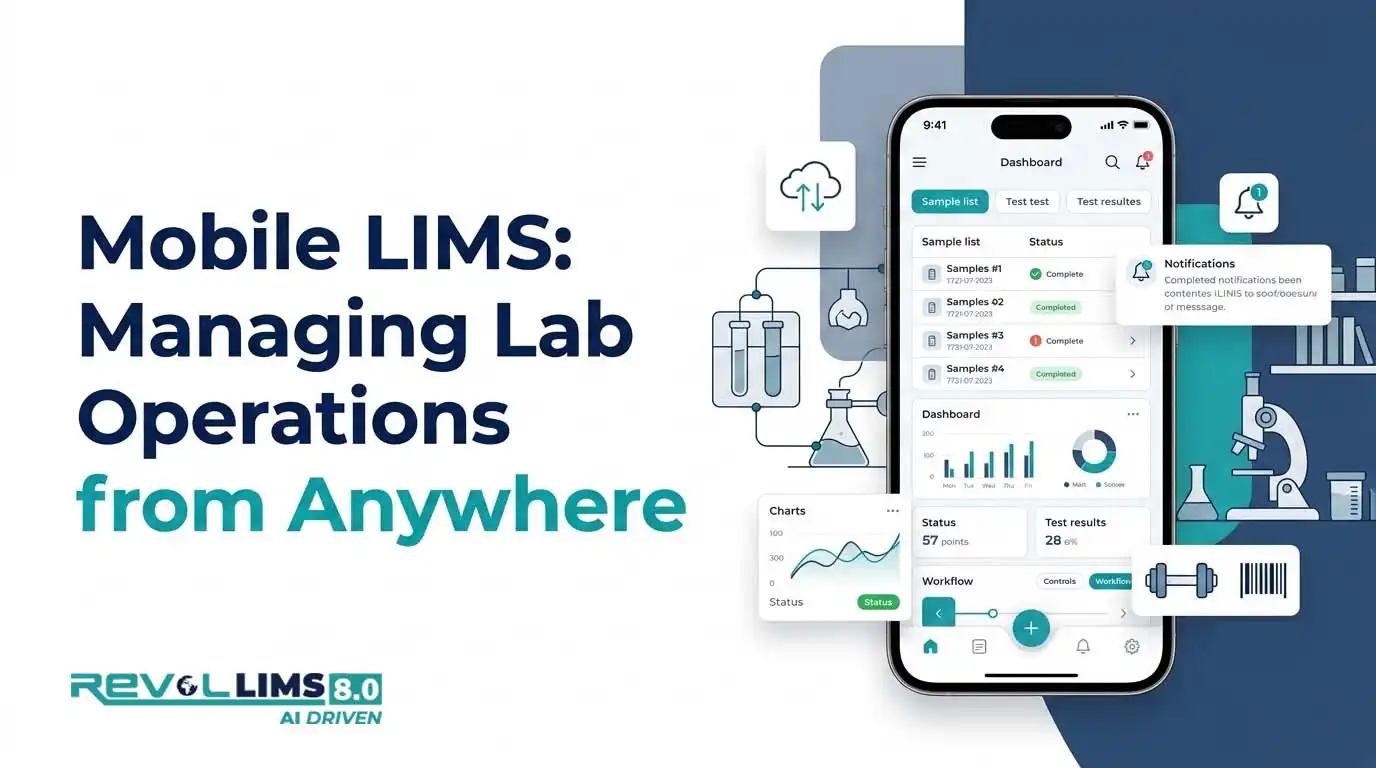
- Zero-Footprint Web-Based Platform: Accessible via PC, tablet, and mobile, ensuring predictive insights reach decision-makers wherever they work.
- Reduction in Unplanned Downtime: Measure the frequency and duration of unexpected instrument failures before and after implementation.
- Decreased Sample Retesting: Improved quality control stability reduces the number of avoided retests, saving reagents, labour, and instrument time.
- Regulatory Compliance Excellence:, Manifests through fewer OOS investigations and reduced deviations. Agencies increasingly expect proactive quality management, making predictive approaches essential for compliance.
- Enhanced Resource Utilisation: Measured by improved instrument capacity, reduced reagent waste, and optimised staffing efficiency.
Conclusion:
The Future of Intelligent Laboratory Management
The transformation from data storage to data intelligence fundamentally changes how laboratories operate. Rather than reacting to problems after they impact quality, predictive analytics enables laboratories to anticipate challenges and implement solutions proactively.
For quality control and testing laboratories facing increasing volumes and pressure to reduce costs, predictive capabilities within LIMS offer a sustainable path forward. The question is no longer whether to adopt these technologies, but how quickly they can be implemented to remain competitive. Modern LIMS platforms that integrate these capabilities position laboratories as strategic assets that drive quality, efficiency, and innovation.
See Revol LIMS in action: Schedule a Personalized Demo with the Revol LIMS Team Today
- Start with Instrument Maintenance: This data is typically well-structured, the benefits are easily measured, and it addresses a universal challenge. Success here builds organisational confidence.
- Staff Involvement: Ensure early involvement of laboratory staff who will rely on these insights.
- Workflow Integration: Focus on delivering intelligence in formats that fit naturally into existing workflows.
- Iterative Refinement: Plan for the refinement of models as the system learns laboratory-specific patterns and staff provide feedback.
- Accuracy Review: Establish processes for reviewing prediction accuracy and updating models based on outcomes.




 (1) (1).webp)