Introduction
The global food industry faces unprecedented challenges in 2025. With supply chains spanning multiple continents, increasing regulatory scrutiny, and consumer demand for transparency, food safety has never been more critical—or more complex. A single contamination incident can result in multi-million dollar recalls, damaged brand reputation, and serious public health consequences.
According to the World Health Organization, unsafe food causes 600 million cases of foodborne diseases annually, resulting in 420,000 deaths worldwide. As supply chains become increasingly globalized, traditional manual processes and disconnected systems can no longer guarantee the level of oversight required to protect consumers and maintain compliance.
This is where Laboratory Information Management Systems (LIMS) have become indispensable. Modern LIMS platforms like Revol LIMS transform how food testing laboratories manage quality control, ensure regulatory compliance, and maintain complete traceability from farm to table. In this comprehensive guide, we'll explore how LIMS technology addresses the most pressing challenges in food safety management today.
Understanding the Food Safety Compliance Landscape
The Regulatory Environment in 2025
Food testing laboratories must navigate an increasingly complex web of regulations:
Global Standards:
- ISO 17025: The international standard for testing and calibration laboratories, requiring documented quality management systems and technical competence
- FDA Food Safety Modernization Act (FSMA): Emphasizes prevention-based controls and mandatory supply chain verification
- HACCP Principles: Hazard Analysis and Critical Control Points remain fundamental to food safety programs
- GFSI Benchmarking: Global Food Safety Initiative standards harmonize food safety requirements across supply chains
Regional Requirements:
- EU Regulations: General Food Law (EC 178/2002) and specific contaminant limits
- China's GB Standards: Increasingly stringent food safety national standards
- India's FSSAI: Food Safety and Standards Authority regulations for domestic and imported foods
Industry-Specific Compliance: Different food sectors face unique requirements—dairy operations must meet pasteurization standards, seafood processors need HACCP plans for biological hazards, and fresh produce handlers follow agricultural water testing protocols.
The Traceability Imperative
The Food and Drug Administration's Food Traceability Rule, which began phased implementation in 2023, requires food companies to maintain records containing Key Data Elements (KDEs) for high-risk foods throughout the supply chain. This "farm-to-fork" traceability means laboratories must track:
- Sample origin and chain of custody
- Testing methodologies and equipment used
- Personnel performing analyses
- Environmental conditions during testing
- Complete audit trails of all data modifications
Manual tracking systems simply cannot provide the granular, real-time visibility that modern regulations demand.
How LIMS Transforms Food Safety Management
1. End-to-End Sample Traceability
Complete Chain of Custody Documentation
Revol LIMS provides comprehensive sample tracking from the moment a food sample enters the laboratory until final disposition. Every touchpoint is automatically documented:
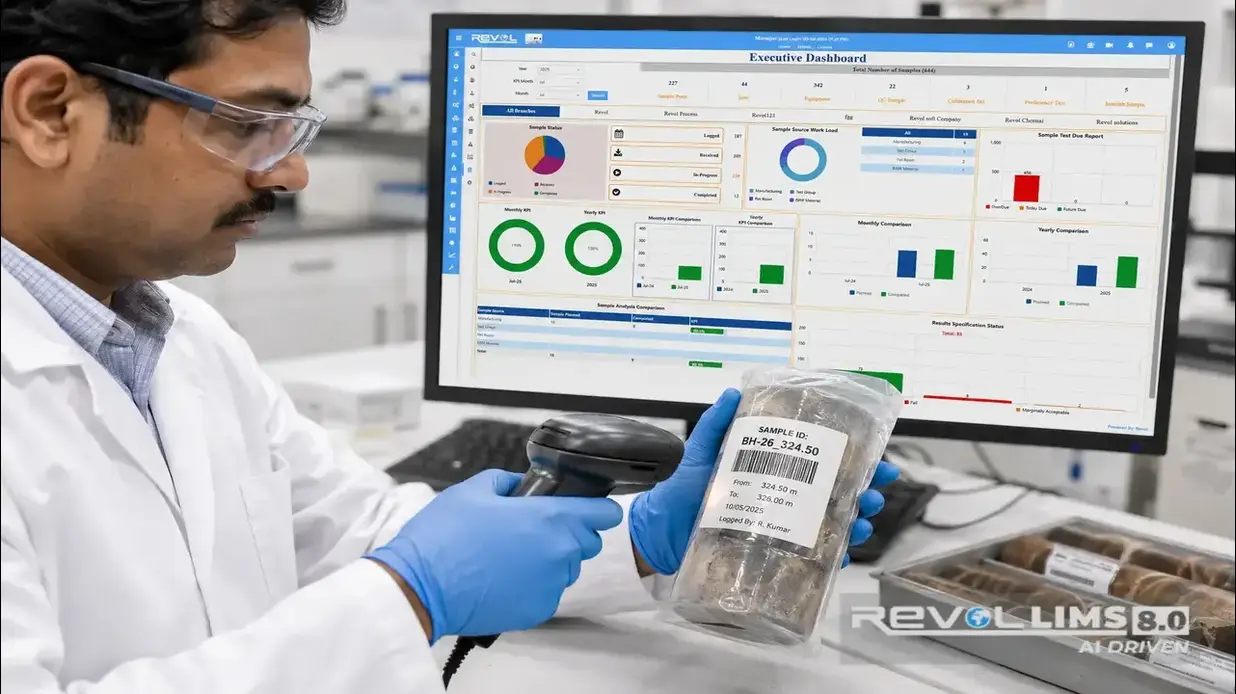
- Sample Receipt: Barcode scanning captures sample details, condition upon arrival, storage requirements, and client information
- Storage Management: Automated tracking of sample location, storage conditions (temperature, humidity), and shelf-life monitoring
- Analysis Workflow: Real-time tracking of which tests are performed, by whom, on which instruments, and under what conditions
- Result Linking: Direct connection between raw data, calculations, and final reported values
When a contamination incident occurs, laboratories using Revol LIMS can instantly identify:
- All samples from the affected batch or supplier
- Complete testing history and results
- Related samples that may require retesting
- Downstream products that received ingredients from the contaminated source
This capability transforms recall response time from days to hours, potentially preventing widespread distribution of unsafe products.
2. Automated Compliance Workflows
Configurable Testing Protocols
Modern food safety testing involves hundreds of different analytical methods, each with specific requirements. Revol LIMS allows laboratories to configure:
- Method-Specific Workflows: Step-by-step guided procedures ensure technicians follow validated methods exactly
- Instrument Integration: Direct data capture from analytical equipment (HPLC, GC-MS, ICP-MS, PCR systems) eliminates transcription errors
- Automated Calculations: Built-in formulas perform complex calculations consistently, with full audit trails
- Quality Control Checkpoints: Mandatory verification steps prevent incomplete or non-compliant testing
3. Real-Time Quality Control & Statistical Process Control
SQC/SPC Integration
Food safety laboratories must continuously monitor testing accuracy and precision. Revol LIMS includes comprehensive Statistical Quality Control (SQC) and Statistical Process Control (SPC) capabilities:
- Control Charts: Real-time Levey-Jennings charts, Westgard rules, and trend analysis for method performance
- Proficiency Testing Management: Track external quality assessment results and generate CAPA (Corrective and Preventive Action) when performance drifts
- Reference Material Tracking: Monitor stability and usage of certified reference materials
- Instrument Calibration Management: Automated scheduling and verification of equipment calibration status
4. Multi-Site Laboratory Management
Global Operations, Unified Data
Food companies often operate testing laboratories across multiple facilities, regions, or countries. Revol LIMS's 100% web-based architecture provides:
- Centralized Data Repository: All testing data across all locations accessible from a single platform
- Standardized Methods: Ensure identical testing procedures are followed at every facility
- Cross-Site Trending: Identify regional patterns in contamination or quality issues
- Resource Optimization: Balance testing workload across facilities based on capacity and expertise
- Global Reporting: Consolidated compliance reports for corporate quality oversight
5. Supplier and Raw Material Management
Supply Chain Quality Verification
Under FSMA's Preventive Controls rule, food companies must verify that their suppliers meet food safety standards. Revol LIMS supports this requirement through:
- Supplier Qualification Tracking: Maintain records of supplier audits, certifications, and performance history
- Certificate of Analysis (COA) Management: Store and compare supplier-provided testing results against internal specifications
- Incoming Material Testing: Automated test order generation for high-risk ingredients
- Supplier Scorecarding: Trend analysis of supplier quality performance over time
- Deviation Management: Automated workflows when supplier materials fail specifications
Traceability Through the Supply Chain:
Revol LIMS's inventory management module tracks raw materials from receipt through production use, maintaining complete genealogy. If finished product testing reveals contamination, the system can:
- Identify the specific raw material lot(s) used
- Trace back to the original supplier
- Identify other batches using the same ingredient
- Generate focused investigation scope
This granular traceability is essential for meeting FDA's Key Data Elements requirements.
Advanced LIMS Capabilities for Modern Food Safety
1. AI-Powered Data Analysis
Generative AI Chat Assistant
Revol LIMS's Gen-AI-based chat assistant represents the cutting edge of laboratory data management. This intelligent interface enables:
- Natural Language Queries: Ask questions like "Show me all pesticide tests that exceeded limits in the past quarter" without writing database queries
- Rapid Sample Logging: Dictate sample details conversationally rather than filling out forms
- Custom Report Generation: Request specific data visualizations or compliance reports in plain language
- Predictive Insights: AI identifies patterns humans might miss, such as seasonal contamination trends or supplier risk factors
Example Use Case:
A food safety manager asks: "What percentage of spinach samples from California suppliers tested positive for E. coli in the last 6 months compared to the previous year?" The AI assistant instantly aggregates the data, generates visualizations.
2. Mobile Laboratory Operations
Field and Remote Testing Support
Food safety testing increasingly occurs outside traditional laboratory settings—at farms, processing plants, and distribution centers. Revol LIMS's mobile application provides:
- On-Site Sample Collection:Document sample collection with photo capture, GPS location, and environmental conditions
- Field Testing Results:Enter rapid test results (ATP swabs, lateral flow tests) immediately
- Offline Capability:Continue working in areas without internet connectivity, with automatic synchronization when reconnected
- Barcode Scanning: Use smartphone cameras for sample identification
- Client Portal Access:Enable suppliers and customers to view relevant testing data and COAs securely
This mobility extends laboratory quality controls to the first and last miles of the supply chain.
3. Integrated Document Management
Centralized Quality Documentation
Food safety compliance requires managing thousands of documents. Revol LIMS's document management module provides:
- Standard Operating Procedures (SOPs):Version-controlled methods with electronic signatures on updates
- Training Records:Link personnel qualifications to specific testing authorities
- Regulatory Submissions:Maintain copies of certifications, registrations, and correspondence
- Audit Documentation:Package all required records for regulatory inspections within minutes
- Controlled Distribution:Ensure personnel only access current, approved versions of procedures
21 CFR Part 11 Compliance:
All document access, modifications, and approvals are captured in comprehensive audit trails with electronic signatures, meeting FDA requirements for electronic records.
4. Client Portal and Transparency
Enhanced Customer Communication
Modern food buyers demand transparency about safety and quality testing. Revol LIMS's client portal enables:
- Real-Time Test Status: Customers check progress of their samples without phone calls or emails
- Automated COA Delivery: Certificates of Analysis automatically delivered upon test completion
- Specification Comparison: Visual dashboards showing results against customer specifications
- Trend Reports: Long-term quality performance summaries
- Secure Data Sharing: Role-based access ensures customers only see their data
This transparency builds trust and differentiates laboratories that can provide modern, data-driven service.
Implementation Best Practices for Food Safety Laboratories
Planning for Success
1. Define Regulatory Requirements First
Before configuring your LIMS, document:
- All applicable regulations (FDA, USDA, EU, local)
- Industry standards (SQF, BRC, FSSC 22000)
- Customer-specific requirements
- Internal quality policies
Use this requirements matrix to guide LIMS configuration decisions.
2. Map Current Workflows
Document existing processes to identify:
- Bottlenecks and inefficiencies
- Manual data entry points (error risks)
- Compliance gaps
- Opportunities for automation
Don't simply automate broken processes—redesign workflows to leverage LIMS capabilities.
3. Prioritize Integration
Modern food safety operations involve multiple systems:
- ERP systems for inventory and production
- Quality management systems
- Environmental monitoring systems
- Customer portals
Revol LIMS's integration capabilities ensure seamless data flow, but early planning prevents technical debt.
Execution Strategies
Phased Rollout Approach
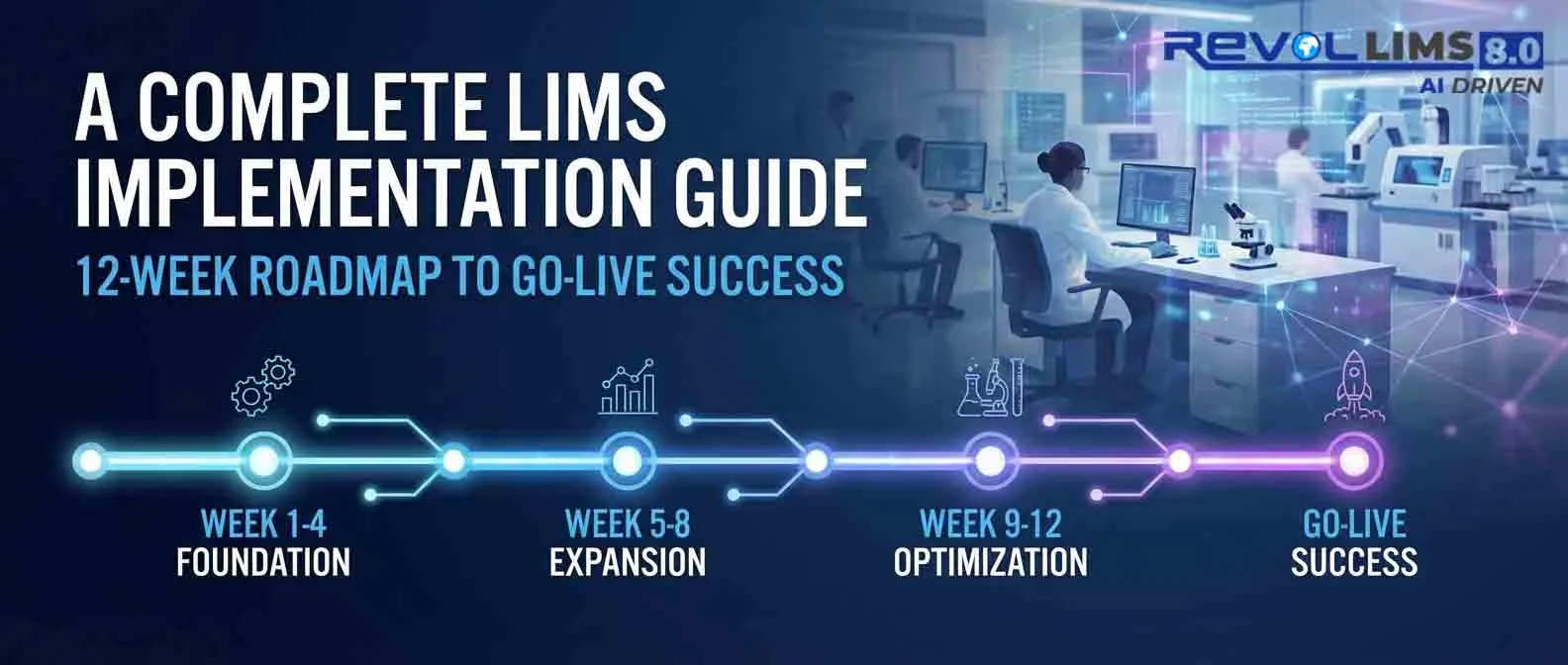
Rather than attempting a "big bang" implementation, successful laboratories phase LIMS deployment:
Phase 1: Core Sample Management (Weeks 1-8)
- Sample login and tracking
- Basic test order management
- Result entry and reporting
- Essential integrations
Phase 2: Advanced Testing Workflows (Weeks 9-16)
- Instrument integration
- Complex calculations
- Method-specific workflows
- QC charts
Phase 3: Compliance & Analysis (Weeks 17-24)
- Full audit trails
- Electronic signatures
- Advanced reporting
- Statistical analysis
Phase 4: Optimization (Weeks 25+)
- AI assistant training
- Custom dashboards
- Mobile deployment
- Client portal activation
This approach delivers value quickly while building user confidence.
Training and Change Management
Technology alone doesn't ensure success—people do. Effective LIMS implementation requires:
- Role-Based Training: Customize education for analysts, supervisors, quality managers, and administrators
- Hands-On Practice: Provide sandbox environments for learning without impacting production data
- Super-User Development: Identify champions who become internal experts
- Continuous Education: Regular refreshers as new capabilities are deployed
Revol LIMS's intuitive interface reduces training time, but investing in user competency pays dividends in adoption and compliance.
Optimization and Continuous Improvement
Leveraging Analytics for Better Decisions
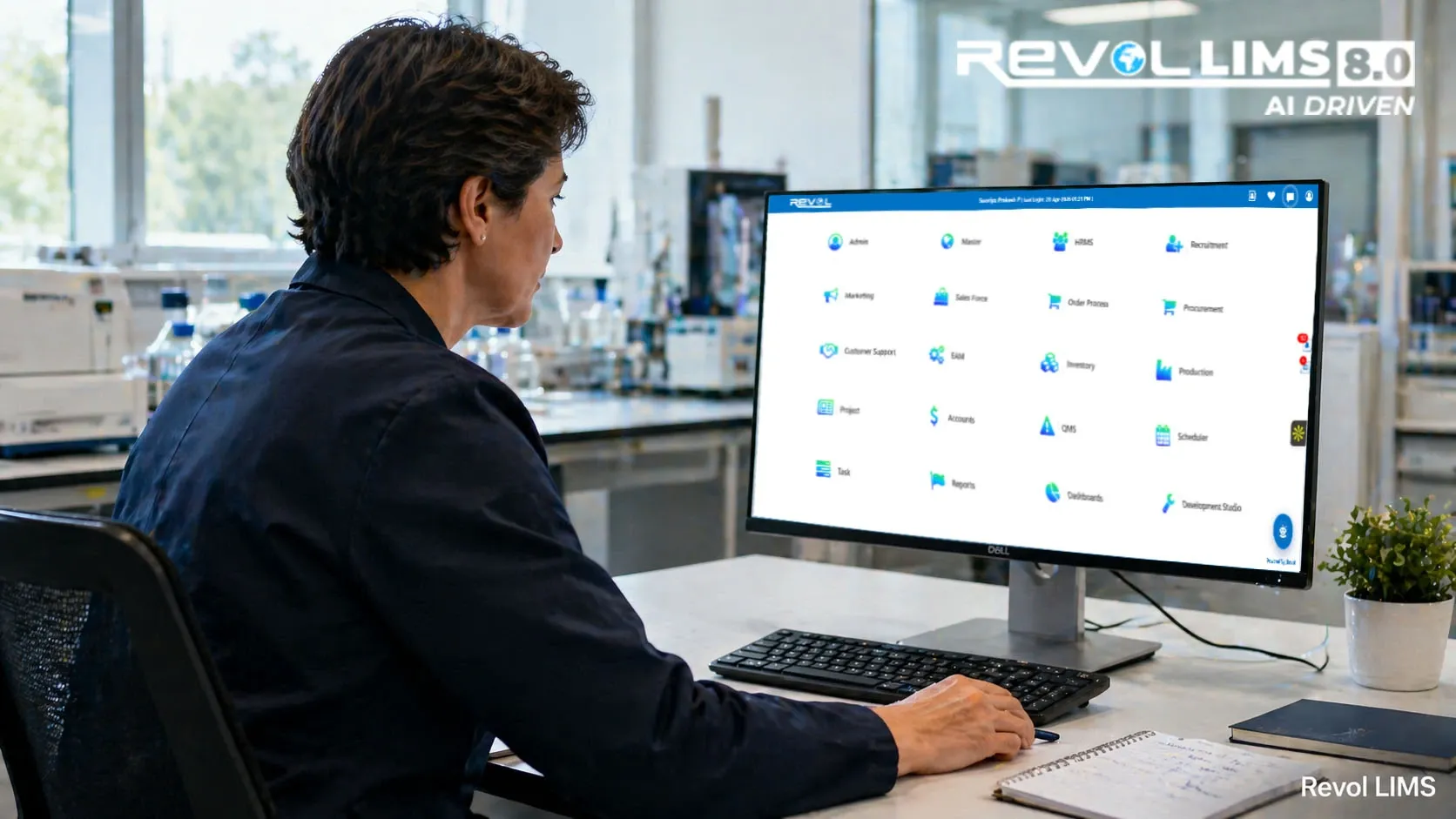
Once operational, use Revol LIMS's real-time dashboards and dynamic reports to:
- Identify High-Risk Suppliers: Track failure rates and take proactive action
- Optimize Testing Strategies: Focus resources on higher-risk samples
- Benchmark Performance: Compare laboratory productivity and quality across sites
- Predict Resource Needs: Forecast staffing and equipment requirements based on historical trends
Regular System Audits
Schedule periodic reviews to ensure:
- Workflows remain aligned with current regulations
- User permissions follow role changes
- Instrument integrations function correctly
- Data backup and recovery procedures work
These audits prevent compliance drift and maintain system integrity.
The Future of Food Safety & LIMS Technology
Emerging Trends to Watch
1. Blockchain Integration for Supply Chain Transparency
While still evolving, blockchain technology promises immutable traceability records. Future LIMS platforms may write critical data points (sample origin, test results, custody transfers) to distributed ledgers, providing unprecedented supply chain visibility.
2. IoT and Continuous Monitoring
Internet of Things sensors in storage facilities, transportation, and production areas will generate continuous environmental data. Advanced LIMS platforms will correlate this real-time information with testing results, enabling predictive food safety management.
3. Advanced Predictive Analytics
Machine learning algorithms will analyze historical testing data, weather patterns, supplier performance, and global food safety incidents to predict contamination risks before they occur—shifting from reactive testing to proactive prevention.
4. Expanded AI Capabilities
Generative AI will evolve beyond query assistance to:
- Automatically generate method validations and SOPs
- Suggest optimal testing strategies based on risk profilesc
- Draft regulatory submission documents
- Provide real-time guidance during complex analyses
5. Enhanced Interoperability
As food safety data becomes increasingly important across supply chains, LIMS platforms will offer standardized APIs and data exchange protocols, enabling seamless information sharing between manufacturers, laboratories, retailers, and regulators.
Conclusion: The Strategic Imperative of Modern LIMS
Food safety in 2025 is no longer just about testing samples—it's about managing complex data ecosystems, ensuring regulatory compliance across jurisdictions, and providing the transparency that modern consumers and business partners demand. Traditional laboratory management approaches cannot meet these requirements.
Revol LIMS represents the evolution of laboratory information management specifically designed for today's globalized food supply chains. Its comprehensive capabilities—from Gen-AI-powered data analysis and mobile operations to multi-site management and real-time compliance monitoring—provide food testing laboratories with the tools they need to:
- Protect Public Health: Through accurate, timely testing and complete traceability
- Ensure Regulatory Compliance: With built-in support for ISO 17025, FDA 21 CFR Part 11, and global standards
- Optimize Operations: Via automation, integration, and intelligent analytics
- Build Customer Trust: Through transparency and data-driven quality assurance
The question is no longer whether food safety laboratories need a modern LIMS—it's whether they can afford the risks of operating without one.
As supply chains grow more complex, regulations become more stringent, and consumer expectations rise, laboratories that invest in comprehensive LIMS platforms like Revol position themselves not just for compliance, but for competitive advantage in an industry where quality and safety are paramount.
Take the Next Step in Food Safety Excellence
Ready to transform your food testing laboratory operations?
Discover how Revol LIMS can help your organization ensure compliance, enhance traceability, and optimize quality control across your global supply chain.
Request a demo of Revol LIMS to see how our industry-leading platform can address your unique challenges and deliver measurable benefits.
Contact us today to start your journey toward a safer, more efficient, and fully compliant food testing operation.
Frequently Asked Questions
Q: How long does it take to implement Revol LIMS in a food testing laboratory?
Ans: Implementation timelines vary based on laboratory size, complexity, and integration requirements. A typical mid-sized food testing laboratory can achieve core functionality (sample management, basic testing workflows, and reporting) within 8-12 weeks. Full deployment including advanced features, multiple site integration, and comprehensive training typically takes 4-6 months. Our phased approach ensures you begin realizing value quickly while building toward complete optimization.
Q: Can Revol LIMS integrate with our existing ERP system and laboratory instruments?
Ans: Yes. Revol LIMS is designed with integration in mind. We support standard protocols for instrument connectivity (including ASTM E1381, HL7, and custom APIs) and have extensive experience integrating with major ERP platforms like SAP, Oracle, and Microsoft Dynamics. Our team works with you during implementation to map data flows and ensure seamless information exchange between systems.
Q: How does Revol LIMS handle multi-site operations with different regulatory requirements?
Ans: Revol LIMS's architecture allows you to configure site-specific workflows, specifications, and reporting templates while maintaining centralized data visibility. You can define regional regulatory rules (FDA vs. EU standards, for example) and ensure each facility operates according to local requirements while enabling global quality managers to access consolidated data across all locations.
Q: What happens if we lose internet connectivity? Can we continue testing?
Ans: Revol LIMS's mobile application includes offline functionality, allowing field operations to continue during connectivity disruptions. Data synchronizes automatically when connection is restored. For main laboratory operations, we recommend standard business continuity planning including backup internet connections. Additionally, our cloud infrastructure provides 99.9% uptime with redundant systems ensuring continuous availability.
Q: Is Revol LIMS validated for FDA 21 CFR Part 11 compliance?
Ans: Yes. Revol LIMS includes all technical controls required by FDA 21 CFR Part 11, including:
- Comprehensive audit trails tracking all data creation, modification, and deletion
- Electronic signature capabilities with user authentication and authorization
- Record retention and archival systems
- Data integrity controls preventing unauthorized access or changes
- Computer system validation documentation
We provide Installation Qualification (IQ), Operational Qualification (OQ), and Performance Qualification (PQ) documentation to support your validation process.
Q: How much training is required for laboratory personnel?
Ans: Revol LIMS's intuitive interface significantly reduces training time compared to legacy systems. Most analysts become proficient in core functions within 2-3 days of hands-on training. Supervisors and quality managers typically require an additional 1-2 days for reporting and administrative functions. We provide role-based training programs, comprehensive documentation, and ongoing support to ensure user success.
Q: Can we customize Revol LIMS to match our specific workflows?
Ans: Absolutely. Unlike rigid "off-the-shelf" systems, Revol LIMS is highly configurable without requiring custom programming. You can:
- Design custom workflows matching your SOPs
- Create laboratory-specific forms and data entry screens
- Configure automated calculations and data transformations
- Build custom reports and dashboards
- Define unique business rules and specifications
Q: How does the Gen-AI chat assistant handle data security and confidentiality?
Ans: The AI assistant operates within Revol LIMS's security framework, respecting all user permissions and access controls. It can only access data that the logged-in user has authorization to view. All AI interactions are logged in audit trails. The system uses enterprise-grade encryption for data in transit and at rest. Importantly, your proprietary laboratory data is never used to train public AI models—your information remains completely confidential within your LIMS environment.
Q: What is the typical ROI timeline for implementing a LIMS in a food testing laboratory?
Ans: Most food testing laboratories see positive ROI within 12-18 months. Key value drivers include:
- Reduced Testing Errors: Elimination of manual transcription errors saves rework costs (typically 15-30% reduction in invalid results)
- Improved Productivity: Automation and workflow optimization often increase laboratory throughput by 20-40% without adding staff
- Faster Turnaround Times: Streamlined processes and better resource allocation reduce average test completion time
- Lower Compliance Costs: Automated audit trails and reporting reduce preparation time for inspections and certifications
- Prevented Recalls: Enhanced traceability and quality control help identify issues before product release, avoiding costly recalls
Your specific ROI depends on current operation efficiency, testing volume, and compliance requirements.
Q: How does Revol LIMS stay current with evolving food safety regulations?
Ans: Our product team continuously monitors regulatory changes globally, including:
- FDA guidance documents and rule updates
- EU food safety regulation amendments
- ISO standard revisions
- Industry-specific certification requirements (SQF, BRC, FSSC 22000)
Regular software updates ensure Revol LIMS maintains compliance with current standards. We also provide regulatory update notifications and best practice guidance to help you adapt your laboratory operations as requirements evolve.