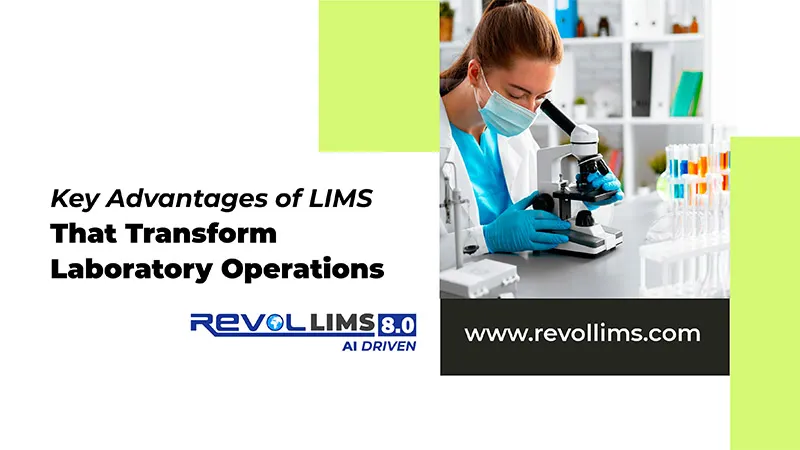
Modern laboratories face unprecedented challenges: increasing sample volumes, stringent regulatory requirements, and pressure to deliver faster results with fewer resources. Laboratory Information Management Systems (LIMS) have become essential tools for addressing these challenges. This comprehensive guide explores the key advantages of LIMS and how they deliver measurable value to laboratories across all industries.
What is LIMS and Why Do Laboratories Need It?
A Laboratory Information Management System (LIMS) is specialized software designed to manage laboratory workflows, samples, data, and compliance requirements. Unlike basic spreadsheets or manual record-keeping, LIMS provides integrated automation that transforms how laboratories operate.
Key LIMS capabilities include:
- Sample tracking and management
- Workflow automation
- Data integrity and security
- Regulatory compliance tools
- Instrument integration
- Report generation and distribution
Understanding the advantages of LIMS starts with recognizing how modern laboratories need more than simple data storage—they require intelligent systems that optimize every aspect of operations.
The Top 15 Advantages of LIMS for Your Laboratory
1. Enhanced Data Accuracy and Integrity
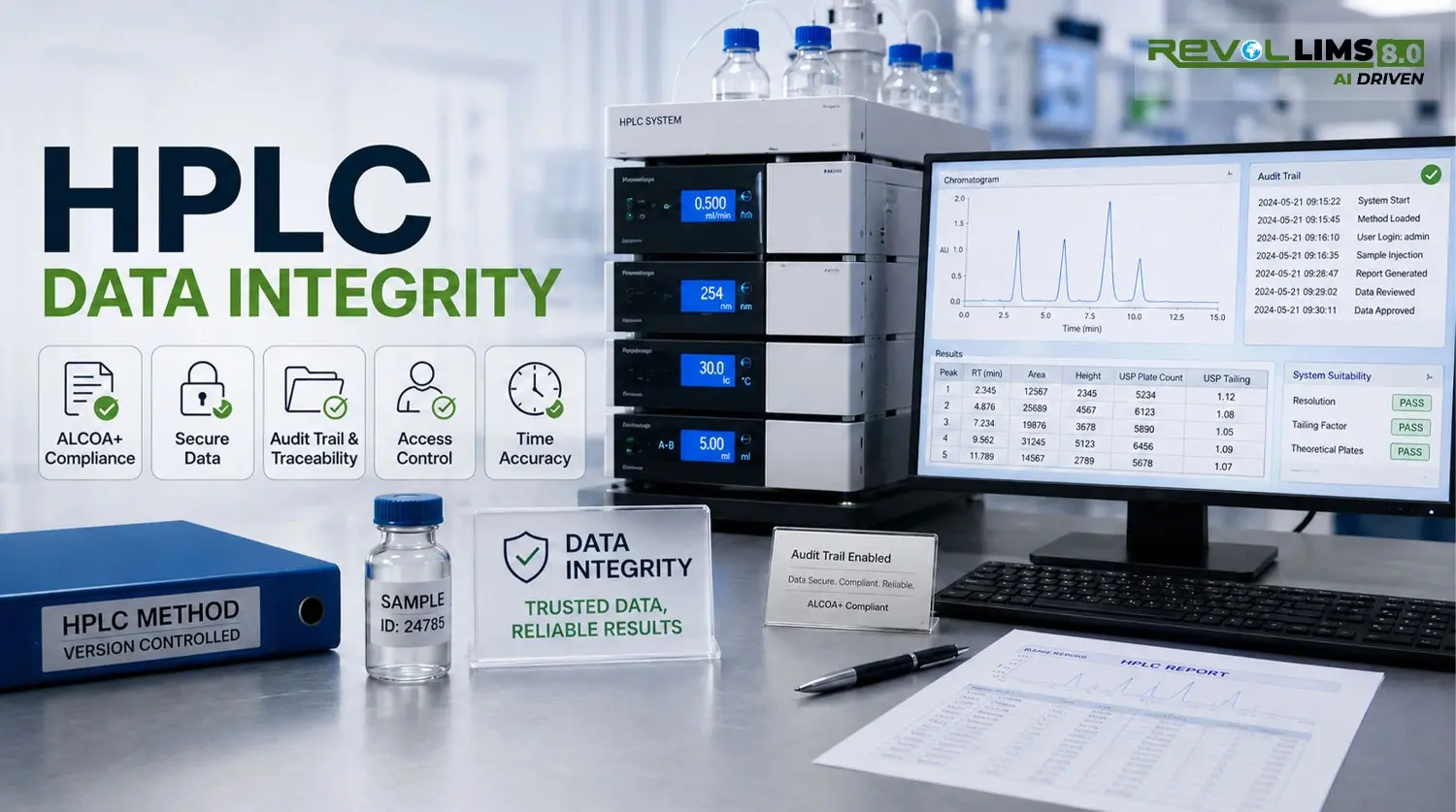
One of the most significant advantages of LIMS is eliminating human error in data management. Manual transcription errors occur in approximately 1-3% of entries, leading to costly mistakes and compliance issues.
LIMS improves data accuracy through:
- Automated instrument data capture eliminating manual entry
- Built-in validation rules preventing incorrect values
- Complete audit trails documenting every change
- Standardized data formats across all users
- Electronic signatures ensuring accountability
Real-world impact: Laboratories report up to 90% reduction in transcription errors after implementing LIMS software, directly improving result reliability and reducing expensive retests.
2. Operational Efficiency Improvements
When evaluating LIMS benefits, efficiency gains consistently rank among the most valuable. LIMS automates repetitive administrative tasks that traditionally consume 30-40% of laboratory staff time.
Efficiency advantages of LIMS include:
- Automated sample login and registration
- Intelligent test assignment and prioritization
- Electronic approval workflows replacing paper signatures
- Automated report generation and distribution to clients
- Smart scheduling optimizing instrument utilization
- Barcode scanning eliminating manual sample identification
Measurable outcomes: Organizations typically achieve 35-50% reduction in administrative time, allowing scientists to focus on analysis rather than paperwork. This translates to processing 20-30% more samples with existing staff.
3. Complete Regulatory Compliance Assurance
For regulated laboratories, compliance represents one of the most critical advantages of LIMS. Non-compliance can result in failed audits, warning letters, product recalls, or facility shutdowns.
LIMS ensures compliance with:
- FDA 21 CFR Part 11 electronic record requirements
- ISO/IEC 17025laboratory quality standards
- Good Laboratory Practice (GLP) regulations
- Clinical Laboratory Improvement Amendments (CLIA)
- Environmental Protection Agency (EPA) methods
- Health Insurance Portability and Accountability Act (HIPAA)
Compliance features include:
- Electronic signatures with user authentication
- Complete chain of custody documentation
- Automated record retention and archival
- Role-based access controls
- Comprehensive audit trails showing who, what, when
- SOP version control and enforcement
- Calibration and maintenance tracking
Audit benefits: LIMS maintains inspection-ready documentation, reducing audit preparation time by 60-70% and significantly lowering compliance risk.
4. Superior Sample Management and Tracking
Sample mismanagement creates costly bottlenecks. The advantages of LIMS for sample tracking include complete visibility from receipt through disposal.
Sample management capabilities:
- Barcode or RFID automatic identification
- Real-time location tracking across storage areas
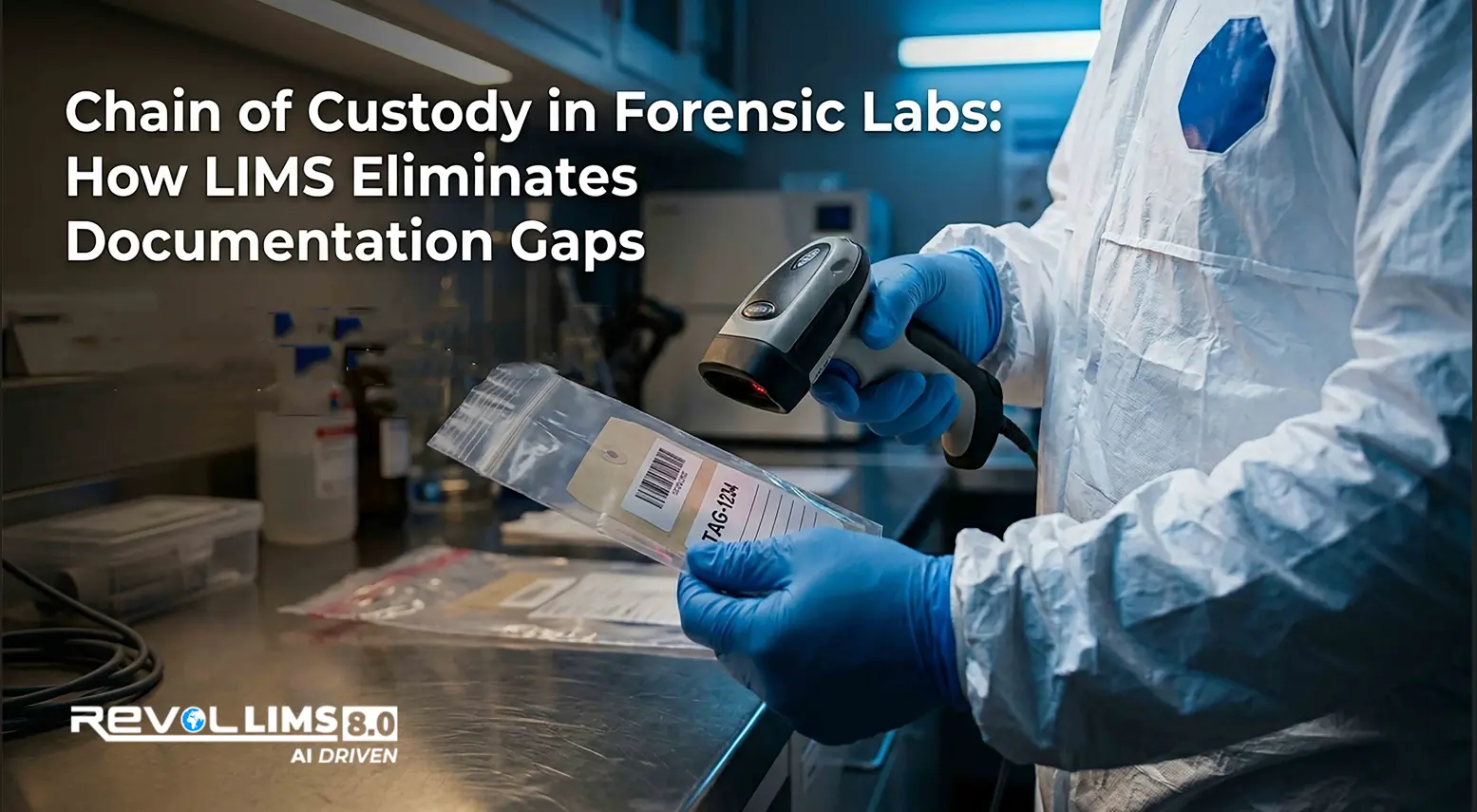
- Automated chain of custody documentation
- Parent-child sample relationships for aliquots
- Storage condition monitoring and alerts
- Expiration date tracking and notifications
- Sample disposal documentation
Problem solved: Never lose track of valuable samples. Reduce sample search time from hours to seconds, ensuring critical testing proceeds without delays.
5. Faster Turnaround Times for Results
Speed matters in competitive laboratory environments. Clinical labs need rapid diagnostics, environmental labs face reporting deadlines, and QC labs keep production lines moving.
How LIMS accelerates turnaround times:
- Eliminating manual handoffs between workflow stages>/li>
- Automated priority sample flagging
- Real-time notifications to relevant personnel
- Parallel processing of multiple samples
- Mobile access enabling remote approvals
- Instant report generation upon test completion
Performance metrics: Laboratories commonly report 25-40% reduction in turnaround time after LIMS implementation. For urgent samples, some organizations achieve 50%+ improvement.
6. Powerful Data Analytics and Business Intelligence
Data trapped in notebooks provides little actionable value. Among the key advantages of LIMS is transforming raw data into strategic insights.
Analytics capabilities include:
Strategic value: Management gains visibility into laboratory performance metrics, enabling data-driven decisions about staffing, equipment investments, and process improvements.
7. Seamless Integration Across Laboratory Systems
Modern laboratories operate within complex technology ecosystems. LIMS serves as the central hub connecting instruments, enterprise systems, and quality management software.
Integration advantages of LIMS:
Efficiency impact: Integration eliminates data silos and duplicate entry, reducing transcription errors and saving 10-15 hours per week in manual data transfer activ,ities.
8. Improved Team Collaboration and Communication
Scientific work increasingly involves distributed teams requiring shared access to real-time information.
Collaboration benefits of LIMS:
Remote work enablement: Modern LIMS platforms support hybrid and remote work models, essential for today's flexible workplace requirements.
9. Significant Cost Reduction and ROI
While LIMS requires upfront investment, the advantages of LIMS deliver compelling return on investment typically within 12-24 months.
Cost savings mechanisms:
Financial impact: Organizations typically report 20-35% reduction in total laboratory operational expenses within two years of LIMS implementation.
10. Scalability Supporting Laboratory Growth
As organizations expand, paper-based systems collapse. LIMS scalability represents a critical advantage for growing laboratories.
Scalability features:
Growth enablement: LIMS grows seamlessly with your organization rather than requiring costly replacements every few years.
11. Robust Quality Management Systems
Quality management integration represents one of the most valuable advantages of LIMS for maintaining laboratory excellence.
Quality features include:
Quality outcomes: Systematic quality processes embedded in daily workflows reduce quality incidents by 40-60% while streamlining ISO/IEC 17025 and CAP compliance.
12. Enhanced Security and Data Protection
Laboratory data represents valuable intellectual property and often includes sensitive personal information requiring stringent protection.
Security advantages of LIMS:
Risk mitigation: Proper LIMS security prevents data breaches that cost organizations an average of $4.24 million per incident according to industry research.
13. Environmental Sustainability Benefits
Sustainability represents an increasingly important advantage of LIMS as organizations pursue environmental responsibility goals.
Environmental benefits include:
Sustainability impact: Digital transformation through LIMS significantly reduces laboratory carbon footprint while improving operational performance.
14. Extensive Customization and Flexibility
Every laboratory has unique requirements. Modern LIMS platforms offer configuration flexibility without requiring extensive programming.
Customization capabilities:
- Customizable dashboards displaying real-time KPIs
- Trend analysis identifying patterns over time
- Quality control charting (Levey-Jennings, Westgard rules)
- Resource utilization reports highlighting bottlenecks
- Predictive analytics for capacity planning
- Statistical process control monitoring
- Integration with business intelligence platforms
- Bidirectional instrument communication (ASTM, HL7)
- ERP system synchronization for inventory and billing
- Electronic Laboratory Notebook (ELN) connectivity
- Quality Management System (QMS) integration
- Environmental monitoring system connections
- Client portal interfaces for result delivery
- REST APIs for custom application development
- Cloud-based access from any location
- Role-based permissions controlling data visibility
- Automated notifications keeping stakeholders informed
- Shared protocol and method libraries
- Electronic review and approval workflows
- Client portals for external stakeholder access
- Multi-site deployment with centralized data
- Reduced reagent waste through optimized inventory management (15-20% savings)
- Lower labor costs from automated workflows (30-40% administrative time reduction)
- Decreased error rates preventing costly retests (saving $50-500 per prevented error)
- Minimized compliance violations and associated penalties
- Optimized equipment utilization extending asset lifespan
- Reduced paper, printing, and physical storage costs (60-80% reduction)
- Improved billing accuracy capturing all billable services
- Support for unlimited users, samples, and test types
- Multi-site deployment with centralized data management
- Configurable workflows adapting to new methods
- Modular architecture allowing incremental expansion
- Cloud deployment eliminating infrastructure constraints
- Merger and acquisition integration support
- Geographic expansion with multi-language capability
- Automated quality control sample insertion
- Statistical process control monitoring
- Non-conformance and deviation tracking
- Corrective and Preventive Action (CAPA) management
- Document control for SOPs and protocols
- Training record management and competency tracking
- Proficiency testing coordination
- Equipment qualification and calibration tracking
- End-to-end encryption for data transmission and storage
- Multi-factor authentication preventing unauthorized access
- Granular role-based access controls
- Automatic session timeouts and password policies
- Regular automated backups with version control
- Disaster recovery and business continuity planning
- HIPAA compliance for clinical patient data
- 70-90% reduction in paper consumption
- Optimized reagent usage reducing chemical waste
- Efficient sample routing preventing redundant testing
- Energy savings from optimized equipment scheduling
- Reduced physical storage space requirements
- Electronic records eliminating document transportation
- Inventory optimization preventing expired reagent disposal
Implementation advantage: LIMS adapts to your laboratory's needs rather than forcing process changes to fit rigid software.
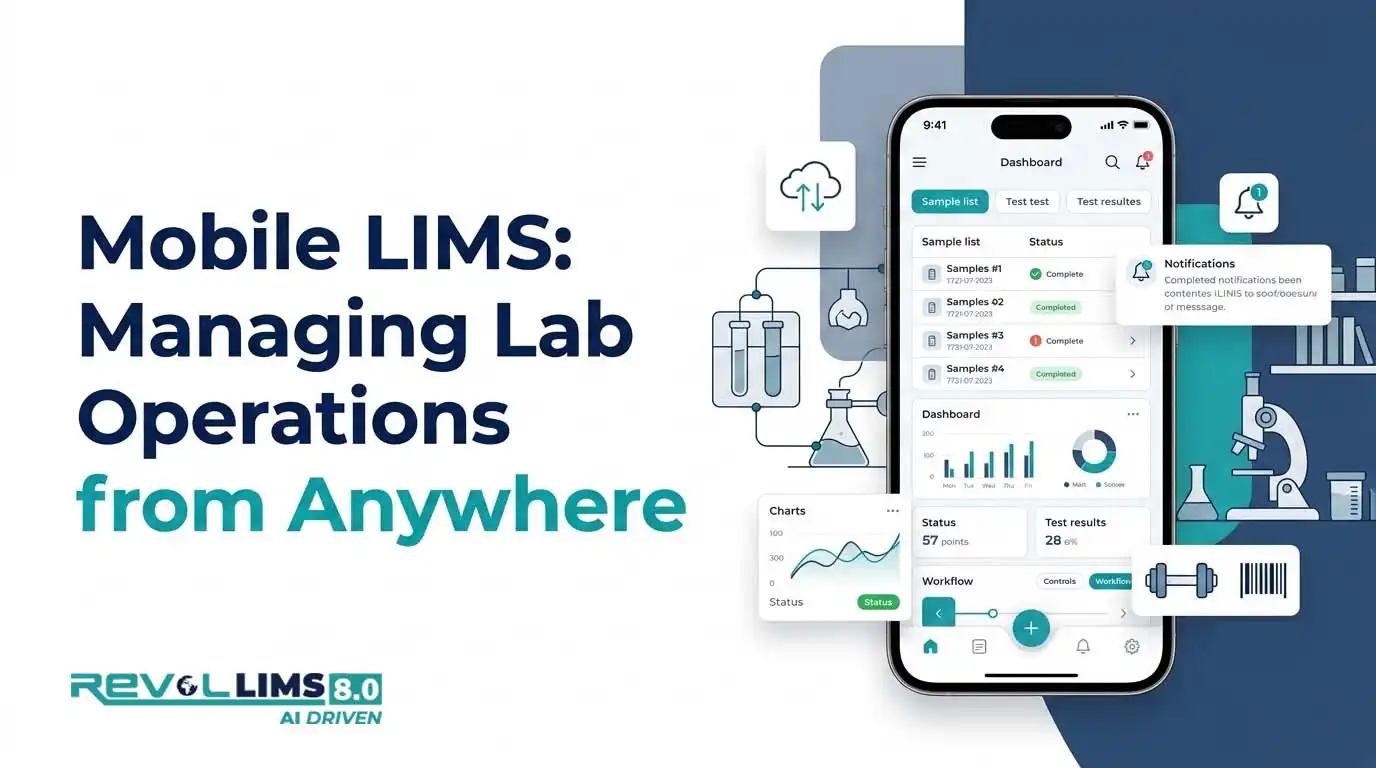
15. Mobile Access and Remote Capabilities
Modern workforce expectations include accessing information anywhere, anytime. Cloud-based LIMS solutions deliver this flexibility.
Mobile advantages of LIMS:
- Configurable workflows matching existing processes
- Custom fields capturing organization-specific data
- Personalized dashboards and reports
- User-defined calculations and validation rules
- Flexible naming conventions and terminology
- Adaptable approval hierarchies
- Custom report templates and formats
Workplace flexibility: Mobile LIMS access supports remote work, field operations, and after-hours emergency response without compromising security or compliance.
Industry-Specific Advantages of LIMS
Clinical and Diagnostic Laboratory LIMS Benefits
Clinical laboratories face unique requirements that specialized LIMS address:
- Smartphone and tablet access to key functions
- Remote approval of results and reports
- Field sample collection with mobile barcode scanning
- Real-time status updates for stakeholders
- Secure access via cloud infrastructure
- Offline capability with automatic synchronization
- Push notifications for critical alerts
Clinical outcome: Improved patient care through faster, more accurate diagnostic results with complete compliance documentation.
Pharmaceutical and Biotech LIMS Advantages
Drug development laboratories benefit from LIMS capabilities including:
Regulatory advantage: Accelerated drug approvals through inspection-ready electronic documentation.
Environmental Testing Laboratory Benefits
Environmental labs require specialized LIMS features:
Legal protection: Complete documentation supporting regulatory reporting and potential litigation.
Food and Beverage Quality Control Advantages
Food testing laboratories gain specific benefits:
- CLIA, CAP, and HIPAA regulatory compliance
- Hospital Information System (HIS) integration
- Critical result notification workflows
- Insurance billing and claims management
- Patient result portals
- Anatomic pathology support
- Drug development workflow support
- Stability study management
- Batch release testing coordination
- Electronic Common Technical Document (eCTD) support
- GLP and GMP compliance
- Technology transfer documentation
- Chain of custody for legal defensibility
- EPA method compliance
- Field sampling integration
- Multi-matrix testing support
- Subcontracting management
- Data deliverable generation
Consumer safety: Ensuring food safety through systematic testing and documentation.
Contract Research Organization (CRO) LIMS Benefits
CROs require flexible LIMS supporting multiple clients:
Business advantage: Efficient multi-client management with complete data security and privacy.
Measuring LIMS Success: Key Performance Indicators
Understanding the advantages of LIMS requires tracking meaningful metrics demonstrating value:
Operational Efficiency Metrics
Quality and Compliance Metrics
Financial Metrics
Customer Satisfaction Metrics
Benchmarking advantage: LIMS provides data for comparing performance against industry standards and driving continuous improvement.
Overcoming Common LIMS Implementation Concerns
Is LIMS implementation too complex for our laboratory?
Modern LIMS platforms offer phased implementation approaches minimizing disruption. Start with core functionality like sample tracking and basic workflows, then expand to advanced features over time.
Best practice: Begin with one department or test type as a pilot, validate success, then expand systematically.
Our laboratory is too small to benefit from LIMS
Cloud-based LIMS solutions have eliminated infrastructure barriers and high upfront costs. Even small laboratories with 5-10 staff members benefit from automation, compliance, and efficiency advantages of LIMS.
Economic reality: Subscription pricing makes LIMS accessible with monthly costs often less than one employee's salary, while delivering productivity gains across the entire team.
Laboratory staff will resist changing from familiar processes
Change management is critical for successful LIMS implementation. Involve end-users early in selection and configuration to build ownership.
Success strategy: Emphasize how LIMS eliminates frustrating manual tasks staff currently perform, positioning the system as a tool that makes their work easier rather than adding burden.
We can't afford LIMS right now
Consider total cost of ownership including hidden costs of current inefficiencies:
Financial reality: Most laboratories cannot afford to continue without LIMS when all costs are properly calculated.
How long does LIMS implementation take?
Implementation timelines vary based on laboratory size and complexity:
Cloud-based LIMS typically deploy 30-40% faster than on-premise installations due to eliminated infrastructure setup.
The Future of LIMS: Emerging Trends and Advantages
LIMS technology continues evolving with capabilities that provide competitive advantages:
Artificial Intelligence and Machine Learning
AI-enhanced LIMS will provide:
- Allergen and nutritional labeling support
- Supplier qualification tracking
- Shelf-life and stability testing
- Product recall management
- Certificate of Analysis (CoA) generation
- HACCP and food safety compliance
- Multi-client data segregation
- Project-based organization and billing
- Flexible invoicing systems
- Client portal access for result review
- Diverse testing protocol support
- Study-specific workflows
- Turnaround Time: Average time from sample receipt to final report
- First-Pass Yield: Percentage of samples completing without retests
- On-Time Delivery: Percentage of results delivered by promised deadlines
- Error Rate: Pre-analytical, analytical, and post-analytical errors per 1,000 samples
- Audit Findings: Number of observations and deficiencies in inspections
- Out-of-Specification (OOS) Rate: Percentage of results requiring investigation
- CAPA Cycle Time: Average time to close corrective actions
- Cost per Sample: Fully loaded cost including labor, materials, and overhead
- Revenue per Sample: Average billable amount per sample
- Days Sales Outstanding: Speed of customer payment collection
- Reagent Waste Percentage: Expired or unused reagent costs
- Net Promoter Score (NPS): Client likelihood to recommend services
- On-Time Delivery Rate: Meeting promised turnaround times
- Complaint Rate: Customer issues per 1,000 samples
- Repeat Business Percentage: Client retention and repeat orders
- Staff time wasted searching for samples or information
- Errors requiring expensive retests
- Compliance violations and associated penalties
- Lost samples requiring recollection
- Missed billing opportunities
- Small labs (1-2 departments): 2-4 months
- Medium labs (3-5 departments): 4-8 months
- Large labs (enterprise-wide): 8-18 months
Internet of Things (IoT) Integration
Connected laboratory environments enable:
Blockchain for Data Integrity
Distributed ledger technology provides:
- Automated anomaly detection in test results
- Predictive maintenance for instruments
- Intelligent sample prioritization
- Result prediction accelerating reviews
- Real-time environmental condition monitoring
- Automated sample tracking via smart storage
- Predictive analytics for equipment failures
- Energy optimization through intelligent systems
Advanced Analytics and Big Data
Next-generation LIMS leverage:
Competitive advantage: Early adoption of emerging LIMS technologies positions laboratories ahead of competitors in efficiency, quality, and innovation.
Conclusion: Maximizing the Advantages of LIMS
The advantages of LIMS extend far beyond simple data management. Organizations implementing laboratory information management systems experience transformation in:
Whether you operate a small quality control lab or multi-site testing organization, LIMS provides the foundation for excellence in laboratory operations. Success requires careful planning, stakeholder engagement, and selection of the right platform for your specific requirements.
The investment in LIMS delivers measurable returns through improved outcomes, reduced risk, enhanced competitive positioning, and sustainable growth. In today's data-driven scientific environment, LIMS has evolved from optional technology to essential infrastructure for laboratory success.
- Immutable audit trails
- Enhanced data security
- Tamper-proof compliance records
- Streamlined inter-laboratory data sharing
- Predictive modeling for laboratory operations
- Population health analytics in clinical settings
- Supply chain optimization
- Prescriptive recommendations for process improvements
- Data Quality: 90% reduction in transcription errors
- Operational Efficiency: 35-50% decrease in administrative time
- Regulatory Compliance: 60-70% reduction in audit preparation time
- Cost Savings: 20-35% reduction in operational expenses
- Turnaround Time: 25-40% faster result delivery
- Scalability: Seamless support for laboratory growth



 (1) (1).webp)

.webp)